
I did not realize how much my pillow was affecting my sleep until I started waking up already tired.
Not the usual “I slept late” kind of tired. It was more like waking up with a tight neck, heavy shoulders, and that annoying need to stretch before even getting out of bed. My pillow felt soft when I first lay down, but by morning, it had either gone flat, shifted out of place, or left my neck resting at an awkward angle.
That is what made me curious about Vela Sleep.
I was not looking for a miracle pillow. I just wanted to know if a more structured, contoured design could keep my neck supported through the night without feeling stiff or uncomfortable.
So I tried it in my normal sleep routine.
In this Vela Sleep review, I will share what actually happened, how it felt compared with a regular pillow, and whether the cervical design made a real difference in comfort, support, and morning stiffness.
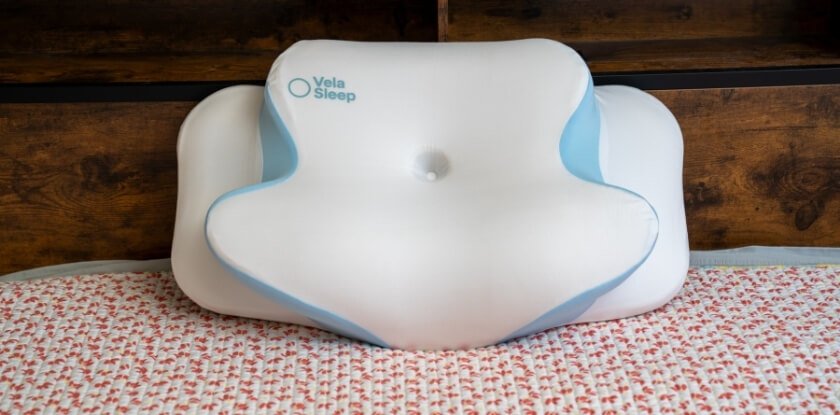
Vela Sleep is a contoured memory foam pillow designed to support your neck, head, shoulders, and arms while you sleep. It has a structured cervical design that helps your head rest in the center while the raised neck area supports the natural curve of your neck.
- Designed to relieve pressure from all angles
- Stop snoring and improve sleep quality
- Ideal for all types of sleeping positions
- OEKO-TEX certified
- Needs 6–7 days to adjust to it
Quick Verdict
Vela Sleep is best for side and back sleepers who want a firmer, more structured pillow instead of something soft and sinky. It may take a few nights to adjust, but the shaped design gives the head and neck a steadier resting position. It is not a medical fix, but it makes sense if your current pillow feels too flat, loose, or inconsistent.
What Is Vela Sleep?
Vela Sleep is a contoured memory foam pillow designed to support your neck, head, shoulders, and arms while you sleep. Instead of using a flat, traditional shape, it has a structured cervical design that helps your head rest in the center while the raised neck area supports the natural curve of your neck.
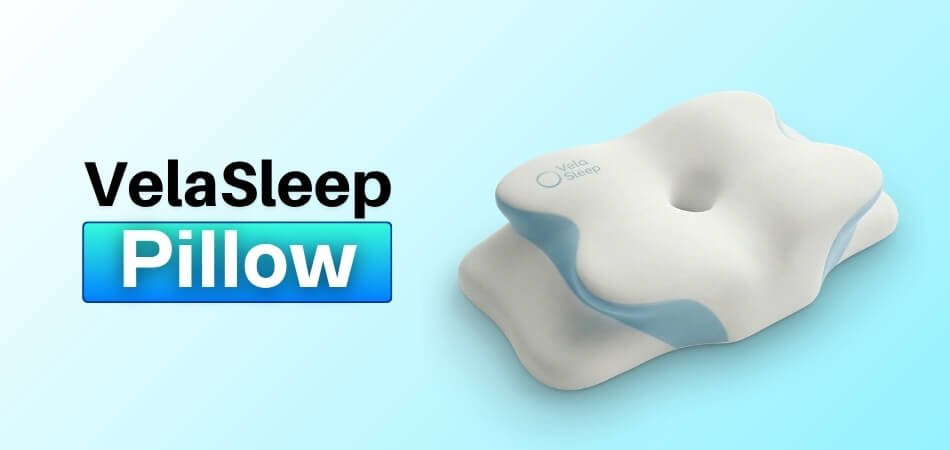
The idea is simple: your pillow should not just feel soft when you first lie down. It should also help keep your neck in a more comfortable position through the night.
Vela Sleep uses specific zones for back sleeping, side sleeping, neck support, and arm placement, so the pillow feels more guided instead of loose or shapeless.
It is still a pillow, not a medical device. But if your current pillow keeps going flat, shifting around, or leaving your neck unsupported, Vela Sleep is designed to offer a more stable and supportive alternative.
How Does Vela Sleep Work?
Vela Sleep works by giving your head and neck a fixed support path instead of letting them sink randomly into a flat pillow. Its contoured cervical design is made to help guide the head, neck, shoulders, and arms into the pillow’s shaped zones while you sleep.
Instead of feeling like a soft pillow that changes shape under pressure, Vela Sleep feels more guided. Each part of the pillow has a purpose:
- Center Head Cradle: Gives your head a settled place to rest, so it does not sink unevenly into the foam.
- Raised Neck Curve: Supports the natural curve of your neck and helps reduce that unsupported, floating feeling.
- Side Sleeper Zones: Create a more stable surface when you turn to your side, especially around the head and shoulder area.
- Arm Relief Areas: Leave extra room near the front of the pillow, which helps if you sleep with one arm tucked near your face.
- Memory Foam Core: Helps the pillow hold its shape through the night instead of flattening like a loose, fluffy pillow.
What I liked about this design is that it does not rely on softness alone. Soft pillows can feel comfortable at first, but once the shape shifts, flattens, or bunches up, the support changes. Vela Sleep felt more consistent because the shape stayed in place and kept my neck better supported while I slept.
The Sleep Problem I Wanted To Fix
The main problem I wanted to fix with Vela Sleep was not falling asleep. I was waking up with neck tightness and shoulder tension after using a regular pillow.
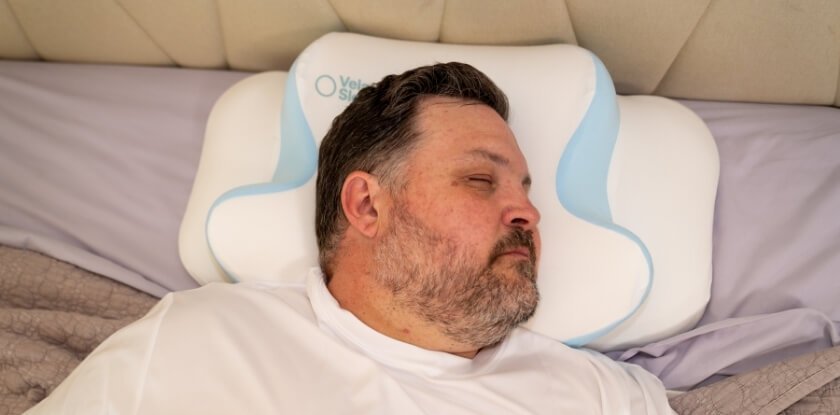
At bedtime, my pillow usually felt fine. Soft, familiar, and comfortable enough. But after a few hours, the support would start to disappear.
Here is what kept happening:
- My pillow would sink in the middle.
- My neck would feel unsupported.
- My shoulders felt tense in the morning.
- I had to stretch before even getting out of bed.
- I kept adjusting my pillow during the night.
That was the frustrating part. The pillow did not feel bad right away, so it was easy to ignore. But the discomfort showed up later, after my head and neck had been resting in the wrong position for hours.
That is why Vela Sleep caught my attention. I wanted to see if its contoured cervical design could keep my neck in a more stable position through the night, instead of flattening like my regular pillow.
I was not expecting a miracle. I just wanted a pillow that did not lose its purpose halfway through the night.
How I Used Vela Sleep For Two Weeks
I used Vela Sleep as my main pillow for two weeks to see how it performed in a normal sleep routine, not just for a quick first impression. I kept my mattress, bedtime routine, and sleeping setup the same, so the only real change was the pillow.
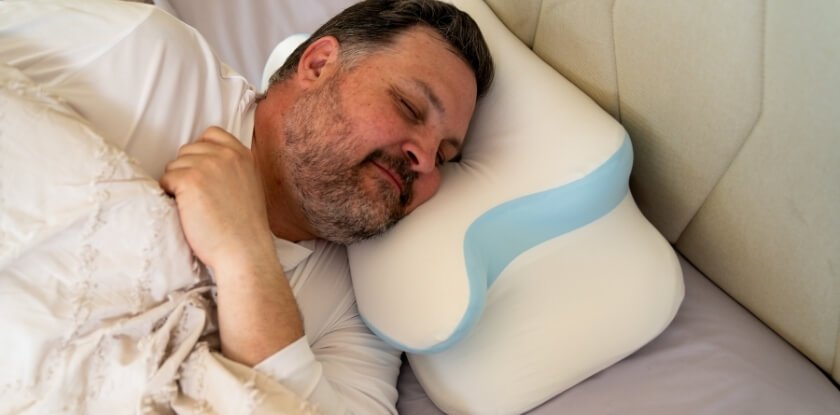
Since Vela Sleep has a contoured cervical design, I did not judge it after one night. I looked at how it performed across multiple nights in my normal sleep routine.
Neck Support
Neck support was the first thing I paid attention to. I wanted to see whether Vela Sleep actually helped my neck feel more supported or if the raised curve would feel too stiff.
The main question was simple: did my neck feel relaxed and steady, or did it feel pushed into an awkward position?
Side Sleeping
I sleep on my side often, so this was important. I checked whether my head stayed level when I turned to the side and whether the pillow gave enough support around my shoulder area.
With a regular pillow, this is where I usually notice the most sinking or uneven support.
Back Sleeping
For back sleeping, I focused on the center cradle. I wanted to see if my head felt settled in place or if the shape felt restrictive.
A good pillow for back sleeping should support the neck without pushing the head too far forward.
Firmness And Comfort
Vela Sleep does not feel like a soft, fluffy pillow, so I paid attention to the firmness. I wanted it to feel supportive, but not hard or uncomfortable.
This part mattered because a pillow can have a smart design, but if it feels too stiff, it is hard to use consistently.
Adjustment Period
I also looked at how long it took to get used to the shape. The first night with a contoured pillow can feel unusual, so I wanted to know whether it became more natural after a few nights.
That helped me judge the pillow more fairly.
Morning Comfort
Morning comfort was the real test. I paid attention to how my neck and shoulders felt when I woke up, especially compared with my regular pillow.
For me, this mattered more than how the pillow felt in the first five minutes.
Pillow Stability
Finally, I checked whether Vela Sleep stayed in place during the night. I wanted to see if I had to keep moving it, fluffing it, or adjusting my head position.
A pillow can feel great at bedtime, but if it shifts or loses support halfway through the night, the comfort does not last.
Design And Build Quality
Vela Sleep does not look like a regular pillow, and that stood out as soon as I placed it on the bed.
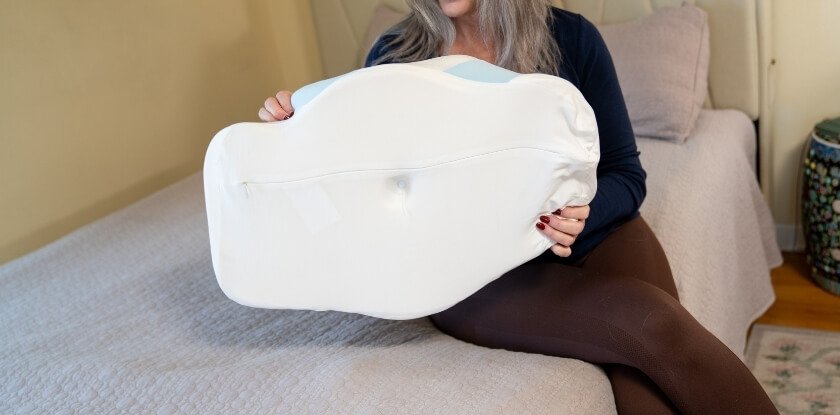
Instead of a flat, soft rectangle, it has a contoured cervical shape with curves, dips, and raised areas that seem purposeful. The center gives your head a place to settle, while the raised neck curve supports the area under your neck. The side sections also felt wider and more stable when I turned from my back to my side.
A few details stood out:
- Center cradle: Helps the head rest more evenly.
- Raised neck curve: Adds support under the neck.
- Side areas: Feel more stable for side sleeping.
- Lower front dips: Give the arms a bit more room.
The foam also has that slow-rebound memory foam feel, where it gives under pressure and then gradually returns to shape instead of bouncing back instantly or collapsing flat.
I also liked that the removable cover is OEKO-TEX certified, which adds some reassurance for a product that stays close to your face and skin every night.
First Night Experience
The first night with Vela Sleep felt different, but not in a bad way.
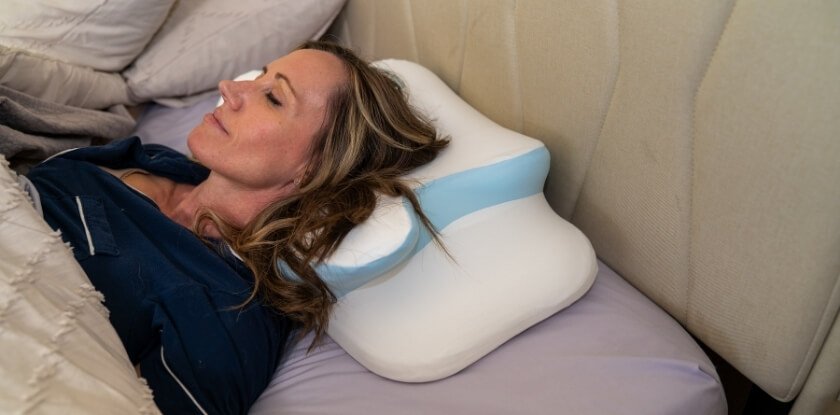
I could immediately tell it was not the kind of pillow you sink into and forget about. The shape is more structured, so my head and neck had to settle into the contour instead of just pressing into a soft surface.
At first, I was aware of the raised neck curve. It felt supportive, but also new. If you are coming from a regular pillow, that is probably the first thing you will notice too. Vela Sleep does not flatten around your head the same way a softer pillow does.
After a little while, the shape started to feel more natural. My head rested in the center area, and my neck felt like it had a defined place to sit instead of floating over a gap.
What stood out most on the first night:
- It felt more structured than soft.
- The neck curve was noticeable at first.
- My head felt more centered.
- I did not need to fluff or fold the pillow.
- It felt better once I stopped expecting it to feel like a regular pillow.
I would not say the first night felt instantly perfect, but it did feel promising. Vela Sleep has a short adjustment curve, especially if you are used to fluffy pillows, but the support started to make more sense the longer I used it.
Neck Support And Comfort
This is where Vela Sleep mattered most to me.
A pillow can look well-designed and feel nice at first, but if it does not support the neck properly, the comfort does not last. With my regular pillow, the problem was not always immediate. It usually showed up later, after the pillow had flattened or shifted during the night.
Vela Sleep felt different because the neck support stayed more consistent. The raised curve gave my neck a defined place to rest, and the center cradle helped keep my head from sinking too unevenly.
Here is what I noticed most:
| Area | My Experience |
| Neck Position | My neck felt more supported instead of hanging over a soft gap. |
| Head Stability | My head felt more centered, especially when lying on my back. |
| Pressure Feel | The support felt steady, not sharp or uncomfortable. |
| Night Movement | I did not feel the same need to keep adjusting the pillow. |
| Morning Comfort | My neck and shoulders felt less tense compared with my regular pillow. |
The comfort is not the same as a fluffy pillow. Vela Sleep feels more structured, so the support is more noticeable. For me, that was a good thing because I wanted my neck to feel held in place, not buried in softness.
Vela Sleep For Side Sleepers
Side sleeping is where Vela Sleep started to make the most sense to me.
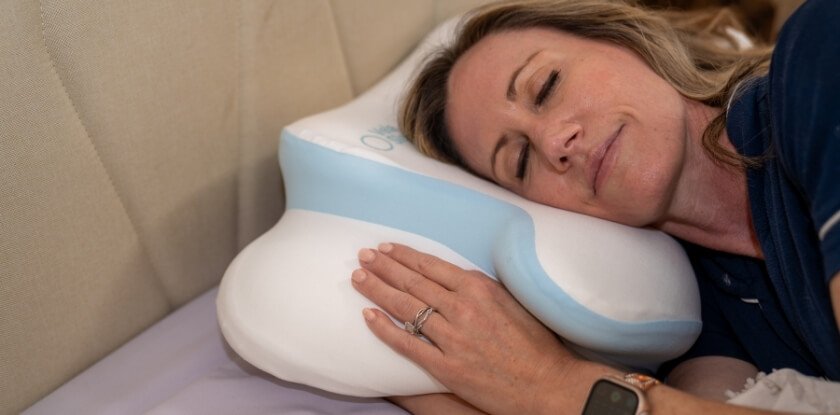
This is usually the position where a regular pillow feels good at first, then slowly loses support. Once the middle sinks or the pillow shifts, my head can tilt slightly downward, and that pressure usually shows up around my neck and shoulder by morning.
With Vela Sleep, the side sleeping experience felt more controlled.
What felt better:
- My head had a steadier place to rest.
- The side area felt wider and more supportive.
- My neck did not feel like it was hanging into a gap.
- I did not need to fold or bunch the pillow to get the right height.
- The pillow held its shape better when I turned onto my side.
The biggest difference was stability. Vela Sleep did not have that loose, sinking feeling I usually get from a softer pillow. It felt more like the pillow was guiding my head and neck into position.
For me, this was one of the better parts of the test. If you are a side sleeper who wakes up with neck tightness or feels like your pillow keeps collapsing under your head, Vela Sleep makes more sense than a regular flat pillow.
Vela Sleep For Back Sleepers
Back sleeping felt more natural than I expected with Vela Sleep.
The center cradle helped my head settle into one spot instead of sliding around on the pillow. I also noticed the raised neck curve more in this position, because it sits right under the neck and gives that area a steady base.
A few things stood out during back sleeping:
- Head position felt more centered instead of rolling slightly to one side.
- Neck support felt steady without creating too much pressure.
- The pillow felt structured but not overly restrictive.
- I did not need to fold or adjust it to create more height.
This is where the cervical design felt useful. With a regular pillow, I often have to adjust the height to avoid feeling too low or too high. Vela Sleep gave my neck a more defined resting place, which made back sleeping feel more stable.
I still think the feel depends on personal preference. If you like a very low, soft pillow, the contour may feel noticeable at first. But if you want more neck support while lying on your back, Vela Sleep does a good job of making your head and neck feel properly positioned.
Vela Sleep For Stomach Sleepers
Stomach sleeping is where I would be a little more careful with Vela Sleep.
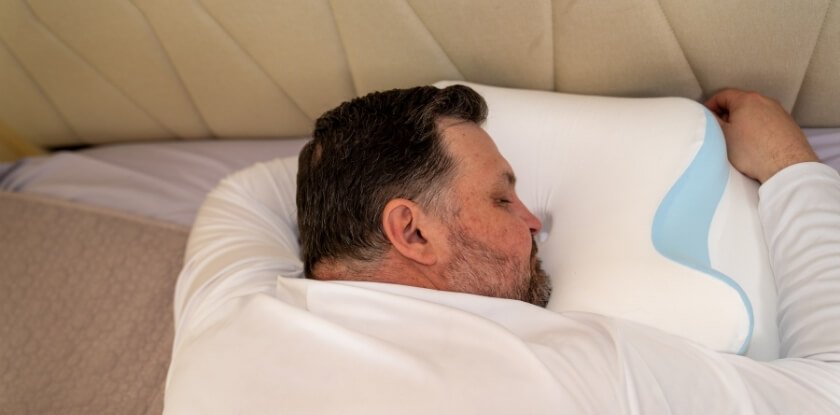
The pillow is made for different sleep positions, but a contoured cervical pillow naturally feels more structured than a thin, flat pillow. That can be helpful for side and back sleeping, while stomach sleepers usually need something lower and less noticeable under the head.
A few things are worth keeping in mind:
- Mostly side sleepers will likely get better support from the shape.
- Back sleepers may benefit more from the center cradle and neck curve.
- Combination sleepers who rotate positions may still find it usable.
- Strict stomach sleepers may find the contour too noticeable.
- People who love very low, soft pillows may find the contour less natural.
So, can stomach sleepers use Vela Sleep? Possibly, especially when stomach sleeping is only part of the night. But for someone who sleeps on their stomach almost the whole time and prefers a very flat pillow, this may not be the most natural fit.
Cooling And Breathability
Vela Sleep felt breathable enough for normal use, but I would not describe it as an ice-cold pillow.
The cover had a smooth, comfortable feel against the skin, and I did not notice the stuffy heat buildup I sometimes get from thicker foam pillows. For me, it stayed comfortable through the night at a regular room temperature.
That said, it is still a memory foam pillow. Very hot sleepers may still feel some warmth, especially in a hot room or without a breathable pillowcase.
A few things stood out:
- The cover felt smooth and light against the skin.
- The pillow did not feel overly stuffy during normal use.
- It stayed more breathable than I expected for memory foam.
- Hot sleepers may still want a cooling pillowcase for extra comfort.
So, my honest take is simple: Vela Sleep does well for everyday breathability, but I would not buy it expecting a strong cooling effect. Its main strength is support, not temperature control.
Cleaning And Maintenance
Cleaning Vela Sleep is fairly simple because the cover is removable. That matters more than it sounds. Pillows collect sweat, oil, dust, and hair over time, and with a foam pillow, you usually do not want to wash the foam core directly. So having a cover you can remove and clean makes the pillow easier to maintain.
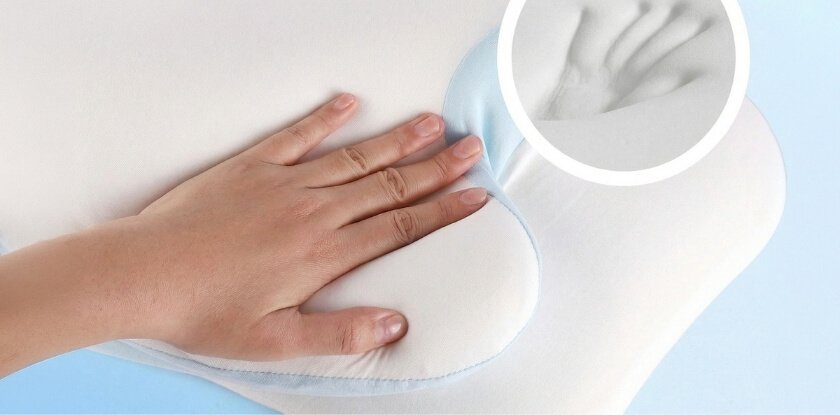
For regular use, I would handle it this way:
- Wash the cover when needed to keep the surface fresh.
- Avoid washing the memory foam core because foam can hold moisture and lose its shape.
- Let the pillow air out occasionally if it starts to feel warm or closed in.
- Use a pillowcase over the cover for extra protection and easier cleaning.
Overall, maintenance is not complicated. The removable cover gives Vela Sleep a practical advantage over pillows that are harder to keep fresh, especially if you plan to use it every night.
What I Liked About Vela Sleep
What I liked most about Vela Sleep was that the design actually showed up during use. It was not just a different-looking pillow on the bed. The shape changed how my head and neck rested once I settled into it.
Here are the things that stood out during my test:
- The neck curve felt useful: It filled the space under my neck better than a flat pillow surface.
- My head felt more settled: The center area helped keep my head from drifting around as much.
- Side sleeping felt steadier: I did not feel the same need to bunch or fold the pillow for height.
- The foam held its shape well: It gave slightly under pressure, but it did not collapse flat.
- The cover was easy to manage: The removable design made cleaning feel more practical.
- There was less pillow fussing: I did not keep adjusting it as much once I found the right position.
Overall, Vela Sleep worked best for me because it stayed consistent. A soft pillow can feel nice at first, but Vela Sleep felt like it was built to keep supporting my neck after the first few minutes.
What I Did Not Like About Vela Sleep
Vela Sleep worked well for support, but it is not the kind of pillow everyone will instantly love.
The biggest thing to know is that it feels structured, not fluffy. That was good for my neck support, but it also means the pillow has a different feel from a soft, regular pillow.
A few drawbacks stood out:
- Takes time to adjust: The contoured shape felt noticeable at first.
- Fit depends on your body and sleep style: Shoulder width, neck position, and pillow preference can change how comfortable it feels.
- Limited snoring claim: It is not something I would buy only for snoring.
For me, these were not deal-breaking issues, but they are worth knowing before buying. Vela Sleep makes the most sense for people who want support and structure, not a soft pillow they can sink deeply into.
Vela Sleep Vs Regular Pillow
The biggest difference between Vela Sleep and a regular pillow is control.
A regular pillow can feel soft and familiar when you first lie down, but its support often changes through the night. It may flatten, shift, or bunch up depending on your sleeping position. Vela Sleep takes a different approach. Its contoured shape gives your head and neck a more fixed place to rest, so the support feels more consistent.
| Feature | Vela Sleep | Regular Pillow |
| Shape | Contoured cervical design | Flat or loosely shaped |
| Neck Support | More guided and consistent | Depends on height, fill, and how much it compresses |
| Feel | Structured and supportive | Softer and more familiar |
| Side Sleeping | Gives the head a steadier surface | Can sink or shift unevenly |
| Back Sleeping | Center cradle helps keep the head settled | May need adjusting for the right height |
| Night Movement | Less need to fluff or fold | Often needs reshaping |
| Best For | Sleepers who want neck support and stability | Sleepers who prefer soft, flexible comfort |
| Adjustment | May take a few nights to feel natural | Usually feels familiar right away |
A regular pillow may still be better for people who love a soft, loose feel. But Vela Sleep has the advantage when support matters more than plushness. It feels less like something you have to shape yourself and more like a pillow designed to keep your neck in position through the night.
Who Should Buy Vela Sleep?
Vela Sleep is a better match for people who already know they want more guidance from their pillow.
It is not really for someone who buys a pillow mainly for that soft, sink-in first impression. This is more for sleepers who care about how their head and neck are positioned after several hours, not just how the pillow feels when they first lie down.
You may be a good fit for Vela Sleep if you:
- Sleep mostly on your side or back
- Prefer memory foam over loose fill
- Want a pillow that keeps a more defined shape
- Often wake up feeling like your pillow did not hold up overnight
- Like the idea of a head cradle and raised neck curve
- Want something more support-focused than a basic pillow
The brand also positions Vela Sleep as hypoallergenic and vegan, which may matter if you are sensitive to certain materials or prefer animal-free products. The easiest way to decide is to think about what bothers you most.
Who Should Avoid Vela Sleep?
Vela Sleep is not the best match for every sleeper, especially because it has a defined shape and a more support-focused feel.
You may want to skip it if you prefer a pillow that feels loose, low, and easy to fold into any shape. Vela Sleep is more guided than that, which is helpful for some sleepers but less natural for others.
It may not be the right choice for:
- Strict stomach sleepers who need a very low pillow
- People who dislike memory foam
- Anyone who wants a pillow they can fold, squeeze, or bunch up
- Sleepers who prefer a plush hotel-style feel
- People expecting a pillow to solve serious neck, spine, or sleep-related issues
The simple rule is this: Vela Sleep is better for people who want a pillow to guide their sleeping position. It is less ideal for people who want a pillow they can freely shape throughout the night.
Is Vela Sleep Worth It?
Vela Sleep is worth it if the main problem with your current pillow is not comfort at bedtime, but support that fades during the night.
That is the real value of this pillow. You are not just paying for memory foam or a different shape. You are paying for a design that gives your head and neck a more defined resting position and holds that shape better over several hours.
The price makes more sense for people who already feel frustrated with soft, flat, or inconsistent pillows. In that case, Vela Sleep feels like a targeted upgrade rather than just another pillow purchase.
It may not feel as valuable if you already sleep well on a traditional pillow. But if you keep waking up with tightness, pressure, or the feeling that your pillow is not doing enough, Vela Sleep has a clear reason to consider.
Vela Sleep Price And Where To Buy
I bought Vela Sleep from the official website, which is where the main discount, bundle deals, return policy, and warranty details were listed.

At the time of my purchase, Vela Sleep was available with a 50% discount, bringing the single pillow price down from $119.99 to $59.99. I also noticed a few bundle options for people who want more than one pillow.
The pricing looked like this:
- 1 VelaSleep Pillow: $59.99 instead of $119.99
- 3 VelaSleep Pillows: $119.98 with the “Buy 2, Get 1 Free” offer
- 5 VelaSleep Pillows: $179.97 with the “Buy 3, Get 2 Free” offer
I went through the official site because it clearly showed the current sale price and the available warranty details. Vela Sleep also comes with a 30-day money-back warranty and a 1-year warranty, which made the purchase feel less risky because pillow comfort is personal.
What Other Users Are Saying
I also looked at common feedback from people who tried Vela Sleep, and most of the comments seemed to focus on the same few points: better neck support, the shaped feel, and how different it is from a basic pillow.
“The first night felt a little different because the pillow has a real shape to it, but after a few nights, I started to understand the support. My neck felt more settled, especially when sleeping on my side.”
— Rachel Morgan“I bought Vela Sleep because my old pillow kept going flat. This one feels firmer, but in a good way. It does not have that fluffy hotel pillow feel, but it keeps my head in a better position.”
— Daniel Price“As a back sleeper, I liked the center part the most. My head did not roll around as much, and I did not wake up needing to readjust the pillow every morning.”
— Melissa Carter“It took me two or three nights to get used to the contour, but I ended up liking it more than I expected. I would not recommend it to someone who wants a super soft pillow, but for support, it works well.”
— Brian Foster
Final Verdict: Should You Buy Vela Sleep?
By the end of this Vela Sleep review, the thing I kept coming back to was how quietly useful the pillow felt.
It did not give me that dramatic “new pillow changed everything overnight” moment. And honestly, that made the experience feel more believable. The difference was smaller but more practical: fewer little adjustments, less fighting with the pillow shape, and a neck position that felt more settled when I woke up.
That is where Vela Sleep makes sense. Not as a luxury pillow you buy for softness, but as a problem-solving pillow for people who are tired of waking up and blaming everything except the pillow under their head.
I would not put it in everyone’s bedroom. Some sleepers will still prefer a looser, more traditional feel. But for someone who wants a pillow that feels steady, shaped, and more intentional, Vela Sleep earns its place.
It is not a perfect pillow. It is just a more thoughtful one.
FAQs About Vela Sleep
Even after testing a pillow, some questions only come up right before buying it. These are the practical things I would want answered before placing an order, especially with a contoured pillow that feels different from a regular one.
Does Vela Sleep Have A Strong Smell At First?
Like many memory foam pillows, Vela Sleep may have a slight new-foam smell when first opened. It was not a major issue for me, but letting it air out before the first full night can make the experience better.
Can You Use A Regular Pillowcase With Vela Sleep?
Yes, a regular pillowcase can usually be used with Vela Sleep, but a tight pillowcase may slightly affect how the contour feels. A softer, more flexible pillowcase works better because it lets the shape do its job without pulling too tightly over the curves.
Does Vela Sleep Help With Snoring?
Vela Sleep may help with snoring if poor head and neck positioning is part of the problem. The contoured shape supports the neck and keeps the head in a steadier position, which may help some sleepers feel less restricted at night. It is not a snoring cure, though, so loud or frequent snoring should be checked by a healthcare professional.
Is Vela Sleep Too High For Smaller Sleepers?
It may feel slightly more noticeable for smaller sleepers or people with narrow shoulders, especially at first. The contour is designed to support the neck, but comfort depends on your body size, sleep position, and how much pillow height you normally prefer.
Can Couples Use Different Vela Sleep Pillow Options?
Yes, couples can use Vela Sleep individually based on comfort preference. A bundle may save money, but both people should still expect their own adjustment period because pillow comfort is personal.
Vela Sleep is a contoured memory foam pillow designed to support your neck, head, shoulders, and arms while you sleep. It has a structured cervical design that helps your head rest in the center while the raised neck area supports the natural curve of your neck.
- Designed to relieve pressure from all angles
- Stop snoring and improve sleep quality
- Ideal for all types of sleeping positions
- OEKO-TEX certified
- Needs 6–7 days to adjust to it


