
I never thought much about how many family stories disappear without anyone noticing. They usually come up for a few minutes at dinner, during a phone call, or when someone finds an old photo. Then the conversation moves on, and the story gets buried again.
That is what made me curious about Memorygram. I did not want another regular photo book with nice pictures and empty captions. I wanted a way to collect the stories behind those pictures, especially the small details that usually never get written down.
Memorygram caught my attention because it promised something more personal: guided questions, written or spoken answers, photos, and a finished hardcover book that can even include the storyteller’s voice through a QR code. It sounded like a thoughtful gift, but I also wondered if it would feel natural in real life or just become another unfinished project.
So in this Memorygram review, I’ll share what stood out to me, what felt useful, what could be better, and who I think it is actually worth buying for.
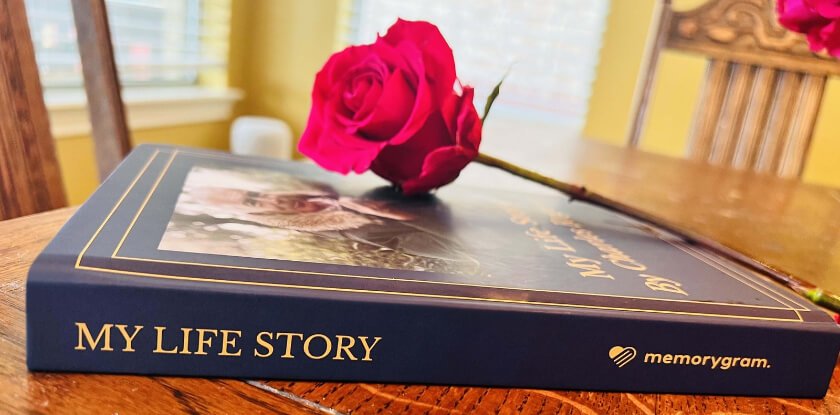
Memorygram is a guided legacy book service that helps turn someone’s life stories into a finished hardcover book. Instead of starting with a blank page, the storyteller receives thoughtful prompts and can answer them over time by writing, speaking, or using the phone-based option
- Turns family stories into a hardcover book
- Records and preserves loved ones' voices
- Easy phone interviews, no internet needed
- - Downloadable PDF copy
- Extra book copies cost more
Quick Verdict
Memorygram is worth it if you want to collect family stories in a guided, organized way instead of making a regular photo book. It works best for parents, grandparents, or older relatives who are open to sharing memories through written answers, photos, or voice recordings. The main drawback is that the final value depends on participation, so it is not ideal if the storyteller is unlikely to answer the prompts.
What Is Memorygram?
Memorygram is a guided legacy book service that helps turn someone’s life stories into a finished hardcover book. Instead of starting with a blank page, the storyteller receives thoughtful prompts and can answer them over time by writing, speaking, or using the phone-based option.
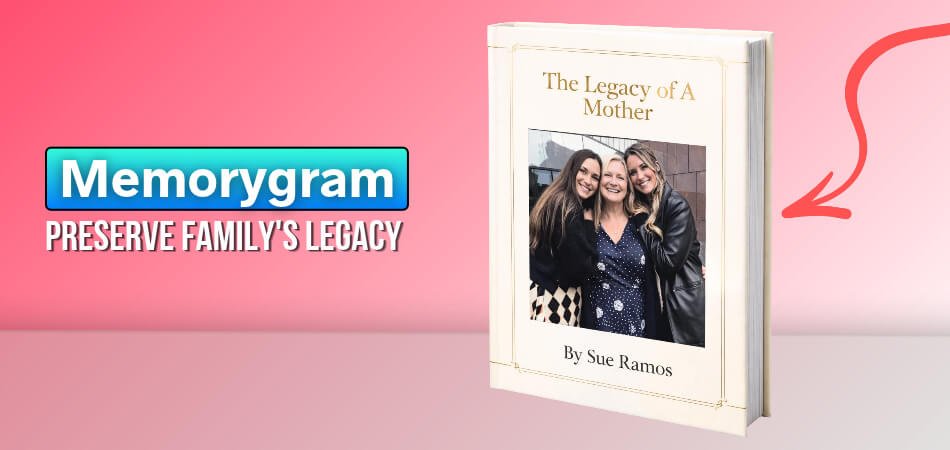
The idea is simple: collect personal memories, add meaningful photos, and turn everything into a printed book the family can keep. What makes it different from a normal photo book is that the focus is not only on pictures. It is about the stories behind those pictures, the small details, and even the person’s voice if recordings are included through the QR feature.
Memorygram feels like part gift and part family keepsake project. You are not only buying a book upfront. You are creating a place for personal stories, old photos, and voice memories to come together in a format that can be shared and revisited later.
How Does Memorygram Work?
Memorygram works more like a guided storytelling process than a quick photo book order. You choose who the book is for, then the storyteller receives prompts designed to bring out personal memories, family stories, and life details.
Here’s the basic process:
- Choose the storyteller: You can start the book for a parent, grandparent, older relative, or yourself.
- Answer guided questions: The storyteller responds to prompts over time instead of writing everything from scratch.
- Use writing or voice: Answers can be written or spoken, which makes it easier for people who do not want to type long responses.
- Add photos: Family pictures can be included so the stories have more context.
- Create the final book: Once the memories are collected, they are turned into a printed hardcover Legacy Book.
The main thing to know is that Memorygram is not instant. The finished book depends on how much the storyteller shares and how consistently they take part in the process.
Why I Wanted To Try Memorygram
I wanted to try Memorygram because I kept thinking about how easily family stories get lost. Some stories come up once during a casual conversation, then no one writes them down. Other memories stay attached to old photos, but the details slowly fade over time.
A regular photo book did not feel like enough for that. Photos are important, but they do not always explain who was there, what was happening, or why that moment mattered. I wanted something that could help collect the stories behind the pictures without making the process feel too formal.
It stood out because it gives the storyteller prompts instead of asking them to start from a blank page. That felt useful to me, especially for older relatives who may have plenty to share but would never sit down and write a full life story on their own.
My Experience With Memorygram
Using Memorygram felt less like ordering a finished product and more like starting a small family project. The setup was not the hard part. The real experience came from seeing how the prompts helped bring out stories that probably would not come up in a normal conversation.
Setup Felt Simple
Getting started was straightforward, and I did not feel like I was dealing with a complicated tech product. The process was easy enough to follow, which matters when the gift involves someone older who may not want to figure out a confusing system.
The Prompts Helped
The questions made storytelling feel less overwhelming. Instead of asking someone to explain their whole life at once, Memorygram breaks things into smaller memories. That made the answers easier to start and gave the whole process a more natural rhythm.
Some Answers Surprised Me
A few prompts brought out details I probably would not have thought to ask on my own. That was one of the better parts because the book started feeling more personal and less like a basic fill-in-the-blank memory project.
Photos Added Context
Adding old pictures made the stories feel more complete. A photo by itself can look nice, but when it sits beside the memory behind it, the whole thing feels more meaningful and easier for other family members to understand.
The Voice Feature Stood Out
Reading the stories was nice, but hearing them in the person’s own voice added something different. It made the keepsake feel more personal than a regular printed book, especially because voices carry emotion in a way text cannot.
It Took Patience
Memorygram does not feel rushed, and that is part of the experience. Some prompts take longer to answer than others, especially when old photos or specific details are involved. The slower pace made the finished memories feel more thoughtful instead of quickly filled in.
What I Liked About Memorygram
The best thing about Memorygram is that it gives family memories a clear path without making the process feel like homework. A few things stood out most during the experience:

- Guided Storytelling: The prompts made it easier to collect memories without starting from a blank page.
- Personal Feel: Stories, photos, and voice recordings made it feel warmer than a normal photo book.
- Voice Memories: Hearing the storyteller’s own voice added emotional value that printed text alone cannot give.
- Good Gift Idea: It feels more thoughtful than another generic birthday, holiday, or family gift.
- Flexible Answer Options: Writing, speaking, or using the phone option makes it more practical for older relatives.
- Photo Context: Old pictures felt more meaningful when paired with the stories behind them.
What Could Be Better
Memorygram has a strong idea behind it, but it is not the kind of product that works perfectly for everyone. A few things are worth knowing before buying:
- Not An Instant Gift: You can start the gift quickly, but the finished hardcover book takes time because the stories need to be collected first.
- Depends On Participation: The final book is only as good as the answers. If the storyteller gives short replies or stops responding, the result may feel thin.
- May Need Reminders: Some parents or grandparents may need a little help staying consistent, especially with answering prompts or adding old photos.
- Not For Everyone: Some people enjoy sharing memories, while others may find personal questions uncomfortable or simply not want to take part.
Memorygram Vs Regular Photo Book
This was one of the biggest differences I noticed while using Memorygram. A regular photo book starts with pictures. Memorygram starts with stories, then uses photos to support them.
| Feature | Memorygram | Regular Photo Book |
| Main Focus | Stories, memories, photos, and voice | Photos and captions |
| Best Use | Preserving family history | Displaying favorite pictures |
| Story Prompts | Included | Not included |
| Voice Memories | Available through the voice feature | Usually not included |
| Effort Needed | Requires answers and participation | Mainly requires photo selection |
| Emotional Value | Comes from personal stories | Depends mostly on the photos |
A regular photo book works well when the pictures are already enough. Memorygram makes more sense when the missing piece is the story behind those pictures.
Who Should Buy Memorygram?
Memorygram is a good fit for someone who has real stories to share and just needs a little structure to bring them out. It works best for people who enjoy looking back, talking about family moments, or adding meaning to old photos.
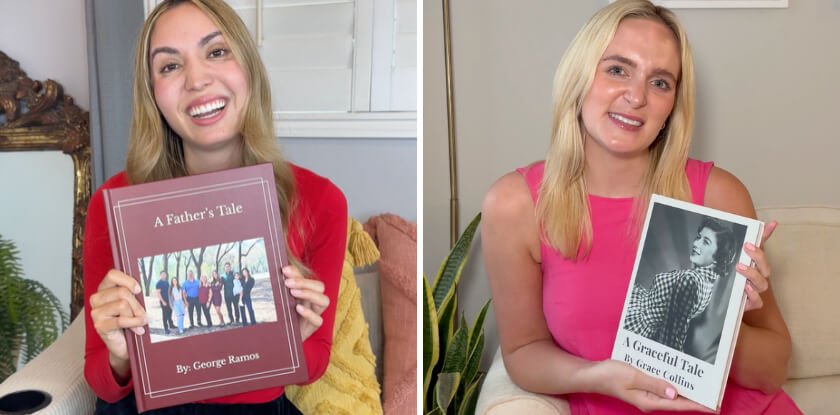
It makes the most sense for:
- Parents Or Grandparents
- Adult Children Buying For Parents
- Grandchildren Buying For Grandparents
- Families With Old Photos
- People Who Like Sentimental Gifts
- Anyone Preserving Family Stories
Memorygram fits buyers who want something more personal than a regular gift. For the right person, it feels useful, thoughtful, and worth keeping.
Who Should Skip Memorygram?
Memorygram is not the right fit for everyone, and that became clear after using it. The product works best when someone is open to sharing memories, so it loses value if the storyteller does not want to take part.
Skip Memorygram if it is for:
- People Who Want An Instant Gift
- Someone Who Does Not Like Personal Questions
- A Recipient Who Rarely Finishes Guided Projects
- Anyone Looking For A Basic Photo Album
- Families Without Time To Add Photos Or Details
- Buyers Who Only Care About The Printed Book
It makes the most sense when the process matters as much as the final book. If the person receiving it has no interest in answering prompts or sharing stories, a simple photo book is a better choice.
Memorygram Pricing: How Much Does It Cost?
Memorygram pricing felt fairly clear when I checked, but I would still treat it like a promotional offer rather than a permanent price. The main thing to watch is the final total, especially if you add extras like more copies or a digital version.
| Pricing Detail | What I Saw |
| Current Offer | Early Father’s Day 20% off |
| Sale Price | $98.80 |
| Regular Price | $123.50 |
| Savings | About $24.70 off |
| Best To Check | Final price before checkout |
The price felt reasonable once I looked at what was included beyond the printed book. Memorygram is not just charging for paper and binding. The cost also covers the guided story process, photo collection, voice memory option, and the final keepsake format. Before ordering, I would still check the checkout page because offers and add-ons can change.
Where I Bought Memorygram
I would not treat Memorygram like a normal product you can safely grab from any marketplace. Since the order is tied to the storytelling process, prompts, photo uploads, and final book creation, the buying experience matters almost as much as the product itself.
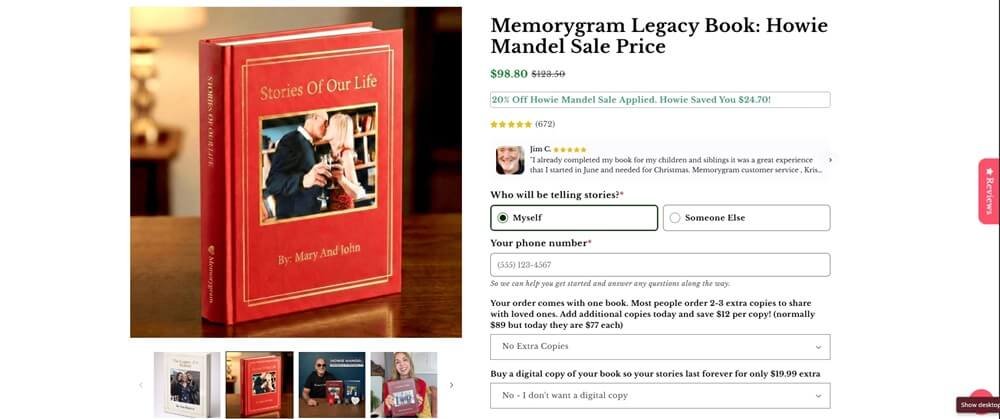
I used the official website because that is where the setup begins properly. It also made it easier to see the current offer, understand what was included, and check the final total before moving forward.
For a product like this, I would be careful with random third-party listings even if the price looks tempting. You are not just buying a book in a box. You are starting a guided memory project, so I would rather order from the place that handles the actual prompts, book process, and customer support.
Is Memorygram Legit?
Yes, Memorygram is legit based on my experience ordering it through the official website. The process felt like a real personalized book service, not a random product page selling a generic keepsake.
A few things made it feel trustworthy:
- Official Buying Process: The order is connected directly to the story collection setup.
- Clear Product Purpose: The service is built around guided memories, photos, and a finished hardcover book.
- Personalized Setup: After ordering, the focus shifts to collecting answers instead of simply waiting for shipping.
- Checkout Details Matter: It is still worth reviewing the current offer, add-ons, delivery details, and refund terms before buying.
Memorygram Reviews From Customers
Along with my own experience, I also looked at the kind of feedback buyers usually focus on with Memorygram. The comments mostly come back to the same idea: people value it most when it helps capture stories they would not have collected on their own.
“I bought it for my dad, and the questions brought up stories I had never heard before. It felt more personal than giving him another regular gift.”
— Maren Whitlock“The book meant more to our family than I expected. The photos were nice, but the written memories were what made it feel special.”
— Dale Hensley“My mom needed a few reminders to keep answering, but once she got into it, she actually enjoyed the process. It became something we talked about together.”
— Lenora Pike“I liked that it gave my grandfather a simple way to share memories without having to write everything from scratch. The prompts made a big difference.”
— Russell Keane“It is not an instant gift, so you need to be patient. But if the person takes part, the final book feels much more meaningful than a normal photo album.”
— Tess Aldridge
FAQs About Memorygram
Buying Memorygram brought up a few small questions that did not fit neatly into the main review, but they still matter before ordering. These are the practical things readers may wonder about once they understand how the service works.
Can You Help The Storyteller Answer Questions?
Yes. I found that Memorygram does not have to be a completely hands-off gift. You can still help by reminding the storyteller, talking through a prompt with them, or helping them find old photos that match the story.
Does Memorygram Feel Too Formal?
Not really. The prompts give the process structure, but the answers still depend on the person’s own voice and personality. It feels more natural when the storyteller answers casually instead of trying to make every response sound perfect.
What Kind Of Photos Work Best?
Older family photos, childhood pictures, wedding photos, travel memories, military photos, holiday moments, and everyday snapshots all fit well. The best photos are not always the cleanest ones; they are the ones with a story behind them.
Can More Than One Family Member Enjoy The Finished Book?
Yes. That is one of the reasons Memorygram feels different from a normal gift. Even though one person may receive it, the finished book can become something siblings, children, grandchildren, and relatives all want to read later.
What Happens If Some Answers Are Short?
Short answers do not ruin the book, but detailed answers make it much better. When a response felt too brief, it helped to ask a follow-up question or add a related photo so the memory had more context.
Memorygram is a guided legacy book service that helps turn someone’s life stories into a finished hardcover book. Instead of starting with a blank page, the storyteller receives thoughtful prompts and can answer them over time by writing, speaking, or using the phone-based option
- Turns family stories into a hardcover book
- Records and preserves loved ones' voices
- Easy phone interviews, no internet needed
- - Downloadable PDF copy
- Extra book copies cost more
Final Verdict: Should You Buy It?
After using Memorygram, it stands out as a meaningful option for preserving family stories in a way that feels more personal than a regular photo book. The biggest value is not just the hardcover book. It is the process of collecting answers, adding photos, and giving those memories a place where the family can actually revisit them.
The voice feature also makes the experience feel different. A printed story is nice, but hearing the person’s voice adds something a normal keepsake cannot match. That is the part that makes Memorygram feel less like a gift item and more like a family record.
This Memorygram review comes down to one simple point: it is best for families who want to preserve stories in a format that feels personal, organized, and worth revisiting. For parents, grandparents, or older relatives who enjoy looking back, Memorygram feels meaningful long after the order is placed.


