
Disclosure: This review contains affiliate links. I may earn a commission if you buy through them, at no extra cost to you. Written by Michael Montoya. Last updated: November 8, 2026.
Spending hours on your feet can leave even a good pair of shoes flat by the end of the day. Liftly Insoles aim at that with what the brand calls 4D Cloud Cushioning, a contoured arch, a shaped heel cradle, and raised massage nodes.
The offer page’s headline is “The Insoles That Relieve Foot Pain Instantly,” and it lists conditions from plantar fasciitis to Morton’s neuroma. That’s a lot to ask of a $29.99 insert, so I wanted to see what holds up, and who’s behind it.
For this Liftly Insoles review, I went through the offer page, the sales articles, the seller’s refund policy, NHS guidance on heel pain, Trustpilot, and BBB.
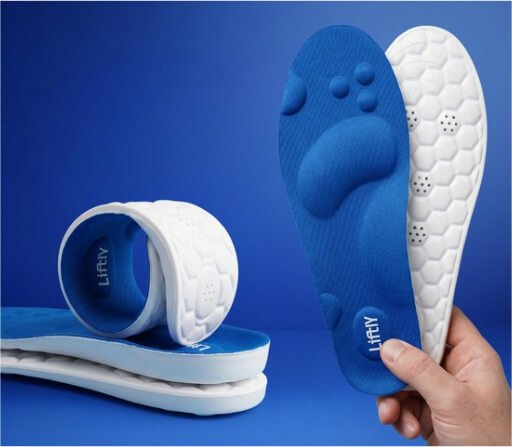
A cushioned, trim-to-fit insole with a shaped arch and heel for long days on your feet. It’s a comfort insert, not a treatment, and returns are strict.
- Cushioned, contoured arch and heel cradle
- Trim-to-fit in two size ranges
- $29.99 a pair, about $15 in a six-pack
- Washable, nothing to charge
- No independent test of the pain claims
- Seller’s Trustpilot page scores 1.7
- Seller’s store policy: unworn only, $15 fee
- Fixed arch height, may crowd tight shoes
Liftly At A Glance: Quick Verdict
Liftly makes sense if you want a cheap, cushioned, trim-to-fit insole with arch and heel support for long days on your feet. I wouldn’t buy it to treat a foot condition, since I found no independent test of it. The seller is the bigger question: Liftly comes from ReAthlete, whose Trustpilot page scores 1.7 out of 5, with complaints about refunds and shipping, and its store refund policy takes back only unworn items, with a $15 fee. I couldn’t read the offer page’s own return terms, so ask before you trim them.
What Liftly Insoles Are and What They Do
Liftly Insoles are full-length inserts that replace your shoe’s own liner and add cushioning and support. ReAthlete is the brand behind them (more on that below).
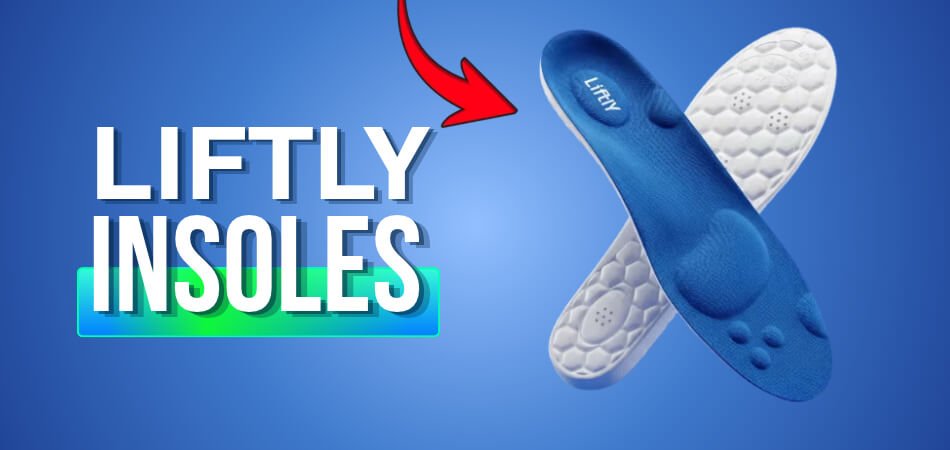
Unlike a basic flat liner, Liftly has raised anatomical contours intended to contact different areas of the foot. Its design includes heel cushioning, midfoot arch support, forefoot support, and raised nodes that the manufacturer describes as providing a massage-like sensation during movement.
| Product detail | Liftly Insoles |
| Product type | Full-length replacement shoe insoles |
| Main technology | 4D Cloud Cushioning |
| Support features | Arch contour, heel cradle, forefoot support, massage nodes |
| Available size ranges | EU 37–41 and 42–47 |
| Installation | Trim-to-fit |
| Warranty | 1 year (terms not published) |
| Best suited for | Buyers seeking additional cushioning and shaped support |
The product is marketed toward people who spend considerable time standing, walking, working, traveling, or participating in everyday activities. Nurses, retail workers, warehouse employees, and frequent walkers are among the audiences likely to find that positioning relevant.
The important distinction is that Liftly is a ready-made, trim-to-fit insole, not a custom-prescribed orthotic. Its outer dimensions can be adjusted, but the underlying support shape is manufactured in advance.
Liftly Insoles Features and Benefits
Liftly’s main appeal comes from combining several cushioning and support features in one replaceable footbed. Each component serves a different intended function, although the actual results will depend on fit and individual comfort.
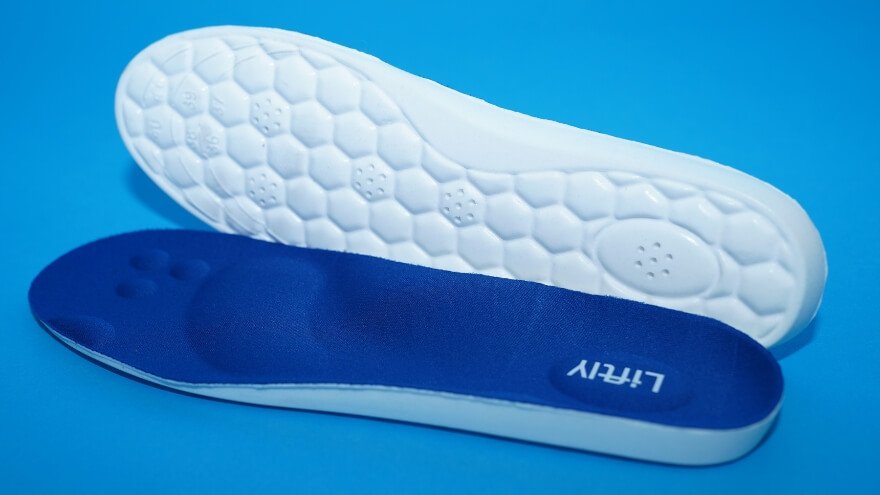
Cushioned Support Across the Footbed
The manufacturer describes its 4D Cloud Cushioning as flexible, responsive foam designed to soften contact during walking and standing. The foam forms the foundation of the insole, while the upper surface provides the area your foot contacts inside the shoe.
A shaped footbed tells you more than a soft surface does, since you can see where the support is meant to go.
Anatomical Support Features
Several specific features distinguish the design:
- 3D arch support: A raised midfoot contour intended to provide contact and support beneath the arch.
- Deep heel cradle: A shaped heel area designed to cushion and cradle the rear of the foot.
- Forefoot support: A contoured section intended to provide additional underfoot contact near the ball of the foot.
- Lateral support zone: An outer-edge contour marketed for improved balance and stability.
- Anatomical Support Nodes: Raised contact points designed to create a gentle, massage-like sensation while moving.
- Trim-to-fit construction: A cuttable outline that makes it possible to adjust the insole to compatible footwear.
It’s a simple insert with nothing to charge or set up. Still, having these parts doesn’t prove every benefit, especially the pain claims.
How Liftly’s 4D Cushioning and Arch Support Work
Liftly’s cushioning system is intended to absorb some of the pressure applied during each step while its shaped contours support different areas of the foot. The manufacturer calls this combination 4D Cloud Cushioning and biomechanical arch support. These are useful descriptions of the intended design, but they are not substitutes for measured performance data.
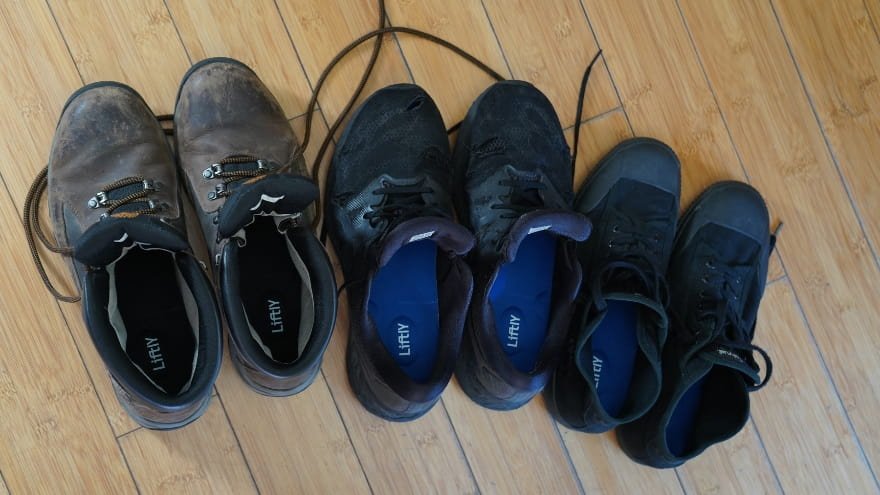
The Cushioning and Support Mechanism
When weight is placed on a foam insole, the material compresses under pressure. Liftly’s foam is intended to provide cushioning during this process and recover as the pressure changes. Its raised arch area and heel cradle add shaped contact surfaces beneath the foot.
The Anatomical Support Nodes add raised contact points instead of a smooth surface. Some people like that, and some won’t. The brand gives labels, not measurements, for its foam and arch.
The Evidence Behind the Technology
Cushioning demos in ads aren’t biomechanical tests, and I found no lab data for this insole.
| Feature or benefit | What the available information establishes |
| Flexible cushioning | Foam construction and flexibility are shown |
| Contoured arch support | Raised support region is visible |
| Heel cushioning | Shaped heel area is documented |
| Improved circulation | Brand claim only; no test found |
| Better body alignment | Brand claim only; no test found |
| Medical pain relief | Brand claim only; no test found |
The design has a clear mechanical purpose. Its more ambitious health claims deserve a higher standard of evidence than promotional images can provide.
Liftly Insoles for Foot Pain: Benefits, Results, and Limitations
Liftly is marketed for tired feet, sore heels, and long hours standing. Cushioning and arch support can help with comfort, but I found nothing showing how much relief you’d get.
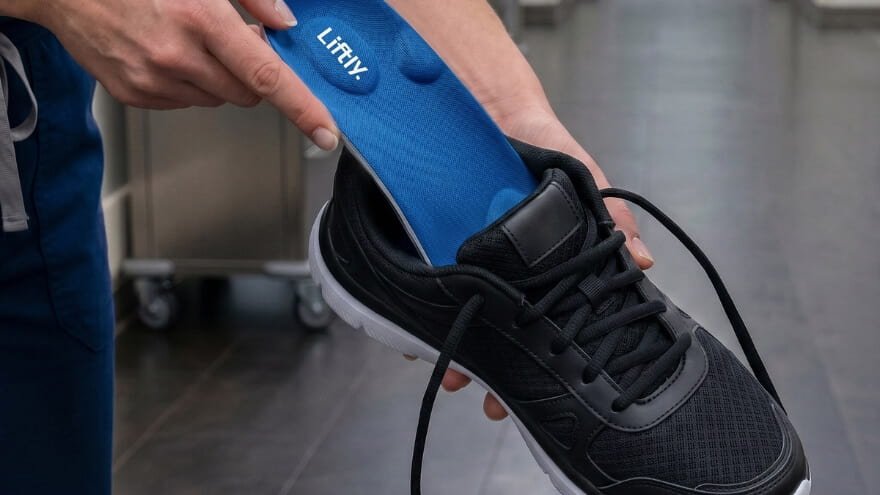
Everyday Comfort and Long Work Shifts
The brand pitches it for long workdays, walking, and travel. Buyer quotes on the offer page describe softer shoes and less fatigue, and they’re the brand’s picks.
I think the fit between design and use matters most. Someone standing through a long retail shift may value heel cushioning more than someone who sits most of the day. Either way, the insole has to work with the shoe.
Plantar Fasciitis and Other Conditions
The offer page lists “Plantar Fasciitis,” “Fallen Arches,” “Morton’s Neuroma,” “Heel Pain,” “Arch Pain,” “Metatarsalgia,” and “Overpronation.”
I found no study on Liftly for any of these. The NHS does list “use insoles or heel pads in your shoes” among things a GP may suggest for plantar fasciitis, so insoles in general are a reasonable thing to try. That isn’t the same as this insole treating it.
The NHS also says to “see a GP if it does not improve within 2 weeks,” and that a podiatrist can recommend insoles and the right shoes. I’d follow that before counting on any ready-made insert.
Who Sells Liftly Insoles?
Liftly is sold through its own offer page, and a press release linked from the brand’s pages says ReAthlete launched it. ReAthlete is the brand behind it, and its own store sells a long list of comfort products, including massagers, cushions, and compression socks. Liftly wasn’t among the store products I checked, so the offer page is the main place to buy it.
That matters because the seller’s record is the part I’d weigh most. ReAthlete’s Trustpilot page scores 1.7 from 23 reviews, with complaints about refunds, return costs, and tracking numbers. Those reviews are about its other products, not insoles. BBB gives ReAthlete LLC a B rating, and it isn’t accredited. I’d go in with one pair, keep your order emails, and read the return rules before you trim anything.
Liftly Insoles Materials, Sizes, and Durability
Liftly is a foam insole with a fabric top. The brand calls the foam responsive and says it holds its support, but I found no material spec or test.
The offer page lists two size ranges, Standard (37-41) and Large (42-47), and you trim to fit.
Construction Quality and Lifespan
The sales article says “Liftly Insoles typically last 12 months or more” with normal daily wear, and the offer page lists a 1-year warranty. I found no independent durability test.
I’d treat that as an estimate. Body weight, activity, and shoes all change how fast foam flattens, so replace them when they look or feel worn.
Main Strengths Of Liftly Insoles
Its main strength is cushioning plus shape. It isn’t one gel pad or a flat liner; the heel, arch, and forefoot are all part of the design.
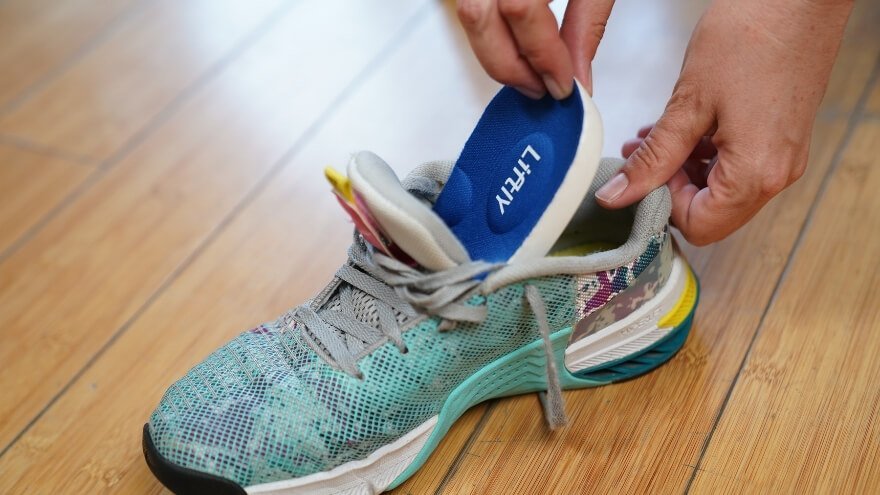
The shaped heel cradle is the most useful-looking part. It gives the heel a defined spot instead of a flat surface, and the arch contour is built in rather than added on.
Trim-to-fit is the other practical point. You can adjust the outline to your shoe, though trimming can’t change the arch height or thickness.
Care is simple too: the brand says it’s “easily washable,” with no batteries or electronics involved.
Liftly Sizing and Shoe Compatibility
Liftly offers two documented size ranges and uses a trim-to-fit design to accommodate different shoe lengths. However, selecting the correct size doesn’t automatically guarantee an ideal fit. The shape of the insole and the available room inside the shoe matter too.
| Size option | Documented EU size range |
| Standard | 37–41 |
| Large | 42–47 |
The brand says “the best way to ensure a perfect fit is to remove your shoe’s original insole first.” Stacking two insoles eats space, and a proper fit means it sits flat.
Arch Height and Available Shoe Space
The brand’s comparison page labels it High for arch height, Max for thickness, and Firm for cushion, with no measurements. “Firm” sits oddly next to the “Soft, Squishy” pitch, and a high, thick insole can crowd a snug shoe.
For shoes with limited internal room, that uncertainty matters. A trim-to-fit outline can shorten or narrow an insole, but it cannot lower its arch contour or reduce the thickness of its cushioning throughout the footbed.
Think about how much room your shoes have before choosing Liftly. The brand says it fits most shoes, but I can’t confirm that from its specs.
Who Should Use Liftly Insoles and Who Should Be Cautious
Liftly is primarily aimed at people seeking additional comfort and underfoot support in their existing shoes. Its features may be especially relevant to buyers who spend long periods walking or standing and want something more contoured than a basic removable liner.
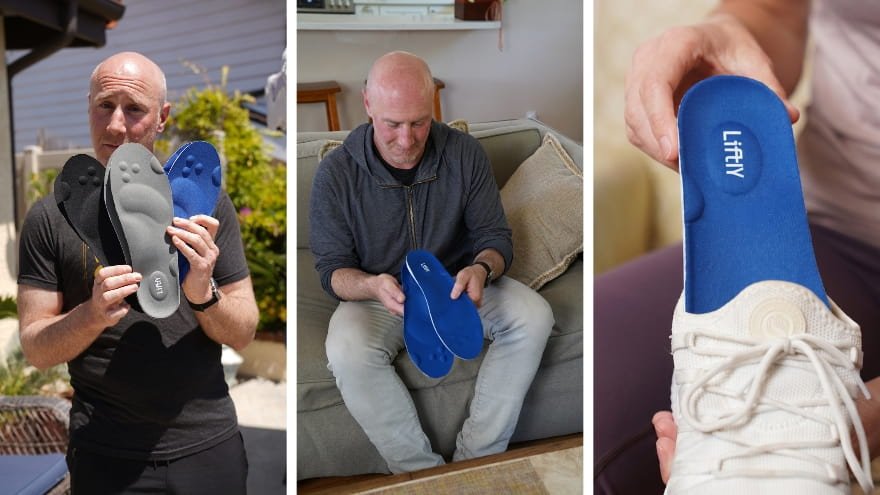
Buyers Who May Appreciate the Design
Liftly may be worth considering for:
- Healthcare, retail, hospitality, and warehouse workers who spend extended periods on their feet.
- Everyday walkers who want an additional cushioned footbed.
- Travelers who prefer supportive inserts in compatible footwear.
- People who find their existing removable shoe liners too flat or minimally cushioned.
- Buyers who prefer a combination of foam cushioning, arch contact, and heel support.
None of this is a promise of less pain. If you work long shifts in one pair of shoes, I’d also give the insoles a chance to dry out overnight.
Buyers Who Need Additional Guidance
People with sensitive feet, reduced foot sensation, pronounced foot deformities, ongoing pain, or prescribed orthotic requirements should be more careful when considering a fixed-shape insole.
I found no material list, arch height, or guidance on who shouldn’t use it.
I wouldn’t assume it suits every foot just because it trims. If you have diabetes or any tingling or loss of feeling in your feet, the NHS says to see a GP.
How to Install, Wear, and Clean Liftly Insoles
Setup is simple: pick your size range, trim if needed, and put it in your shoe.
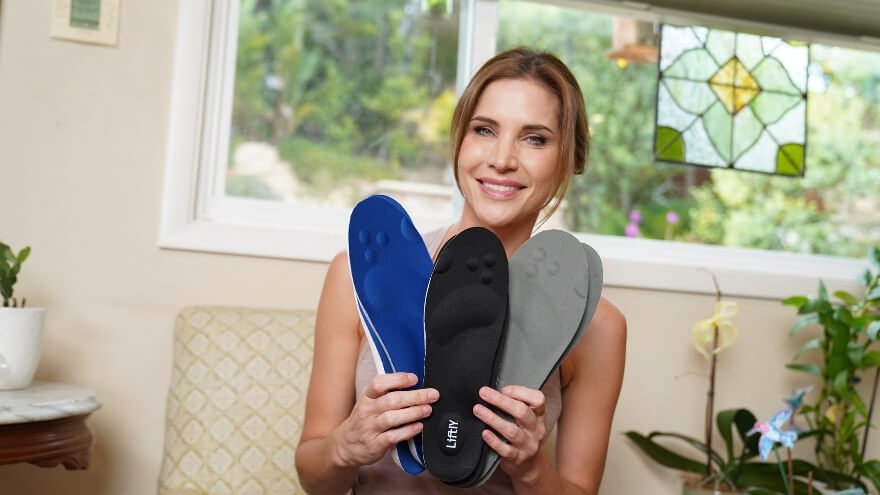
Installing Liftly Insoles
- Remove the original shoe liner. Take out the existing removable footbed to create room for Liftly.
- Choose the appropriate size range. Compare the replacement insole with your shoe’s original liner.
- Trim carefully if necessary. Use the supplied guides or the original liner as a reference, taking care not to remove excessive material.
- Insert the insole correctly. Fabric side up. The brand says to “Slide in the new insole, pressing firmly.”
- Check the fit. Make sure the insole sits flat and the shoe remains comfortable without unusual pressure or crowding.
Wearing and Cleaning
The brand pitches all-day wear, but I found no break-in advice. I’d build up wear time and stop if anything presses or rubs.
For cleaning, the brand only says “easily washable.” I’d hand-wash with mild soap and let them air-dry.
Liftly Insoles vs. Regular Shoe Insoles
Liftly differs from a basic flat shoe liner mainly through its contoured construction. Its raised arch, heel cradle, and anatomical nodes provide a more structured contact surface than the simple flat liners shown in the manufacturer’s comparison materials.
| Feature | Liftly Insoles | Basic flat shoe liner |
| Arch contour | Raised, structured design | Typically limited |
| Heel area | Contoured cradle | Often relatively flat |
| Cushioning | Branded foam cushioning | Depends on material |
| Massage nodes | Included | Usually absent |
| Trimming | Documented trim-to-fit design | Varies by product |
| Individual support fit | Fixed anatomical profile | Depends on design |
This comparison concerns the basic flat-liner category, not every drugstore insole. Many other over-the-counter products also provide substantial arch support, heel cups, and cushioning, so Liftly’s features are not automatically unique.
I’d choose on support profile, shoe fit, and price. I found nothing proving Liftly gives better relief than other arch-support insoles at drugstores.
Tips For Getting The Most Out Of Liftly Insoles
The best way to get practical value from Liftly is to focus on fit, realistic expectations, and regular care. Even a well-designed insole can disappoint when placed inside footwear that doesn’t accommodate its shape.
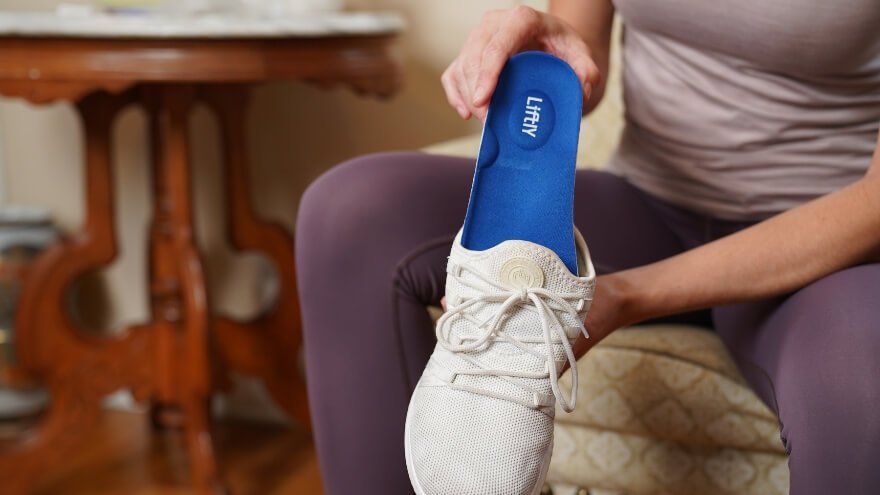
These are the steps I’d focus on:
- Start with the correct size range. Use the documented sizing information rather than relying on appearance alone.
- Remove the existing removable liner. This follows the manufacturer’s installation guidance and helps avoid unnecessary stacking.
- Trim carefully. Make small, controlled adjustments instead of cutting away too much material at once.
- Check the arch position. The built-in contour should feel appropriately positioned rather than creating uncomfortable localized pressure.
- Pay attention to shoe space. An insole that raises the foot too much can make otherwise comfortable shoes feel crowded.
- Keep the insoles clean and dry. The brand gives no washing steps beyond “easily washable,” so let them air-dry after cleaning.
- Watch for changes in cushioning and shape. Don’t rely entirely on the 12-month lifespan when deciding whether an insole needs replacing.
One buying tip matters most: ReAthlete’s store refund policy only takes back items “in new condition: unused, clean, undamaged, and free from stains or signs of wear.” Once you trim or wear them, a return is unlikely, so check fit against your old liner first.
Liftly Pros and Cons
Here’s the short list, for and against.
I think the physical design is the biggest plus. The thin evidence behind the health claims, and the seller’s record, are the biggest minuses.
Liftly Claims Vs What I Found
| Claim | What I found | Where I checked |
| “The Insoles That Relieve Foot Pain Instantly” | I found no test on Liftly. Results with any insole vary. | Offer page |
| Relief for “Plantar Fasciitis,” “Morton’s Neuroma,” and more | The NHS lists insoles among things a GP may suggest for plantar fasciitis, but that’s about insoles in general, not this one. | Offer page, NHS |
| “Walk, Run, Jump & Stand 100% Pain-Free” | No insole can promise that, and the brand shows no evidence. | Offer page |
| “Rated 4.9 | 250,000+ Reviews” | Another page says 4.8 from 10,000+. The seller’s Trustpilot page scores 1.7 from 23. | Offer page, sales article, Trustpilot |
| “you can easily return them, hassle-free!” | ReAthlete’s store policy takes back only unworn items, with a $15 fee and return shipping on you. The offer page’s own return text didn’t open for me. | Offer page, ReAthlete policy |
| “Free Returns” | ReAthlete’s store policy charges a $15 return fee and makes you pay return shipping. | Sales article, ReAthlete policy |
| “typically last 12 months or more” | That’s the brand’s figure, with no wear test I could find. | Sales article |
What Buyers Say About Liftly Insoles
I found no Trustpilot page for the Liftly offer site. The seller, ReAthlete, has a Trustpilot page with a TrustScore of 1.7 from 23 reviews, read November 8, 2026, and none of those reviews is about insoles; they cover its massagers and cushions. BBB lists ReAthlete LLC with a B rating, not accredited. So the only Liftly reviews I can show are the brand’s picks from the offer page, and results vary.
Two happy buyers:
Bobbi F. wrote on the offer page, “No break,in period needed. I wore them all day immediately and felt great.”
Kirk H. wrote, “They absorb impact well when walking on hard surfaces.” On another brand page, the same words are signed “Jean P.,” which is a reason to treat these quotes with care.
And one about the seller:
On Trustpilot, Larie’ wrote in July 2025, “Stand by your product so the customer won’t have to pay out of those fees!”
The complaints worth reading:
The ReAthlete complaints are about other products, but they’re about the same seller. One reviewer wrote in August 2026, “REATHLETE had stated in writing that my refund would be issued within 14 business days after delivery was confirmed.” Another wrote in September 2026, “you sent me a FedEx tracking number that FedEx does not recognize.”
Liftly Insoles Price, Discounts, and Bundle Value
On November 8, 2026, the offer page data showed one pair at $29.99, three pairs at $59.98, and six pairs at $89.97. The page advertises free US shipping “on qualifying offers only,” but its data added $4.99 to every package, so check your total.
Here’s the latest pricing breakdown:
| Package | Sale Price | Price Per Pair |
| 1 Pair | $29.99 | $29.99 |
| 3 Pairs (Buy 2, Get 1 FREE) | $59.98 | $19.99 |
| 6 Pairs (Buy 3, Get 3 FREE) | $89.97 | About $15 |
The six-pair bundle works out to about $15 a pair. The “regular” prices are the brand’s own list prices, so I wouldn’t lean on the 75% figure.
Check the shipping on bundles at checkout, since the data adds it on top.
Choosing the Best Liftly Insoles Package
The six-pair bundle has the lowest price per pair, at about $15. I’d only buy it once you know the insoles suit your feet and shoes.
Here’s who each package suits:
- 1 Pair ($29.99): Best for first-time buyers who want to try Liftly before purchasing additional pairs.
- 3 Pairs ($59.98): A practical middle option for people who use multiple pairs of shoes and rotate a few pairs of shoes.
- 6 Pairs ($89.97): Best per-pair value, particularly for households or buyers who already know the design suits their needs.
You don’t need a bundle to start, and with an unworn-only return policy, I’d start with one pair.
Before you order, check the total, the shipping, and the return terms.
Where to Buy Liftly Insoles: Shipping, Returns, and Warranty
My links go to the offer page, where you can see current prices and bundles.
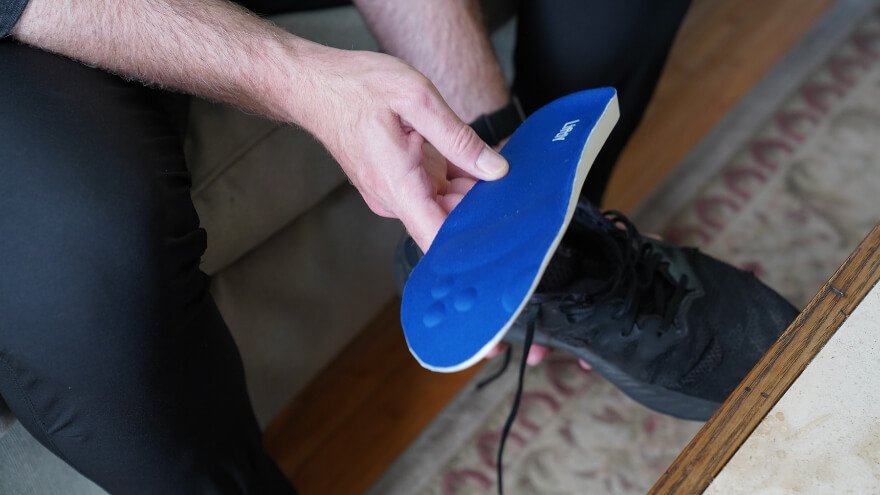
The offer page says “We ship all orders within 24-48 hours,” with US delivery in about 3 to 5 business days. International times vary, and customs may apply.
Liftly Insoles Money-Back Guarantee and Returns
The offer page says “30-DAY MONEY BACK WARRANTY” and promises returns “hassle-free.”
The offer page’s own return text didn’t open for me. ReAthlete’s store refund policy is stricter, and it may or may not cover offer-page orders: “Items must be in new condition: unused, clean, undamaged, and free from stains or signs of wear,” “A $15 return and processing fee applies per order,” and “Return shipping costs are the customer’s responsibility.”
That makes the 30 days useful only if you don’t trim or wear them. I’d email support@reathlete.pro to ask how the guarantee works for worn insoles, and keep the reply.
Liftly Insoles One-Year Warranty Coverage
The offer page says “Each Liftly Insole is proudly backed by a 1-year warranty.” I didn’t find the warranty terms, so I’d expect it to cover defects, not normal wear.
Keep your order confirmation in case you need it.
Frequently Asked Questions About Liftly Insoles
These are the smaller questions I’d want answered, from what the brand publishes plus some general caution.
Will Liftly insoles fit your shoe size and different types of footwear?
The offer page lists Standard (37-41) and Large (42-47), and you trim to fit. Trimming doesn’t change the arch or thickness, so tight shoes may not have room.
Do Liftly insoles really help relieve heel pain and plantar fasciitis symptoms?
It’s marketed for that, and the NHS does list insoles among things a GP may suggest. I found no study on Liftly itself, and results vary. The NHS says to see a GP if it “has not improved after treating it yourself for 2 weeks.”
Are Liftly insoles safe for sensitive feet or people with existing foot conditions?
It’s a simple foam insole, but its arch and raised nodes may not suit every foot. I found no material list or warnings. If you have “diabetes and foot pain” or “tingling or loss of feeling in your foot,” the NHS says to see a GP.
How does Liftly’s 4D Cloud Cushioning and arch support technology work?
It combines foam with raised arch, heel, and forefoot contours. “4D” is brand language, and I found no measurement behind it.
What does Liftly’s 30-day money-back guarantee and one-year warranty cover?
The offer page advertises 30-day money back and a 1-year warranty. ReAthlete’s store refund policy takes back only unworn items, with a $15 fee and return shipping on you. The offer page’s own return pop-up didn’t open for me, so get its terms in writing.
How much do Liftly insoles cost, and which package offers the best value?
The offer page lists $29.99 for one pair, $59.98 for three, and $89.97 for six. I’d buy one pair first.
How long do Liftly insoles last before losing their cushioning and support?
The sales article says about 12 months or more. I found no wear test, so replace them when they look or feel flat.
Are Liftly customer reviews and ratings reliable?
The brand’s pages show “4.8/5 (Based on 10,000+ reviews)” in one place and “Rated 4.9 | 250,000+ Reviews” in another, and the seller’s Trustpilot page scores 1.7 from 23 reviews. I wouldn’t lean on the brand’s numbers.
How should you trim, wear, and clean Liftly insoles?
Remove your shoe’s original insole, pick your size range, and trim a little at a time using the old liner as a guide. Slide it in fabric side up, check that the shoe still feels roomy, and clean it as the brand’s “easily washable” note suggests, letting it air-dry.
Do Liftly insoles help knee, hip, or back pain?
The offer page says the design “reduces stress on your feet, ankles, knees, hips, and lower back.” I found no study on Liftly for any of that. Cushioning and arch support may make long days more comfortable, but for joint or back pain, I’d see a doctor or physiotherapist rather than count on an insole.
Can you move Liftly insoles between shoes?
Yes, they’re loose inserts, so you can swap them between shoes of a similar size. Once trimmed for one shoe, though, they may not fit a longer or wider pair. If you rotate shoes, a second pair trimmed separately is the simpler option, and that’s where a bundle makes sense.
How do Liftly insoles compare with regular drugstore insoles?
Liftly includes a contoured arch, heel cradle, cushioned foam, and raised massage nodes, which distinguish it from a basic flat liner. However, other over-the-counter insoles also offer similar structural features. The best choice depends on footwear fit, support preferences, price, and individual comfort rather than brand claims alone.
Final Verdict: Are Liftly Insoles Worth Buying?
Yes, if you want a cheap, cushioned, trim-to-fit insole for long days on your feet, and you buy one pair to test. I gave it 8.0 out of 10 overall for the design, price, and simple setup. The pain claims with no evidence behind them, the seller’s 1.7 Trustpilot score, and a store refund policy that won’t take back worn insoles are why it isn’t higher. If your heel pain lasts more than two weeks, see a doctor before you rely on any insole.


