
Disclosure: This review contains affiliate links. I may earn a commission if you buy through them, at no extra cost to you. Written by Michael Montoya. Last updated: November 8, 2026.
Lying awake with a racing mind is miserable, and it’s common. Sleeping pills aren’t something most people want to rely on, so a drug-free gadget that helps you wind down sounds appealing.
Dodow is a small bedside device that projects a slowly pulsing light onto the ceiling. You breathe in time with it, and the rhythm slows your breathing down. The offer page headline is “Clear Your Mind… Fall Asleep 2.5x Faster!” Slow breathing as a way to relax is a real, widely used technique, but that headline is a big claim, so I wanted to see what’s actually behind it, what it costs, and who makes it.
For this Dodow review, I went through the offer page and its order data, the brand’s sales articles, Livlab’s own store and return policy, NHS guidance on insomnia, Trustpilot, and BBB.

A bedside light that paces slow breathing to help you wind down at night. A sensible relaxation aid; the bigger sleep claims aren’t proven for this device.
- Simple, drug-free breathing guide
- Silent, with automatic shutoff
- Battery powered and portable
- Maker Livlab scores 4.6 on Trustpilot
- No published trial of the device
- Speed and ‘retrains your brain’ claims not backed
- Not a treatment for insomnia or apnea
- Return window stated as 100 and 30 days
Quick Verdict
Dodow makes sense if your trouble is a busy mind at bedtime and you’d like a simple, drug-free breathing guide. The idea is sound and the maker, Livlab, has a strong Trustpilot score. The catch is the marketing: “2.5x faster,” “SCIENTIFICALLY-PROVEN,” and “retrains your brain” go further than any evidence I found for this device. At $59, I’d try it within the return window and see a doctor if sleep problems have lasted months.
What is Dodow?
The offer page calls Dodow “a light metronome scientifically designed to block out overactive thought patterns.” In plain terms, it’s a disc that sits on your nightstand and shows a soft, slowly expanding and shrinking circle of light on the ceiling. You breathe in as the light grows and out as it shrinks.

The device runs an “8- or 20-minute sleep cycle (shuts off automatically),” and you adjust the light with a “touch-sensitive surface,” per the offer page. The brand’s sales article says it runs on “3-AAA batteries” and comes with batteries in the box.
It’s not a medication, and it doesn’t measure anything. It’s a breathing guide in light form.
Who Makes Dodow?
Dodow is made by Livlab, a French company. The offer page says it’s “proudly made in France and distributed locally in the USA,” and Livlab’s store describes it as designed in France since 2012. The offer page’s support email is support@mydodow.com, and Trustpilot’s mydodow.com page now shows Livlab’s profile.
The Science Behind It
Dodow’s idea rests on slow, paced breathing. The offer page says the light “slows your breathing rate down to 6 bpm and reduces your rate of exhalation.” Breathing slowly, with a longer exhale, is a common relaxation technique used in yoga and stress-management programs.

What I couldn’t find is a published trial of the Dodow device itself. The offer page says it’s “Inspired by 13,000 sleep studies,” which describes the research on breathing in general, not tests of this product. So the technique has a basis, but the device’s own results haven’t been independently shown.
Inspired By Yoga Breathing
The brand links Dodow to yoga. In my own words: yoga has a long tradition of controlled breathing, and slowing the breath is a big part of it. Dodow turns that into a visual cue you can follow with your eyes half closed.
Based On Cognitive Behavioral Therapy (CBT)
The offer page says Dodow combines “yoga, meditation, and behavioral therapy.” That’s marketing shorthand. CBT for insomnia is a structured treatment, usually with a trained professional; the NHS says a GP may offer “cognitive behavioural therapy (CBT)” for insomnia. A light that paces your breathing isn’t CBT, though it may help you relax.
Exhale Longer Than Inhale
The brand says the light “reduces your rate of exhalation,” meaning you breathe out more slowly than you breathe in. A longer exhale is a common feature of calming breathing exercises.
Cardiac Coherence
Livlab’s store says Dodow is inspired by studies on “cohérence cardiaque,” or cardiac coherence, a breathing pace of about six breaths a minute. That matches the offer page’s 6 bpm figure.
Dodow Technical Specifications
The brand publishes few specs. Here’s what its pages state.
| Spec | What the brand says |
| Brand / maker | Dodow, by Livlab (France) |
| Power | 3 AAA batteries, per the sales article |
| Programs | 8-minute and 20-minute cycles, automatic shutoff |
| Controls | Touch-sensitive surface for light brightness |
| Ages | “from the age of 6 up,” per the offer page |
| Size, weight, brightness | Not stated on the pages I read |
How Does Dodow Actually Work?
The offer page describes three steps: “Place Dodow on Nightstand,” “Choose Your Cycle,” and “Watch The Light As It Lulls You To Sleep.”

You lie on your back and look at the circle of light on the ceiling. As it grows, you breathe in; as it shrinks, you breathe out. The rhythm starts a bit faster and slows over the cycle, so your breathing slows with it.
Following the light also gives your mind one simple thing to focus on, which the brand says helps “eliminate those racing thoughts.” That part is similar to counting or other focus exercises. When the cycle ends, the light turns off and you’re meant to drift off.
Features Of Dodow
Here are the features the brand lists, with what they mean in practice.
Train Your Breathing
The brand claims “with regular use, Dodow retrains your brain to naturally fall asleep on its own again.” I found no study showing that for this device. Practicing slow breathing may become a habit you can do without the light, which is likely what the brand means.
Light Metronome
The light works like a metronome for your breath, steady and predictable, which is the core of the product.
Blue Light
The device uses a soft blue light. That’s worth a thought, because the NHS advises “do not watch television or use devices, like smartphones, right before going to bed, because the blue light makes you more awake.” Dodow’s light is meant to be dim and on the ceiling, not a screen in your face, and it shuts off on its own. Still, keep the brightness low with the touch surface, and if light of any kind keeps you up, it may not suit you.
Two Sleep Cycles
The “8- or 20-minute sleep cycle” lets you pick a short or longer session.
Touch-Sensitive Surface
The offer page says you adjust the light through a touch-sensitive surface.
Battery Powered
The sales article says it runs on AAA batteries. The offer page, oddly, also says “just plug it in,” so the power details aren’t consistent across the brand’s pages; check the box when it arrives.
Wireless and Portable
The offer page says “With no cords to lug around, Dodow is perfect for business trips, vacations.” It’s small enough to pack.
What Buyers Report, and What’s Realistic
Results from a relaxation aid vary a lot from person to person, so I looked at what buyers say. Quotes from the brand’s site are ones it chose to show.
Falling Asleep Faster
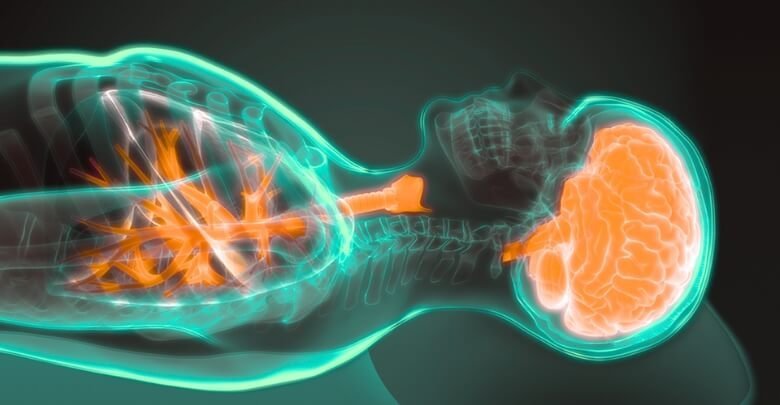
The brand claims “Fall Asleep 2.5x Faster!” Brand-picked buyer Janet A. wrote, “Dodow has helped me fall asleep much more efficiently than ever before!” A Trustpilot reviewer, quoted below, says it helped her insomnia. I found no independent measurement of how much faster.
A Calmer Body and Mind
Slow breathing is widely used to help people relax. That’s the realistic benefit: a few minutes of quiet focus before sleep.
Quieting a Busy Mind
Andras wrote on Trustpilot in May 2025, “The gentle light it projects gives me something simple to focus on.” That fits the design.
Night Awakenings
You can restart a cycle if you wake at night. That’s a reasonable use, though the brand’s “stay asleep” claim isn’t backed by a study I found.
Sensitivity to Noise
Dodow makes no sound, so it won’t mask noise. Focusing on the light may help some people ignore background sounds, but earplugs or white noise do that job more directly.
A Bedtime Ritual
A fixed wind-down routine is something sleep advice often recommends. The NHS suggests you “relax at least 1 hour before bed – for example, take a bath or read a book.” Dodow can be one part of a routine like that.
Who Should Use Dodow?
It fits people whose main trouble is winding down, not people with a medical sleep disorder.

Overthinking at Night
This is the clearest fit. If your mind races when the lights go off, a simple focus task may help.
Waking Up in the Night
You can restart a cycle if you wake, which some people find helpful.
Stress and Worry
Slow breathing is a common relaxation tool. If stress or anxiety is ongoing or severe, talk to a doctor; a light isn’t a treatment.
Long-Term Insomnia
The NHS says to “See a GP if” “you’ve had trouble sleeping for months.” It also notes a GP may offer CBT. I’d use Dodow alongside that advice, not instead of it.
Snoring or Breathing Pauses
The NHS lists “snoring or interrupted breathing while sleeping” as a possible cause of poor sleep. That’s a reason to see a doctor, not to buy a light.
Restlessness
If you’re restless rather than anxious, a fixed bedtime and a quiet routine may help more than any gadget.
Why Slow Breathing Can Help: A Look at the Nervous System
Slow breathing with a long exhale is widely used to help the body shift toward a calmer state. That’s the general idea Dodow builds on.
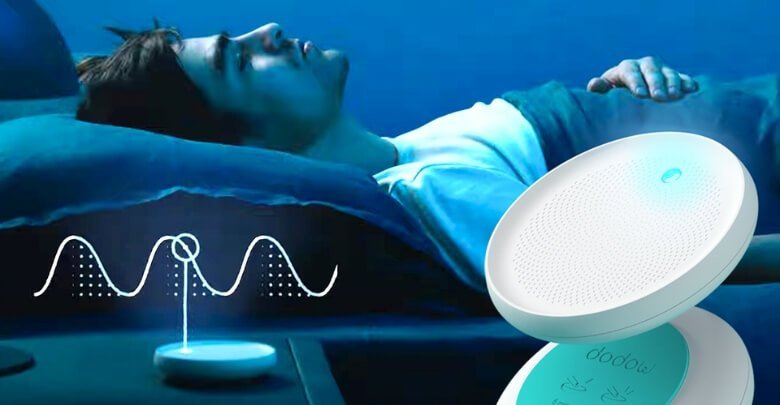
The offer page goes further, saying the breathing “lulls your mind and body into a deep, restful sleep.” I found no Dodow-specific study measuring that. The fair version is that slow breathing may help you relax, and relaxing can make it easier to fall asleep.
How to Use Dodow, Step by Step
The brand’s steps are short. Here they are in a little more detail, with the cautions I’d add.
Step 1: Set it up
Put the batteries in, if they aren’t already, and place Dodow on your nightstand so the light reaches the ceiling above your pillow. The brand says to “Place Dodow on Nightstand.”
Step 2: Pick a cycle
Choose the 8-minute or 20-minute cycle. The short one suits nights when you’re nearly asleep; the longer one gives a racing mind more time.
Step 3: Dim the light
Use the touch surface to set the light as low as you can still see. A dim light is easier to follow with half-closed eyes and less likely to wake you.
Step 4: Breathe with the light
Lie on your back. Breathe in as the circle grows and out as it shrinks. Don’t force deep breaths; just follow the pace.
Step 5: Let it switch off
When the cycle ends, the light goes out. If you’re still awake, you can start another cycle or simply rest.
A Simple Bedtime Routine Around Dodow
A device works best as part of good sleep habits. The NHS says “Insomnia usually gets better by changing your sleeping habits,” and lists a few things to do and avoid.
The NHS suggests you “only go to bed when you’re sleepy,” “wake up and get out of bed at the same time every day,” and “make sure your bedroom is dark and quiet – use curtains, blinds, an eye mask or ear plugs if needed.”
It also advises “do not smoke or drink alcohol, tea or coffee at least 6 hours before going to bed,” “do not eat a big meal late at night,” and “do not nap during the day.”
Dodow fits in at the very end of that routine, once the lights are out. If late coffee or screens are keeping you awake, fixing those will likely matter more than any gadget.
When to See a Doctor Instead
A bedtime gadget is fine for occasional trouble winding down. Some sleep problems need more than that.
The NHS says to see a GP if “changing your sleeping habits has not helped your insomnia,” if “you’ve had trouble sleeping for months,” or if “your insomnia is affecting your daily life in a way that makes it hard for you to cope.” In the US, your primary care doctor is the equivalent first stop.
The NHS is also cautious about over-the-counter sleep products. It says pharmacy sleeping aids “cannot cure insomnia but may help you sleep better for 1 to 2 weeks,” and advises “Check with your doctor before taking anything for your sleep problems.” Dodow has no drug in it, which is a plus. My own view, not NHS advice: if any quick fix isn’t enough after a few weeks, get help for the cause.
Dodow vs Breathing Apps and White Noise
Dodow isn’t the only way to wind down. Here’s how it compares with two common options, in general terms.
| Point | Dodow | Breathing app | White noise machine |
| How it helps | Paces slow breathing with light | Paces breathing with sound or visuals | Masks background noise |
| Screen in bed | No | Usually yes, on your phone | No |
| Sound | Silent | Often guided audio | Constant sound |
| Cost | $59 one time | Free to paid | Varies |
If noise is what wakes you, white noise or earplugs fit better. If you want breathing guidance without a phone in bed, Dodow’s design makes sense.
Is Dodow Worth $59?
For what it is, a light with two timers, $59 plus $5.99 shipping is a lot. You could practice the same slow breathing for free by counting, or with a breathing app.
What you pay for is convenience: a cue you don’t have to count yourself, on the ceiling instead of a phone screen, with no notifications pulling you back into your day. For some people, that difference is the whole point.
If you’ve tried counting breaths and your mind keeps wandering, Dodow’s visual cue may be worth trying. If you already sleep fine most nights, it’s probably not worth the money. And if you buy one, give it a fair run of several nights before deciding.
Pricing of Dodow Sleep Aid Device
On November 8, 2026, the offer page data listed:

| Package | Offer price | Offer page “was” price | Per unit |
| 1 Dodow | $59.00 plus $5.99 shipping | $59.00 | $59.00 |
| Buy 1, Get 1 50% OFF | $88.50 | $118.00 | $44.25, free shipping |
| Buy 2, Get 1 FREE | $118.00 | $177.00 | about $39.33, free shipping |
For one person, the single unit is enough. The bundles make sense only for family members or gifts.
Where Can You Buy It?
My links go to the Dodow offer page. Livlab also sells Dodow on its own store, livlab.care, which showed prices in euros for my location.

The offer page promises “TRY IT FOR 100 DAYS!” and a “100-DAY MONEY BACK GUARANTEE.” Livlab’s return policy for its own store extends returns to “one hundred (100) days for HoomBand and Dodow,” and says returned items must be “in good condition, including the original packaging and all accessories provided.” The offer’s order data, though, lists a 30-day return window, with the item returned first.
The brand’s sales article also says “by the end of 30 days.” So I’d plan on returning within 30 days to be safe, keep the box, and email support@mydodow.com to confirm the window for an offer-page order.
What’s Included with the Dodow?
Based on the brand’s pages, you get the Dodow device, and the sales article says “it comes with batteries so it works right out of the box.” Livlab’s store sells a travel case separately and as a bundle. I found no full box list for the offer package, so check the order summary. The offer’s checkout data includes an upsell to “Add a LIFETIME Warranty on ALL your Dodow(s) for only $10.” Livlab’s store sells one too. The standard warranty isn’t stated, so ask support what’s covered if a fault appears.
Pros and Cons of Dodow
The short version, from the brand’s pages and what buyers report:
What Sets Dodow Apart From Other Sleep Aids?
Most sleep aids are pills, sound machines, or apps. Dodow sits in a small group of breathing-guide devices.
Automatic Shutoff
It turns off after 8 or 20 minutes, so there’s no light left on all night.
Silent
It makes no noise, which suits a shared bedroom better than a sound machine.
No Screen
Unlike a breathing app on your phone, you don’t have to look at a screen in bed. Livlab’s store calls it “sans ondes, ni écran,” meaning without waves or a screen.
If you’d rather not spend $59, you can practice slow breathing on your own by counting your breaths. Dodow’s appeal is that the light does the counting for you.
Dodow Customer Reviews
Every quote here is labeled with where it came from.

On Trustpilot, the mydodow.com page now shows Livlab’s company profile, checked November 8, 2026: a TrustScore of 4.6 from 4,073 reviews, 68% five stars and under 1% one star. That covers Livlab’s other products too, such as the Hoomband. The profile is claimed. BBB showed no listing for Dodow, and the Livlab results there were unrelated US companies.
Two happy buyers, from Trustpilot:
Rachel Wong wrote in June 2025, “Dodow has greatly helped me with my insomnia.”
Andras wrote in May 2025, “Dodow has made a real difference.”
And one about support:
Sara Knudsen wrote in June 2025, “I reached out to LIVLAB’s customer service about my Dodow.”
The complaints worth reading:
The one-star review I noted on that page was about a different Livlab device, the HoomKid: “did not work after charging no sound.” I found few independent complaints specific to Dodow.

Dodow Claims Vs What I Found
| Claim | What I found | Where I checked |
| “Fall Asleep 2.5x Faster!” | No study of the device is shown. | Offer page |
| “SCIENTIFICALLY-PROVEN” and “Inspired by 13,000 sleep studies” | The studies are on breathing in general, not this device. | Offer page |
| “DOCTOR-RECOMMENDED” | The page names one sleep doctor; no statement from him is shown there. | Offer page |
| “retrains your brain to naturally fall asleep” | No evidence shown. | Offer page |
| “100-DAY MONEY BACK GUARANTEE” | Livlab’s store policy says 100 days for Dodow; the offer’s order data says 30. | Offer page, Livlab policy, order data |
Frequently Asked Questions
These are the smaller questions I’d want answered, from what the brand publishes plus common sense.
Is Dodow Effective?
It may help you relax and fall asleep if a busy mind is your problem. I found no published trial of the device, so results vary and aren’t guaranteed.
What’s the Best Sleeping Position for It?
On your back, looking at the ceiling, since you follow the light there. If you sleep on your side, you can turn over once the cycle ends.
Does Dodow Come With a Money-Back Guarantee?
The offer page promises 100 days, and Livlab’s store policy gives Dodow 100 days, but the offer’s order data shows 30. Plan on 30 to be safe and confirm with support.
Is It Suitable for Children and Older Adults?
The offer page says it’s suitable “from the age of 6 up.” For a child with ongoing sleep problems, talk to their doctor first.
Who Makes the Dodow Sleep Aid?
Livlab, a French company. The offer page says it’s “proudly made in France.”
Does Dodow Help With Sleep Apnea?
No. Snoring or pauses in breathing at night are a reason to see a doctor, as the NHS notes.
Is Dodow Safe?
No safety issues are listed on the brand pages I read, and it has no drug, sound, or contact with your body. Keep the brightness low, keep batteries away from small children, and stop using it if the light keeps you awake rather than calming you.
Does Dodow Help With Anxiety?
Slow breathing is a common way to calm down, so it may help with bedtime worry. It isn’t a treatment for an anxiety disorder; if worry is affecting your daily life, talk to a doctor.
Can You Return an Opened Dodow?
Within the return window, if it’s in good condition with its original packaging; see the return section above. Livlab’s policy also says “Return fees are generally payable by the customer” unless the item was defective.
Will the Light Bother a Partner?
It might. The light is on the ceiling, so a partner may see it. Turning the brightness down helps, and it shuts off after 8 or 20 minutes.
Can You Use Dodow for Naps?
You can, but the NHS advises “do not nap during the day” if you have insomnia, so I’d keep it for bedtime.
How Long Do the Batteries Last?
The brand doesn’t give a battery life on the pages I read. Keep spare AAA batteries in the nightstand.
Does Dodow Help With Jet Lag?
The offer page says it’s “super helpful for jet lag and other acute sleep problems.” It may help you relax in a hotel room; it doesn’t reset your body clock.
Can You Use Dodow With Sleep Medication?
It’s a light, not a drug, so the device itself adds no medicine to what you take. If you take sleep medication, follow your doctor’s advice about it.
Final Verdict: Is Dodow Worth Buying?
Yes, if a busy mind keeps you awake and you want a simple, drug-free way to slow your breathing at bedtime. I gave it 8.0 out of 10 overall for the sound idea, the easy design, and the maker’s strong Trustpilot record. It isn’t higher because the speed and science claims go beyond any evidence for the device, and the offer’s return window is stated two ways. Try it within 30 days, and see a doctor if poor sleep has lasted months.


