
Disclosure: This review contains affiliate links. I may earn a commission if you buy through them, at no extra cost to you. Written by Michael Montoya. Last updated: November 8, 2026.
A glass of wine with dinner used to be a simple pleasure. For a lot of people it now comes with a question: what is this doing to my liver, my sleep, and my next morning? A whole shelf of supplements has grown up around that worry, from one-off hangover pills to daily liver formulas.
Cloud 9 Daily Restore sits in the daily camp. The offer page’s headline promises you can “Take Control” without quitting alcohol. That’s a big promise. So I wanted to know what’s actually in the bottle and how much of each ingredient. I also wanted to see what the brand’s own trial did and didn’t show, what it costs, and how the guarantee works.
I went through the offer page and its FAQ, the brand’s product, about and policy pages, and its Supplement Facts. I checked Trustpilot and the BBB, and I read what the National Center for Complementary and Integrative Health (NCCIH) says about two of the main ingredients, milk thistle and ashwagandha.
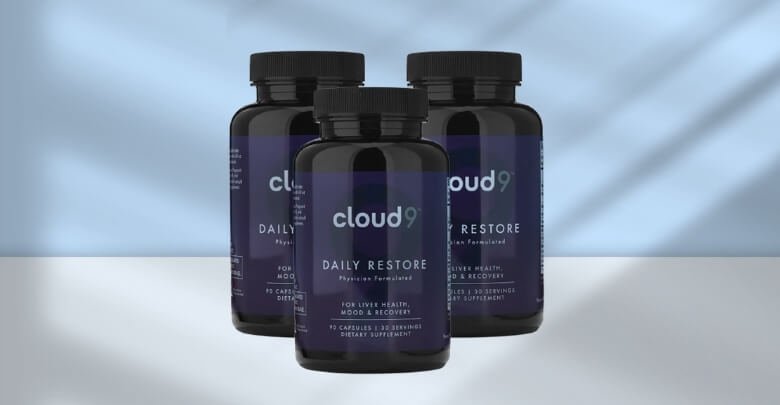
A daily four-capsule supplement for people who drink, with milk thistle, NAC, DHM, B vitamins and mood ingredients, all listed with amounts. Strong refund policy; the liver evidence is still unsettled.
- Every ingredient amount on the label
- 180-day refund, even on opened bottles
- BBB A rating, no complaints
- No caffeine or stimulants
- Cancel subscriptions with no fees
- Brand trial had no placebo group
- Four capsules a day
- Offer page shows 60 days, policy says 180
- No Trustpilot reviews yet
- Ashwagandha not for everyone
Quick Verdict On Cloud 9 Daily Restore
Cloud 9 Daily Restore is a daily supplement for people who drink and want to support their liver, replace B vitamins, and steady their mood. The label lists every ingredient with its amount, the brand has a BBB A rating, and its refund policy gives you 180 days, even on opened bottles. That’s a better setup than most supplements I look at.
The catch is the evidence. The brand’s own 12-week trial had no placebo group, as its FAQ admits, and NCCIH says liver trials of milk thistle “have been conflicting or too limited to allow conclusions to be reached.” It’s also four capsules a day, not one or two. I’d see it as a reasonable, well-labeled supplement with a strong guarantee, not proven liver protection, and certainly not a license to drink more.
What is Cloud 9 Daily Restore?
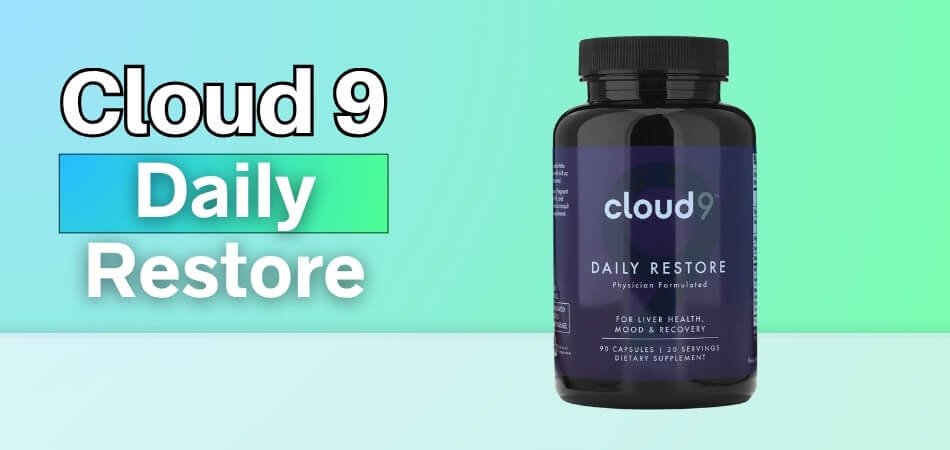
Cloud 9 Daily Restore is a dietary supplement from Cloud9, the brand name of Rebound LLC. The product page calls it “A doctor-formulated daily capsule for people who drink” and says it “supports healthy liver enzymes, replaces the nutrients alcohol drains, and helps you wake up clear.”
It isn’t sold as a hangover pill you take the morning after. The brand wants you to take it every day, even on days you don’t drink, because several of its nutrients “work cumulatively.” Its FAQ recommends “taking it daily for at least 90 days.”
The formula mixes three groups: liver-support ingredients (milk thistle, NAC and DHM from vine tea), B vitamins (B1, B12 and folate), and mood ingredients (5-HTP, L-tyrosine, L-theanine and ashwagandha). One daily dose is four capsules, and a bottle holds 30 doses.
Like every supplement, it carries the standard line: “These statements have not been evaluated by the Food and Drug Administration. This product is not intended to diagnose, treat, cure, or prevent any disease.”
What’s In One Four-Capsule Dose
The good news is that nothing is hidden. The Supplement Facts on the brand’s product page list every ingredient with its amount per four-capsule dose, with no proprietary blend. Here’s what’s in one daily dose, in the label’s own terms:
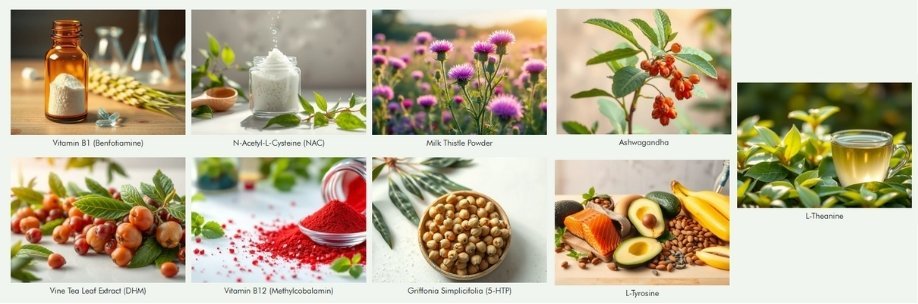
- Benfotiamine (vitamin B1), 500 mg: a form of vitamin B1. The label puts it at 41,700% of the Daily Value.
- Milk thistle powder, 350 mg: the home page says it’s “standardized to 80% silymarin,” though the Supplement Facts list only “Milk Thistle Powder.” NCCIH says “The main constituent of milk thistle extract is silymarin, a mixture of compounds.”
- NAC (N-acetyl L-cysteine), 350 mg: the home page calls it “a building block of glutathione,” an antioxidant your body makes.
- Organic ashwagandha powder (root), 300 mg: an herb the brand groups with its mood ingredients.
- L-tyrosine, 300 mg: an amino acid, also in the mood group.
- Vine tea leaf extract, 200 mg: standardized to 98% dihydromyricetin, the DHM the brand names on the offer page.
- Vitamin B12 (as methylcobalamin), 500 mcg: 20,833% of the Daily Value, per the label.
- Folate, 680 mcg DFE: from 400 mcg of L-5-MTHF-Ca, an active form of folate; 170% of the Daily Value.
- Griffonia simplicifolia seed extract, 50 mg: standardized to 99% 5-HTP. The brand’s FAQ says, “The 5-HTP amount is kept low.”
- L-theanine, 50 mg: an amino acid the FAQ links to “a calm, steady feeling without making you drowsy.”
- Sea salt (75 mg) and potassium (90 mg, as potassium chloride): small amounts of minerals.
The other ingredients are microcrystalline cellulose and silicon dioxide, and the product page says the capsules are vegan. The B-vitamin percentages are very high. If you already take a B-complex or a multivitamin, add up what you get from both and show the totals to your doctor or pharmacist.
What The Brand Says To Expect In The First Week
I can only check what the brand puts in writing, so this section follows the brand’s own account of the first week. The product page has a timeline titled “Better mornings build week by week,” and it’s clear that it’s “Based on what customers report. Individual results vary.”
Easier Mornings, Per The Brand
For week one, the timeline lists “More energy in the morning.” The FAQ says, “Many customers notice easier mornings within the first week or two.” That’s customer feedback the brand collected, not a measured result, so I’d treat it as a hope rather than a promise.
A Clearer Head After Drinking Days
The same week-one list includes “A clearer head after drinking days.” The offer page goes further, with “Clears brain fog and improves energy” near the top. I found no test on the brand’s pages that measures brain fog in the first week, so this one rests on customer reports.
B Vitamins Coming Back Up
The third week-one point is “B1, B12 and folate start coming back up.” That’s the most plausible early change, since the dose of each is high. The brand doesn’t show blood levels for it, though; its at-home blood test, sold separately for $139, is how it suggests you check your own numbers.
What The Trial Reported By Week Four
The product page says, “In our 12-week clinical trial, 78% already reported waking refreshed more often by week 4.” That figure is self-reported, from a trial with no placebo group, which matters for anything as subjective as how a morning goes.
Your Drinking Habits Still Matter
The brand is direct about this. Its FAQ asks, “Does this make it OK to drink more?” and answers, “No.” It adds, “Drink better, not more.” I agree with that line, and it’s a fair reminder that no supplement cancels out what alcohol does.
Weeks 2–12 And Everyday Use
The rest of the timeline runs from week two to week twelve, and I’ve added what I make of each stage.
Weeks 2–3: Less Brain Fog And Better Sleep
For weeks two and three, the timeline lists “Less brain fog,” “Deeper, more restful sleep” and “Mornings that feel easier.” Again, these are customer reports. Sleep and fog depend on so much, including how much you drink and when, that I wouldn’t pin a change on any one capsule without more evidence.
Weeks 4–6: Steadier Energy
The next stage lists “Steadier energy all day,” “Less bloating” and “Fewer rough mornings after a night out.” By week 12, the brand’s trial reported that 83% “had less next-day fatigue.” That’s a week-12 figure, not a week-six one, and the same caveat about the missing placebo group applies.
Weeks 7–12: The Long Game
The last stage lists “Ongoing liver support from daily use” and calls it “A good time to recheck your bloodwork.” I like that the brand points you to a blood test rather than asking you to take its word for it. If your liver numbers worry you, though, that’s a conversation for your doctor first.
Possible Side Effects
The brand’s pages don’t list side effects. NCCIH does for two ingredients. For milk thistle, it says, “The most common side effects are digestive symptoms such as bloating, nausea, and gas.” For ashwagandha, it says it “may cause drowsiness, stomach upset, diarrhea, and vomiting” in some people. One verified buyer on the product page also wrote, “My only complaint is the capsule size.”
A Daily Habit, Not A Morning-After Pill
It’s easy to read past this, but the dosing is daily. The FAQ says to take the dose “every day, including days you don’t drink,” and “On drinking days, take it earlier in the day.” If you miss a day, “pick back up the next day. There’s no need to double up.” So it’s a commitment, not something you grab after a big night.
The “Plant-Based” Label
The offer page says “100% Plant-Based | Non-GMO.” The plant ingredients on the label are milk thistle, ashwagandha, vine tea and griffonia. The rest are vitamins, amino acids and minerals, and the label doesn’t say where those come from. The offer page’s FAQ also says the formula is “not classified as organic,” even though the label lists organic ashwagandha.
Four Capsules, Not Two
The old version of this review said two capsules a day. The current Supplement Facts say “Serving Size 4 Capsules” and “Servings Per Container 30,” and the FAQ says, “1 Daily Dose is 4 capsules.” You can take them together or split them across the day, “with a meal.”
Doctor-Reviewed, And By Whom
The brand says its formula was “reviewed by Dr. Brooke Scheller, a Doctor of Clinical Nutrition and our Cloud9 Health Advisor from the start,” and that “Two independent doctors reviewed it too.” The home page names them as Dr. Eric Wood, a naturopathic doctor, and Dr. Samuel Sarmento, MD. An earlier version of this page named another doctor whom I couldn’t find on the brand’s pages, so I’ve left that name out.
On sales, the offer page says “Over 150,000 Bottles Sold.” The about page says “2.5M+ doses delivered.” At 30 doses a bottle, 2.5 million doses equals about 83,000 bottles, so the two figures don’t line up. I can’t check either, and I wouldn’t let either one decide for you.
Pros and Cons
It weighs up like this, based on the brand’s pages, its policies, and the independent records I checked.
What’s Behind The Science Claims
The offer page says that every ingredient is backed by human clinical studies, without naming them there; the product page gives a few examples. This is what I could and couldn’t confirm about the evidence.
- The brand’s own trial: the about page says “An independent clinical research company ran our 12-week clinical trial” and that it “measured liver enzymes and next-day symptoms at the start and again at week 12.” The home and product pages report that 75% “had a decrease in at least one liver enzyme,” 92% “woke up feeling refreshed more often,” 83% “had less next-day fatigue” and 81% “focused better,” at week 12. The product page adds two details that matter: the 75% means “3 out of 4 people with paired blood tests,” and “Most people started in a normal range.” The pages I read don’t name the research company or say how many people took part.
- Ingredient studies: the product page lists “A few examples” of outside research, including a review of “clinical trials on milk thistle and liver health,” a “placebo-controlled DHM trial” in 60 adults and a “benfotiamine (vitamin B1) trial on alcohol dependence” with 120 people. Those test single ingredients, not this product.
- No placebo group: the brand’s FAQ says, “Our 12-week study didn’t have a placebo group: everyone took Daily Restore and was compared with their own starting point.” I give the brand credit for saying so. It does mean the results can’t separate the supplement from other changes, such as drinking a little less during a study.
- What NCCIH says about milk thistle: “Results from clinical trials of milk thistle for liver diseases, such as alcohol-related liver disease, hepatitis B and C, non-alcoholic fatty liver disease,” and others “have been conflicting or too limited to allow conclusions to be reached.” It adds that two studies it funded, on hepatitis C and on a progressive form of fatty liver disease, “did not show benefits from supplementation with the milk thistle extract silymarin.”
- A note on supplement quality: NCCIH also says some milk thistle products “have been found to contain amounts of silymarin substantially different from what’s stated on the label.” Cloud9 says its batches are “third-party lab tested,” but the pages I read don’t show the test results.
The old version of this review said the formula is built on Harvard-backed protocols and that 10 to 25 clinical studies back each ingredient. I found neither on the brand’s current pages, so I’ve removed both. What’s left is a fully listed formula, a brand-run trial with honest limits, and ingredients whose liver benefits aren’t settled.
How Safe Is It to Use?
Safety is where I’d slow down, because this product mixes a dozen listed ingredients and is meant for daily, long-term use.
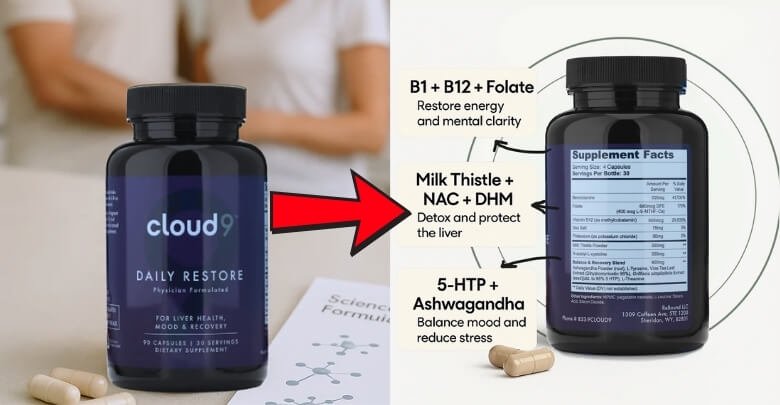 A brand image of an older label. The front reads 90 capsules and 30 servings, while the back label shows 4 capsules per serving and 30 servings per bottle, and also a Balance & Recovery Blend. The current Supplement Facts on the brand’s site list every amount, at 4 capsules and 30 servings, which would be 120 capsules. Check the label on the bottle you receive.
The Ingredient Amounts Are Listed
Because every amount is on the label, you or your doctor can check each one against what you already take. That’s the single most useful thing a supplement label can do, and many don’t.
What NCCIH Says About Ashwagandha
NCCIH says ashwagandha “may be safe when taken in the short term (up to 3 months)” and that “There is not enough information to allow conclusions about its long-term safety to be reached.” It adds that “there have been a number of cases that link liver injury to ashwagandha supplements,” though it calls that rare. It says ashwagandha “should be avoided during pregnancy,” and is “not recommended” before surgery or for people “who have autoimmune or thyroid disorders.” Since the brand recommends daily use for at least 90 days, that 3-month line is worth knowing.
Medicines And Ashwagandha
NCCIH also says ashwagandha “might interact with some medications,” naming those for diabetes and high blood pressure, immunosuppressants, sedatives, anti-seizure medicines and thyroid hormone medicines. For milk thistle, it notes possible “allergic reactions, particularly among people who are allergic to related plants,” such as ragweed.
Prescription Medicines, Pregnancy And Nursing
The brand’s FAQ says, “If you take prescription medication, especially for mood or sleep, or you’re pregnant or nursing, show the Supplement Facts to your doctor before you start.” Its product page also says it’s not for you if “You’re pregnant or nursing” or “You need treatment for a medical condition.”
No Caffeine Or Stimulants
The FAQ says, “There’s no caffeine and no stimulants.” That’s helpful if you’re sensitive to caffeine or already drink plenty of coffee.
What “FDA-Approved Facility” Means
The offer page says “Made in FDA-Approved Facility” in one spot and “FDA-registered U.S. facility” in another. The FDA says it “does not have the authority to approve dietary supplements before they are marketed,” and its rules require supplement makers to follow current good manufacturing practices. The product page’s own wording, “GMP-certified facility,” is the more accurate one.
If you have a liver condition, take regular medicine, or are pregnant or nursing, I’d talk to your doctor before you start. That isn’t a formality here: the product is aimed at people whose livers are already under some strain.
Who Should Use It?
Based on the brand’s pages and the safety notes above, here’s who I think it fits, and who should skip it:
- Regular social drinkers who plan to keep drinking: the brand built it for people who “enjoy a drink and want to feel better doing it.”
- People who want a fully labeled formula: every amount is listed, so you can check it with your doctor.
- People who’ll take it every day: it’s four capsules daily, including days you don’t drink, for at least 90 days per the brand.
- Buyers who want a long refund window: 180 days from delivery, even on opened bottles, per the refund policy.
- Not for pregnant or nursing people: the brand and NCCIH both say so.
- Not a first step for a medical condition: if you have liver disease, a thyroid or autoimmune disorder, or take mood, sleep, blood pressure, diabetes or thyroid medicine, talk to your doctor first.
How It Compares With Other Liver Support Products
The offer page has its own comparison chart against other hangover products and general multivitamins, with checkmarks for things like “Backed by Clinical Research.” That chart names no rival product, so I can’t check it.
What I can do is show what Daily Restore’s label and pages say, next to what I’d check on any rival before buying.
Cloud 9 Daily Restore vs Other Liver Support Supplements
| What to check | Cloud 9 Daily Restore | What to look for on a rival |
| Daily dose | 4 capsules | How many capsules, and whether the price covers a full month |
| Liver ingredients | Milk thistle 350 mg, NAC 350 mg, DHM 200 mg | The same ingredients, and their amounts |
| B vitamins | B1 500 mg, B12 500 mcg, folate 680 mcg DFE | Whether the B vitamins are included at all |
| Mood ingredients | 5-HTP 50 mg, L-tyrosine, L-theanine, ashwagandha | Whether you want these at all, especially with medicines |
| Amounts on the label | Yes, every ingredient | Any “proprietary blend” that hides amounts |
| Caffeine or stimulants | None, per the brand | Added caffeine or stimulants |
| Trial of the finished product | 12 weeks, no placebo group | Whether the product itself was tested, and against a placebo |
| Refund window | 180 days, opened bottles accepted | Length, and whether opened bottles count |
| Price for one month | $59 one-time, $54 by subscription | Price per daily dose, not per bottle |
The brand’s site also has its own comparison pages against Thorne, Life Extension and WOWMD. I didn’t use those, since a brand comparing itself with rivals is marketing. If you’re choosing between them, compare labels and refund terms on each rival’s own site.
What Other Buyers Are Saying
The old version of this review quoted five customers by name. I couldn’t trace those quotes to any source, so I’ve removed them.
Here’s what I could check. Cloud9 claimed its Trustpilot profile in April 2025. When I checked it in November 2026, it said, “This company hasn’t received any reviews yet.” The brand’s home page says “4.8★ average rating from 664 customer reviews,” and those reviews sit on its own site, where the brand controls the display.
On the product page, the reviews I read were mostly positive, with some honest hedging. A verified buyer posting as Josh M., dated 02/05/2026, wrote: “while it hasn’t been a dramatic change yet, I’m starting to notice some improvements.” An anonymous verified buyer, dated 10/28/2025, wrote, “I’m not sure if I have felt much difference yet, but it gives me peace of mind.” And the capsule-size complaint above came from a verified buyer posting as Gayle, 72, dated 01/11/2026.
What’s the Price of Cloud 9 Daily Restore?
Prices differ between the offer page and the brand’s main product page, so here’s each, as I saw them in November 2026.
On the offer page, the one-time prices are $59 for one month, $110 for two months, $156 for three months and $264 for six months. That works out to about $55, $52 and $44 a month for the larger packs. The offer page shows each of these with “/month” under it, but each multi-month price is a total for the whole pack, not a monthly charge. It also lists subscribe-and-save discounts of up to 34%.
On the brand’s product page, the subscription prices are $54 every month, $135 every 3 months and $240.72 every 6 months. Subscriptions come with “Free US shipping,” and the page says, “Renews every 6 months at $240.72. We email you before every renewal. Pause or cancel anytime, no fees.”
Shipping is free on subscriptions and on one-time orders of $100 or more, per the FAQ. Smaller one-time orders cost $4.90 for economy (5–8 business days) or $6.90 for standard (3–4 business days). The brand also says HSA and FSA cards are accepted.
The guarantee is worth reading closely. The refund policy says you can ask for a refund “within 180 days, counted from the day your order is delivered,” and “Opened bottles are fine, even empty ones.” But the offer page shows “60-Day Risk-Free Guarantee,” and the cart says “60-day Hassle Free Returns.” I’d go by the written policy, and save a copy of it with your order. Return shipping is on you, and “Shipping fees are non-refundable.”
Where to Buy It
The safest place to buy is the brand’s own site, where the 180-day refund policy and the subscription terms apply. Google’s AI answer for this product lists other online sellers too, which I didn’t check, so I can’t say whether the same guarantee applies there.
If you subscribe, note the renewal schedule at checkout and set a reminder. The brand says it emails you before each renewal, and you can cancel from your account or by emailing info@trycloud9.com.
Is Cloud 9 Daily Restore Legit?
Yes, it’s a real product from an identifiable company. The about page says “Cloud9 is the brand of Rebound LLC” and that “Mike Hardenbrook founded it in 2024.” The site lists a mailing address in Sheridan, Wyoming, offices in Scottsdale, Arizona, and a phone number, 833-9CLOUD9.
The BBB lists Cloud9 in Scottsdale with an A rating, accredited since July 16, 2025, and says “Cloud9 has no complaints filed with BBB in the last 3 years.” Trustpilot has no reviews yet, as noted above.
One of the AI answers I checked said customers often have trouble with refunds. I didn’t find any complaint to back that up on the BBB, and the written refund policy is generous, so I’d treat it as unconfirmed. The real warning signs are smaller: the mismatched guarantee wording, and sales figures that don’t line up.
Claims Vs What I Found
| Brand claim | What I found |
| “Supports liver detox & cellular defense” (offer page) | The brand’s trial reported that 75% of people with paired blood tests had a decrease in at least one liver enzyme, without a placebo group; most started in a normal range. NCCIH says milk thistle liver trials are “conflicting or too limited.” |
| “Every Ingredient in Daily Restore Is Backed by Human Clinical Studies” (offer page) | The offer page names no studies, and NCCIH doesn’t treat milk thistle’s liver benefits as settled. |
| “Made in FDA-Approved Facility” (offer page) | The FDA doesn’t approve supplements before sale. The product page says “GMP-certified facility.” |
| “60-Day Risk-Free Guarantee” (offer page) | The refund policy says 180 days from delivery, even on opened bottles. |
| “100% Plant-Based” (offer page) | The label also lists vitamins, amino acids and minerals, without saying where they come from. |
| “Over 150,000 Bottles Sold” (offer page) | The about page says “2.5M+ doses delivered,” which equals about 83,000 bottles at 30 doses a bottle. |
| “4.8/5 Average Customer Rating” (offer page) | The reviews are on the brand’s own site. Trustpilot shows no reviews yet. |
I checked all of these on the brand’s pages, NCCIH, the FDA, Trustpilot and the BBB in November 2026.
Frequently Asked Questions
These are the questions buyers ask most, with what the brand’s pages and health sources actually say.
Is It Worth Taking If You Don’t Drink Often?
Yes, per the brand. Its FAQ says it’s for people who drink “often, now and then, or are cutting back.” It’s a daily product, though, so you’d take it on days you don’t drink, too.
Does This Replace a Daily Vitamin?
No. The label lists only three vitamins, B1, B12 and folate, plus small amounts of salt and potassium. It doesn’t cover the other vitamins and minerals a multivitamin does. If you take both, add up the B vitamins.
How Long Does One Bottle Last?
A month. The label lists 30 servings of four capsules each, which is 120 capsules, so one bottle covers 30 days at the full daily dose.
Can You Take It With Coffee Or Breakfast?
The brand says to take the capsules “with a meal,” together or split across the day, so breakfast works. It doesn’t mention coffee, and the formula itself has no caffeine.
How Soon Might You Notice A Difference?
Not right away, by the brand’s own account. The FAQ says many customers notice “easier mornings within the first week or two” and recommends taking it daily for at least 90 days. Those are customer reports, not measured results.
Is There A Downside To Taking Milk Thistle?
For most people, it’s mild. NCCIH says it “appears to be well tolerated,” with digestive side effects being most common, and it can cause allergic reactions in people allergic to related plants such as ragweed.
Does Cloud 9 Daily Restore Help With Hangovers?
The brand says yes, “but it works differently from a one-time hangover remedy,” because it’s meant to be taken every day. I found no placebo-controlled test of the product for hangovers.
Is It HSA Or FSA Eligible?
The brand says yes: “You can use your HSA or FSA card at checkout.” Check with your plan if you’re unsure.
Final Verdict
Yes, if you drink regularly, want a fully labeled daily supplement, and are happy to take four capsules a day for a few months. I gave Cloud 9 Daily Restore 8.0 out of 10. That’s for its open label, its 180-day refund policy on opened bottles, its BBB A rating, and its honest FAQ about the trial’s missing placebo group. It isn’t higher because that trial can’t prove the product works and NCCIH calls milk thistle’s liver evidence inconclusive. The offer page’s 60-day line and “FDA-Approved Facility” wording also don’t match the brand’s own policies. If you’re pregnant, nursing, or on medicine, talk to your doctor first, and remember the brand’s own advice: “Drink better, not more.”


