
Cleaning floors properly keeps your home looking fresh, safe, and dust-free for everyone. Whether it’s tile, hardwood, or laminate, using the right steps matters. Many people wonder about the correct order when vacuuming and mopping. Doing it right helps avoid mess and damage during daily or deep cleaning.
So, should you vacuum first, then mop?
You should vacuum first, then mop, because vacuuming removes loose dirt, dust, and debris that can spread or scratch floors when wet. Mopping afterward cleans residual grime and stains more effectively, leaving floors cleaner, streak-free, and better protected.
Learn the best floor-cleaning routine for spotless results every time. Understand how proper technique improves hygiene and saves effort. Keep reading to get step-by-step tips and cleaning advice.
Difference Between Vacuuming and Mopping
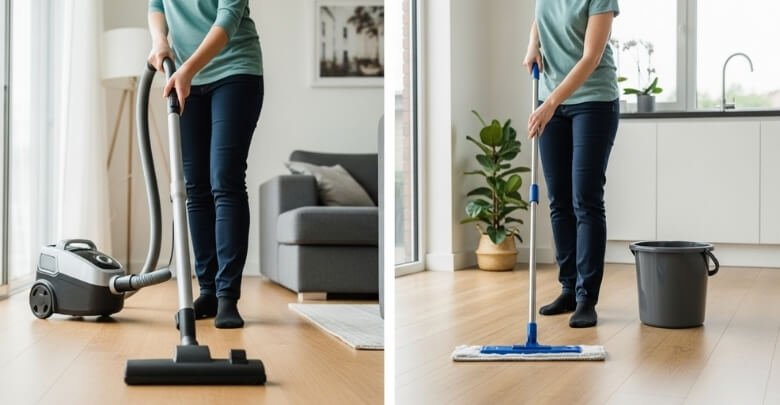
Cleaning floors properly depends on understanding how tools work because different methods remove different kinds of dirt, and knowing the contrast helps homes stay cleaner longer without extra effort.
Purpose of Cleaning
Vacuuming focuses on dry debris like dust, hair, and crumbs, while mopping targets sticky residue and stains using controlled moisture carefully indoors. This method suits daily upkeep because it collects loose particles without spreading dirt across surfaces during regular household movement. Tools like DreamVac enhance this process by offering strong suction and smart features that make pre-mopping cleanup faster and more efficient. Dry suction works best before liquids appear since moisture changes how dirt behaves on common household floor materials.
Mopping serves another role by lifting grime that sticks after spills, cooking splashes, or foot traffic over time. Water combined with cleaners loosens residue that vacuums cannot remove, even with strong suction power alone. Together, both methods complete floor care by handling different soil types efficiently without overlapping cleaning functions.
Type of Dirt Removed
Vacuuming removes lightweight materials, including dust, sand, pet hair, crumbs, and fine particles hiding between floor seams. These materials move easily and scatter when wet, making dry removal important before introducing any cleaning solution. Strong airflow captures debris quickly, keeping floors safer from scratches caused by dragged grit pieces.
Mopping handles dried spills, oils, footprints, and thin films that remain after dry cleaning finishes completely. Liquids help dissolve stuck messes so they release from surfaces instead of resisting brushes, pads, or cloths. This approach leaves floors feeling smooth rather than dusty under bare feet afterward.
Impact on Floor Surfaces
Vacuuming protects floors by removing abrasive particles that might scratch wood, laminate, or vinyl during movement. Hard debris trapped under wet pads can cause marks, lines, or dull patches over repeated cleaning sessions. Dry cleaning first lowers damage risks while preserving original floor finishes longer.
Mopping refreshes surfaces by restoring shine and removing buildup that makes floors look cloudy or worn. Correct moisture levels matter because excess water harms wood and weakens adhesive layers underneath planks. Gentle damp cleaning improves appearance without compromising the structural integrity of common household flooring.
Tools and Techniques Used
Vacuuming relies on suction brushes, filters, and airflow designed to lift debris from flat or textured surfaces. Different attachments help reach corners, edges, furniture gaps, and baseboards where dirt often collects unnoticed. This process stays quick, efficient, and suitable for frequent use across busy living spaces.
Mopping uses water cleaning solutions, pads, or strings to wipe surfaces evenly with controlled pressure. Technique matters because over-wetting spreads dirt instead of removing it from floors completely. Proper rinsing and wringing ensure residue lifts away rather than redepositing elsewhere.
Cleaning Frequency and Timing
Vacuuming fits daily or frequent routines since it requires little setup and dries instantly after use. Busy homes with pets, children, or heavy traffic benefit from regular dry debris removal schedules. Consistent vacuuming reduces how often deep wet cleaning becomes necessary overall.
Mopping happens less often because it needs drying time, preparation, and careful movement afterward. Weekly or biweekly schedules suit most households, depending on usage and floor exposure levels. Spacing sessions correctly maintains cleanliness without unnecessary moisture stress on materials.
Should You Vacuum First, Then Mop?
Yes, vacuum first, then mop. Vacuuming removes dust, hair, crumbs, and grit before moisture hits the floor. Mopping afterward lifts stuck-on grime and leaves a cleaner finish. This order reduces streaks, protects hard floors, and helps your cleaning time feel more efficient.
Prevents Dirt From Smearing
Vacuuming first picks up loose debris that water would otherwise spread. Once floors get damp, dust and grit can turn into muddy streaks. That’s why mopping first often looks clean at first, then dries cloudy.
Dry debris also gets pushed into corners when it’s wet. A quick vacuum pass removes those particles early, so the mop can focus on residue and grime instead of dragging dirt around.
Protects Floor Surfaces
Grit and sand can scratch floors when a wet mop drags them across the surface. This matters most for wood, laminate, and vinyl, where tiny scratches build up over time. Vacuuming first reduces friction and protects the finish.
When the surface is already free of debris, mopping becomes gentler. The mop pad glides instead of grinding particles into the floor.
Improves Mopping Results
Mops work best when they have direct contact with the floor. Vacuuming clears the way so the cleaning solution spreads evenly and rinses away more cleanly. You’ll notice fewer streaks, especially in high-traffic areas like kitchens and hallways.
It also keeps mop pads cleaner for longer. That usually means fewer water changes and less time spent redoing sections.
Reduces Recleaning and Effort
Mopping over dust can leave a thin residue that feels sticky after it dries. Sticky floors attract dirt faster, which makes you feel like the floor gets “dirty again” right away. Vacuum-first prevents that cycle.
This is also where the benefits of small vacuums show up. Lightweight models make it easier to do quick daily passes in entryways, kitchens, and under tables, so debris doesn’t build up before you mop.
Best Order for a Clean Finish
A simple sequence works in most homes:
- Pick up clutter (small items, cords, rugs if needed)
- Vacuum (edges first, then open areas)
- Spot-clean sticky spills (quick wipe if needed)
- Mop last (light moisture, clean water/pad as needed)
What Happens If You Mop Before Vacuuming?
Cleaning floors in the wrong order often creates new problems instead of solving existing messes around homes. Many people mop first without realizing how moisture changes dirt behavior and surface feel. Understanding these effects helps avoid wasted effort and repeated cleaning frustration later.
Dirt Clumps Together When Wet
Water causes loose dust, hair, and crumbs to bind together instead of lifting away smoothly from floors. These damp clusters spread unevenly across surfaces and settle into corners, edges, and grout lines quickly. Vacuuming later struggles because clumped debris sticks harder than dry particles ever would.
Floors Feel Sticky or Gritty After Drying
Wet mopping traps fine dust against surfaces where it dries into thin films that people feel underfoot. Floors lose smoothness and feel slightly rough despite looking clean at first glance. That texture attracts more dirt faster and ruins the comfort of walking barefoot indoors.
Re-cleaning Becomes Necessary More Often
Mopping first spreads dirt rather than removing it completely from busy household floor areas. People notice stains returning quickly, which leads to repeated cleaning sessions during short periods. Extra work wastes time, energy, and cleaning supplies without improving long-term cleanliness results.
Residue Builds Up Over Time
Repeated mop-first cleaning leaves invisible layers of grime that dull the floor’s appearance gradually. Residue attracts oils, dust, and moisture faster, creating a cycle of constant dullness. Floors lose shine, strength, and freshness much sooner than properly maintained surfaces.
Best Cleaning Order by Floor Type
Different floor materials react differently to moisture, dirt, and pressure during routine cleaning at home. Knowing the right order for each surface prevents damage, improves appearance, and reduces repeated effort over time. Smart choices protect floors and keep cleaning simple.
Hardwood Floors
Hardwood surfaces scratch easily when grit moves under wet tools during cleaning sessions at home. Vacuuming first removes sand dust and debris that could damage protective finishes over time. Dry preparation keeps wood smooth, strong, and visually appealing for many years.
Tile Floors
Tile floors hide debris inside grout lines, where moisture alone cannot remove buildup effectively. Vacuuming clears trapped dirt so mopping reaches stains without spreading grime across tile surfaces. This order keeps grout brighter and reduces dull patches forming between tiles.
Laminate Floors
Laminate reacts poorly to excess moisture because water pushes dirt into seams and weakens surface layers. Starting with cleaning floors using vacuums removes particles before damp tools spread residue across planks. This sequence helps the laminate stay clean without swelling or clouding.
Vinyl Floors
Vinyl floors benefit from dry debris removal before moisture enhances shine during final cleaning steps. Vacuuming first stops dirt from streaking when mops glide across smooth vinyl surfaces. The result looks brighter, cleaner, and more polished after drying is complete.
Special Scenarios: Pets, Kids, and Heavy Messes
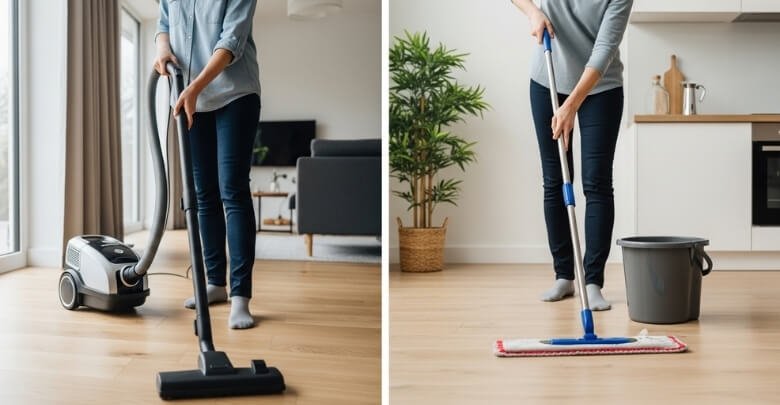
Busy households face unique cleaning challenges because daily activity brings constant dirt movement and frequent spills. Pets, children, and outdoor traffic change how floors collect messes quickly. These conditions make choosing the correct cleaning order far more important.
Pet Hair Problems
Pet hair absorbs moisture quickly and tangles together once wet during cleaning routines at home. Mopping first causes hair to cling tightly across floors, rugs, and corners instead of lifting away. Vacuuming beforehand removes loose fur efficiently and prevents stubborn clumps from spreading everywhere.
High-Traffic Crumbs and Dust
Kids track crumbs, dust, and tiny debris across floors during meals, playtime, and daily movement. Moisture spreads these particles outward when mopping happens before dry debris removal steps begin. Vacuuming first keeps dirt contained and improves final cleaning results across busy areas.
Mud and Grit Damage
Shoes bring mud, grit, and sand indoors, which scratch floors easily when dragged by wet tools. Mopping first presses sharp particles against surfaces, causing damage and dull marks over time. Vacuuming removes abrasive material early and protects floor finishes longer.
Bacteria Spread During Mopping
Dirty floors hold bacteria, and moisture spreads wider when mopping begins without preparation steps. Wet tools push germs into new areas instead of removing them completely from surfaces. Vacuuming first limits the spread and supports cleaner, healthier floor conditions overall.
FAQs About Vacuuming Before Mopping
Before choosing the right cleaning routine, many people still have practical doubts about timing, tools, and special situations. These frequently asked questions address concerns not yet discussed, helping readers apply the vacuum-first approach confidently across different homes, schedules, and cleaning habits without confusion or wasted effort.
Does Vacuuming First Save Time Overall?
Vacuuming first saves time because it prevents dirt from spreading during mopping, which often forces people to clean the same area twice. When dry debris disappears early, mopping finishes faster with fewer streaks. This order reduces repeated passes, water changes, and drying delays, making cleaning sessions more efficient overall.
Can Sweeping Replace Vacuuming Before Mopping?
Sweeping helps but does not fully replace vacuuming because brooms miss fine dust, hair, and particles hiding along edges or seams. Vacuuming provides stronger suction that captures debris completely before moisture appears. Using a vacuum first leads to cleaner results and reduces residue buildup that sweeping alone often leaves behind.
Is Vacuuming First Necessary for Light Cleaning Days?
Even on light cleaning days, vacuuming first improves results because small particles still exist on seemingly clean floors. Dust and hair quickly turn into residue when wet. A quick vacuum pass prevents smearing and keeps mopping focused on refreshing the surface rather than redistributing unseen dirt.
Does the Order Matter for Small Apartments or Rooms?
The order matters regardless of space size because dirt behavior stays the same in small or large areas. In compact rooms, debris spreads faster when wet, making mistakes more noticeable. Vacuuming first keeps tight spaces cleaner, reduces streaks, and prevents buildup where frequent traffic concentrates dirt quickly.
How Often Should You Vacuum Before Mopping?
Vacuum before every mopping session, even if mopping happens weekly or biweekly. Skipping vacuuming allows dust to mix with moisture, forming residue over time. Regular vacuuming before mopping protects floors, improves cleanliness, and prevents long-term dullness caused by layered grime.
Does Vacuuming First Help With Floor Allergies?
Vacuuming first helps reduce allergens because it removes dust, pollen, and pet dander before moisture spreads particles around. Mopping alone can push allergens into new areas. Using a vacuum first limits airborne irritants and supports cleaner indoor air, especially in allergy-sensitive households.
What If You Only Have Time for One Cleaning Step?
If time allows only one step, vacuuming provides more immediate benefits than mopping. It removes loose dirt, prevents surface damage, and keeps floors safer. While mopping refreshes appearance, vacuuming controls debris that causes faster re-soiling when moisture later contacts untreated floors.
Closing Remarks
Clean floors come from smart habits, not extra effort or stronger products. Removing dry debris first creates a clean foundation that protects surfaces and improves every step afterward. When moisture meets dirt too early, results suffer, and time gets wasted.
Understanding how dirt behaves explains why routines matter more than tools. Many homeowners still wonder should you vacuum first, then mop, yet the answer becomes clear through better results and easier upkeep.
This simple order reduces scratches, limits residue, and keeps floors feeling fresh longer. By following the correct sequence, cleaning becomes faster, more effective, and far less frustrating for everyday living.


