
Running out of battery while traveling, working, or exploring can be frustrating, especially when you rely on your devices for everything from maps to meetings. That’s where portable chargers, also known as power banks, come in handy. They’ve become an essential part of modern life, keeping phones, tablets, and other gadgets powered up anywhere, anytime. But have you ever wondered, how does a portable charger work?
A portable charger stores electrical energy and later transfers it to your devices through controlled circuits and voltage regulation. Inside, it contains lithium-based battery cells, safety mechanisms, and smart chips that manage power flow efficiently. This system allows the power bank to store energy safely during charging and release it steadily while powering your device.
Whether you’re heading on a long trip or just need backup power during a busy day, understanding how a portable charger functions can help you use it more effectively and choose one that suits your lifestyle. Let’s explore how these compact power devices actually keep your gadgets alive when you need them most.
Key Components Inside a Portable Charger
Every portable charger operates through a network of smart electrical components that work together to store, regulate, and deliver energy safely. From the outer casing to the internal circuitry, each element plays a crucial role in ensuring your devices receive steady power without damage. Understanding these internal parts gives a clearer picture of how modern chargers achieve both efficiency and reliability.
Battery Cells
At the heart of every portable charger are its battery cells, usually lithium-ion or lithium-polymer. These cells store the electrical energy that powers your devices later. The total capacity, measured in milliamp-hours (mAh), determines how many full charges a power bank can deliver. High-quality cells ensure stable voltage, efficient discharge, and long-lasting performance.
Charging Circuit Board
The circuit board is the control center of the power bank. It manages energy flow between the power source, internal battery, and connected devices. It regulates voltage to prevent overcharging or overheating, maintaining smooth operation even under heavy load. In advanced models like the Rush Charge Universe, optimized circuitry ensures rapid yet safe charging for multiple devices simultaneously.
Input and Output Ports
Ports act as the entry and exit points for power. Input ports draw energy into the power bank from wall outlets or computers, while output ports transfer stored energy to your devices. USB-C and USB-A outputs are the most common, offering flexible compatibility and varying speeds. Multiple ports allow users to charge several gadgets at once without power loss.
Microcontroller Unit (MCU)
A portable charger’s microcontroller unit constantly monitors internal performance. It regulates voltage, temperature, and current flow, adjusting output as needed for each device. This intelligent management system prevents overheating, extends battery life, and ensures optimal charging speed no matter which device you plug in.
Protection Mechanisms
Modern power banks include multiple safety layers to protect both the user and the device. These systems monitor temperature, prevent short circuits, and stop charging when batteries reach full capacity. Such built-in protection guarantees consistent performance while minimizing risks during daily use.
LED Indicators or Display
LED lights or digital screens show vital information like charge level, battery percentage, or charging status. Some advanced power banks even display real-time voltage and output power. These indicators help users keep track of energy levels, ensuring they never run out of backup power unexpectedly.
Casing and Build Design
The outer casing isn’t just about aesthetics—it provides insulation, durability, and heat dissipation. Quality materials like aluminum or reinforced plastic protect internal components from damage and maintain safety. Sleek, compact designs also make power banks more convenient to carry without compromising on strength.
How Does a Portable Charger Work?
Portable chargers, often called power banks, are designed to store electrical energy and release it later to charge devices like smartphones, tablets, and cameras. They rely on advanced circuits, voltage control, and rechargeable battery cells to ensure efficient and safe charging. Here is how each internal component functions to help you make the most of your charger’s performance and durability.
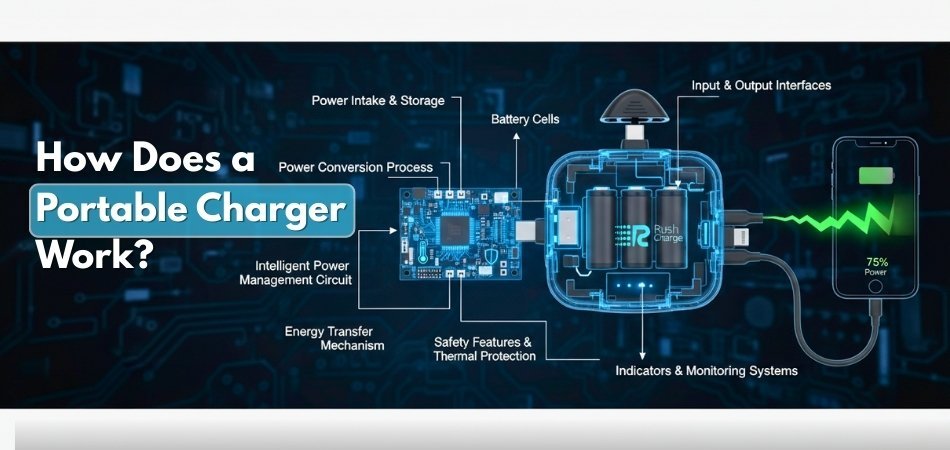
Power Intake and Storage
A portable charger begins its process by drawing energy from an external power source through its input port. The incoming alternating current (AC) is converted into direct current (DC) suitable for storage in lithium-ion or lithium-polymer cells. This stored energy is retained until it’s needed, ensuring reliable power wherever you go.
Battery Cells as the Energy Core
The core of every portable charger lies in its battery cells, which determine storage capacity and output efficiency. High-quality cells maintain a steady voltage and prevent overheating during use. Larger capacity cells also allow for multiple device charges, making them a preferred choice for travelers or heavy device users.
Power Conversion Process
During charging, the stored DC energy is regulated by a conversion circuit that ensures the right voltage and current flow to your device. This control prevents overloads and boosts overall portable charger effectiveness by optimizing energy transfer. A well-designed conversion system allows faster charging with minimal energy loss.
Input and Output Interfaces
Portable chargers are equipped with input ports for charging themselves and output ports for powering external devices. Common types include USB-A, USB-C, and micro-USB. Many modern power banks also support fast-charging technologies like Power Delivery (PD) and Quick Charge (QC), providing quicker, more efficient charging experiences.
Intelligent Power Management Circuit
Inside every power bank is a smart control system that regulates temperature, voltage, and power output. This circuit automatically adjusts to match device requirements, protecting against short circuits and overcharging. Such intelligent management ensures consistent performance and extends both the power bank’s and your device’s lifespan.
Safety Features and Thermal Protection
High-quality chargers incorporate built-in safety mechanisms such as temperature sensors, overload protection, and automatic shut-off systems. These safeguards prevent overheating, preserve battery health, and protect your devices from electrical faults. They’re essential for users who depend on their chargers daily for work or travel.
Energy Transfer Mechanism
When you connect your device, energy flows from the power bank’s battery through regulated circuits into the device’s battery. This controlled process mimics traditional wall charging but draws from stored DC power instead. High-quality cables and connectors enhance efficiency, ensuring stable and quick charging results.
Indicators and Monitoring Systems
Most portable chargers feature LED lights or digital displays that show remaining power levels and charging status. Some advanced models even track real-time voltage and output current. These indicators make it easy to monitor energy usage and ensure your power bank stays ready whenever you need it most.
Efficient Energy Retention in Portable Chargers Explained
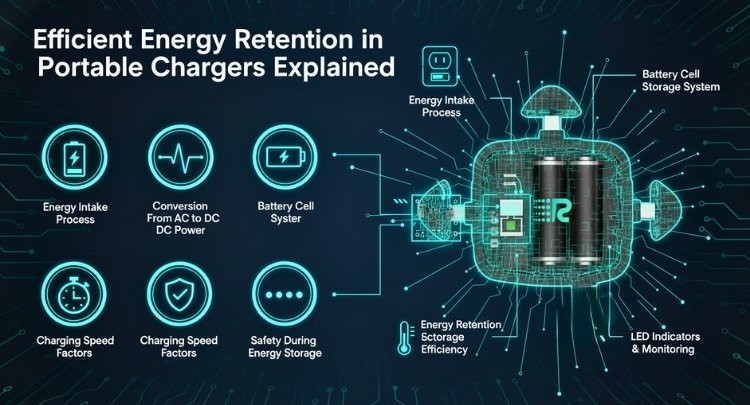
Before a portable charger powers your devices, it must first store energy within its internal battery system. This process involves voltage regulation, current control, and safe energy retention to keep the stored power stable until use. Here are the main steps and factors that explain how a portable charger captures, stores, and maintains energy efficiently.
Energy Intake Process
When connected to a wall outlet or USB port, a portable charger draws power through its input interface. This electrical energy passes through an internal circuit that manages voltage and ensures safe transfer into the battery cells. The input speed can vary depending on the charger’s specifications and cable quality.
Conversion From AC to DC Power
Most household outlets supply alternating current (AC), but portable chargers require direct current (DC) for storage. Inside the charger, a conversion circuit transforms AC into DC energy suitable for the lithium-ion or lithium-polymer cells. This step is essential for maintaining safety and preventing electrical overloads during charging.
Battery Cell Storage System
The converted DC energy is stored in tightly packed battery cells. These cells determine how much charge the power bank can hold, directly influencing its performance. In exploring portable charger capacity explained through real usage, it becomes clear that higher milliamp-hour (mAh) ratings allow multiple recharges, but true efficiency depends on battery quality and circuit balance.
Charging Speed Factors
Several elements affect how fast a power bank recharges. Input voltage, charger design, and even ambient temperature can impact speed and efficiency. Premium models often include quick-charge technologies and adaptive circuits that optimize input flow for faster, safer energy storage.
Energy Retention Efficiency
Not all the energy received from a power source is retained; some is lost as heat during conversion. The best portable chargers minimize this energy loss through efficient circuitry, thermal protection, and advanced chipsets. These components work together to maximize retained power and extend battery health.
Safety During Energy Storage
Reliable power banks include built-in safety systems that prevent overcharging, overheating, and short circuits. These protections automatically regulate voltage when the charger reaches full capacity, ensuring long-term durability and safe energy retention even during extended use.
LED Indicators and Monitoring Systems
Visual indicators such as LED lights or digital screens show how much energy is currently stored and when the charger is fully charged. This simple yet useful feature helps users manage recharging schedules efficiently and avoid overuse or unnecessary power cycles.
Factors That Affect Charging Efficiency
Charging efficiency determines how effectively a portable charger delivers its stored energy to your device. Even two chargers with the same capacity can perform very differently depending on build quality, usage habits, and environmental conditions. Let’s look at the main factors that impact how efficiently a portable charger transfers power and maintains consistent performance over time.
Battery Quality
The quality of the battery cells inside a power bank plays a major role in how well it charges your devices. High-grade lithium-ion or lithium-polymer cells store energy more efficiently, maintain voltage stability, and degrade more slowly over time. In contrast, lower-quality cells may lose charge faster and overheat during frequent use.
Cable and Connector Type
Cable choice also directly affects charging speed and efficiency. High-quality, short cables reduce resistance and allow faster energy transfer, while long or low-quality cables can cause noticeable power loss. Using certified USB-C or fast-charging cables ensures your devices receive the correct voltage and current for optimal performance.
Device Compatibility
Each device has unique power requirements, and a mismatched voltage or current can reduce efficiency. Portable chargers equipped with smart recognition chips automatically adjust output based on the connected device. This ensures faster, safer charging without wasting stored energy or causing battery strain on smaller devices.
Environmental Conditions
Temperature and humidity can significantly impact battery performance. Extreme cold slows down chemical reactions inside the battery, while heat accelerates degradation and shortens lifespan. Keeping your portable charger in moderate temperatures between 15°C and 25°C helps preserve efficiency and overall battery health.
Power Output and Wattage
Chargers with higher wattage ratings can charge compatible devices faster, but efficiency depends on whether your device supports that power level. If your phone or tablet only accepts limited wattage, the extra output won’t improve speed. Matching your device’s charging requirements ensures energy is used effectively.
Usage and Maintenance Habits
How you use and store your power bank greatly influences its long-term performance. Frequently letting it drain completely or leaving it plugged in for long periods can reduce efficiency. Regular recharging, avoiding deep discharges, and proper storage at a partial charge help maintain steady performance over years of use.
Essential Charging Tips for Better Power Bank Performance
Getting the best performance from your power bank isn’t just about its capacity; it’s also about how you use and maintain it. Small changes in charging habits and care routines can make a big difference in speed, safety, and battery lifespan. Here are some essential tips to help your portable charger perform efficiently every time you use it.
- Avoid Full Discharges: Try not to let your power bank drop below 20% before recharging. Keeping the battery partially charged helps maintain its health and prevents deep discharge damage over time.
- Use Certified Cables and Adapters: Always use high-quality, manufacturer-recommended cables and wall adapters. Poor-quality accessories can reduce charging speed and strain the internal circuits of both your charger and devices.
- Store in Moderate Temperatures: Extreme heat or cold can weaken the battery’s chemical balance. Store your power bank in a cool, dry place to preserve its capacity and prevent overheating during use.
- Recharge Regularly, Even When Not in Use: If you don’t use your power bank frequently, recharge it every two to three months. This keeps the battery active and prevents voltage drops that can shorten its lifespan.
- Avoid Overcharging: Disconnect the charger once it reaches full capacity. Leaving it plugged in for long periods can create unnecessary stress on the battery and reduce its long-term performance.
- Clean Charging Ports Periodically: Dust and debris in the USB ports can interfere with proper connections. Use a soft brush or air blower to keep ports clean for smoother charging efficiency.
- Charge One Device at a Time When Possible: Charging multiple devices at once divides the available power output. To ensure faster and more efficient charging, connect one device at a time whenever possible.
- Don’t Use While Recharging: Avoid charging your phone while the power bank itself is plugged in. This split energy flow generates heat and can slow down both charging processes, reducing efficiency over time.
Frequently Asked Questions About Power Bank Performance
Even with a good understanding of how portable chargers work, users often have questions about maximizing their efficiency, safety, and reliability. This FAQ section addresses some of the most common concerns people have when using or maintaining power banks, offering clear, practical answers that help you get the best out of your device.
What Happens If I Leave My Power Bank Unused For Months?
Leaving your power bank unused for too long can cause gradual capacity loss. To prevent this, recharge it every few months to keep the battery active and maintain stable voltage levels.
Can I Use My Power Bank While It’s Charging?
While technically possible, it’s not recommended. Using the power bank while it’s recharging generates extra heat, which can reduce both charging efficiency and the overall lifespan of the battery.
Is It Safe To Charge My Laptop With A Power Bank?
Yes, but only if the power bank supports the required wattage and USB-C Power Delivery output. Always check compatibility with your laptop’s voltage and current needs before connecting to avoid performance issues or damage.
Why Does My Power Bank Get Warm During Use?
A slight temperature increase during charging is normal because of energy conversion. However, excessive heat may indicate an overloaded circuit, poor ventilation, or a low-quality cable—issues that should be addressed immediately.
How Can I Tell If My Power Bank Is Fully Charged?
Most power banks include LED indicators or a digital display that shows charge progress. When all lights remain steady or the display reads 100%, the device is fully charged and can be safely unplugged.
Does Fast Charging Affect Battery Health?
Fast charging doesn’t harm your power bank if it’s designed for it. High-quality models regulate power automatically, ensuring rapid yet safe energy transfer without overheating or reducing cell integrity.
Can A Power Bank Lose Capacity Over Time?
Yes, all rechargeable batteries gradually lose capacity through normal chemical wear. Proper care, such as avoiding full discharges and extreme temperatures, can slow this natural aging process significantly.
Is It Okay To Keep My Power Bank Plugged In Overnight?
It’s best to avoid leaving your power bank plugged in overnight. Even though most modern chargers stop drawing power when full, prolonged charging cycles can create unnecessary heat and slightly reduce battery efficiency over time.
Final Words
Understanding how does a portable charger work? gives you more than just technical knowledge; it helps you make smarter decisions about the devices you rely on every day. From energy intake and storage to efficient power delivery, every component inside a power bank plays a vital role in keeping your gadgets charged and ready when you need them most.
Portable chargers are more than convenient tools; they’re compact energy systems built on precision, safety, and intelligent design. Whether you use one for travel, work, or emergencies, knowing how they function allows you to maintain efficiency, extend battery life, and choose the right model for your lifestyle.


