
Hair removal is a regular part of many beauty routines, with new tools offering alternatives to traditional methods. Two popular options are shaving and using crystal hair removers. Both promise smooth skin, but each offers a different experience. Let’s explore how they compare.
When it comes to crystal hair remover vs. shaving, both methods remove hair at the skin’s surface, but feel quite different. Crystal hair removers are gentle, blade-free, and exfoliate while you use them. Shaving is quick and familiar but may cause nicks or irritation. Your best choice depends on skin type, time, and comfort.
Keep reading to see which method suits your routine and skin needs better. Discover key pros and cons for both options. Learn how to get smoother skin with less hassle and irritation.
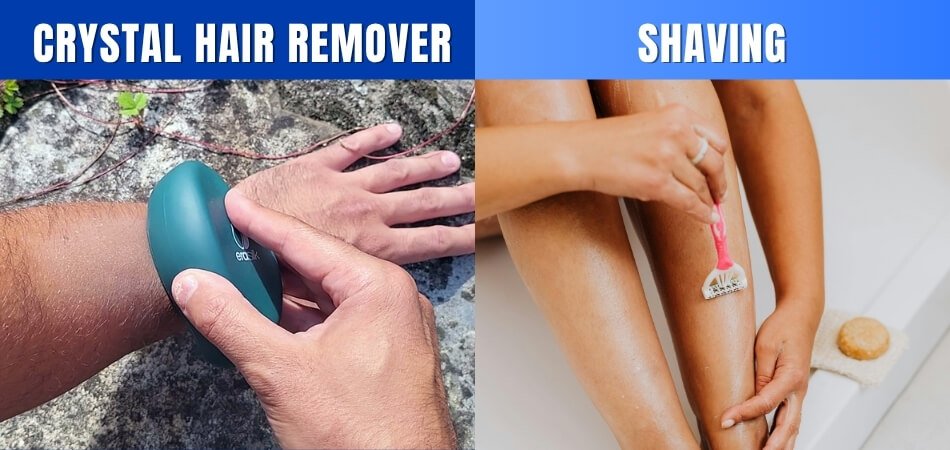
How Each Hair Removal Method Works (Crystal Hair Remover & Shaving)
It is important to understand how different methods of hair removal work so that you can choose the most appropriate one for your skin and lifestyle. This section compares two popular options, Crystal Hair Remover and shaving, explaining how each method removes hair and what to expect during use. Whether you want convenience or smooth results, knowing the process makes all the difference.
Crystal Hair Remover
A crystal hair remover uses a micro-etched glass or nano-crystal surface. When you gently rub it over the skin in small circular motions, the textured surface breaks hair at the skin’s surface while also removing dead skin cells through light abrasion. Products like Erasilk offer this gentle, blade-free method where hair is buffed away rather than cut.
Typical Use Cases
- Legs and arms
- Chest and back
- Areas where users want blade-free hair removal
- People looking for light exfoliation + hair removal in one step
(Not usually recommended for very sensitive areas unless used gently.)
Key Benefits Users Expect
- Blade-free and painless feel for many users
- Reduced risk of cuts and nicks
- Built-in exfoliation for smoother skin
- Reusable and low long-term cost
- Simple to use with no creams or water required
Limitations (Realistic Expectations)
- Can cause redness or irritation if rubbed too hard
- Slower than shaving for large areas
- Results last about the same as shaving (hair grows back in 1–3 days)
- Not ideal for very sensitive skin if overused
- Can create light skin debris/dust during use
Shaving
Shaving uses a razor blade to cut hair directly at the skin’s surface. The blade slices through hair shafts, leaving the skin feeling smooth immediately after shaving. Because the hair is cut bluntly, regrowth can feel stubbly as it emerges.
Common Advantages
- Very fast and convenient
- Easy to do in the shower
- Works well for large areas (legs, arms)
- Widely accessible and familiar
- Immediate smooth results
Common Drawbacks
- Risk of cuts, nicks, and razor burn
- Higher chance of ingrown hairs and bumps
- Requires ongoing maintenance (razors, creams, replacements)
- Can irritate sensitive or dry skin
- Blades dull quickly and need frequent replacement
Quick Takeaway
- Crystal hair removers focus on comfort and exfoliation but require a gentler, slower approach.
- Shaving is fast and effective, but comes with a higher risk of irritation and recurring costs.
Crystal Hair Remover vs. Shaving: Side-by-Side Comparison
Choosing between a crystal hair remover and shaving can feel confusing because both promise smooth skin. Each one works differently and has its own pros and cons. To make things clearer, let’s look at them side by side so you can see which fits your needs better.
| Comparison Factor | Crystal Hair Remover | Shaving |
| Hair Removal Method | Buff’s hair away using a micro-etched crystal surface (no blade) | Cuts hair at the skin’s surface using a razor blade |
| Pain & Comfort Level | Generally painless when used gently; feels like light exfoliation | Usually painless, but can sting if cuts or razor burn occur |
| Skin Irritation Risk | Low–moderate; irritation possible if over-rubbing or on sensitive skin | Moderate–high; razor burn, bumps, and ingrown hairs are common |
| Speed & Convenience | Slower for large areas; no water or cream required | Very fast; best done with water and shaving products |
| Smoothness & Results Duration | Smooth finish, similar to shaving; results last ~1–3 days | Very smooth initially; regrowth usually noticeable in ~1–3 days |
| Exfoliation Benefits | Yes — removes dead skin cells while removing hair | No built-in exfoliation (depends on shaving products used) |
| Cost Over Time | One-time purchase; reusable for months or years | Ongoing cost for razors, blades, creams, and gels |
| Ease of Use for Beginners | Easy, but requires gentle technique and patience | Very easy and familiar for most users |
Hair Removal Method
- Crystal Hair Remover: Uses a micro-etched crystal or glass surface to buff hair away through friction. Hair is removed at the skin’s surface without cutting or pulling.
- Shaving: Uses sharp razor blades to slice hair off at the skin’s surface, leaving a blunt hair tip that grows back quickly.
Why it matters: The method affects comfort, irritation, and regrowth feel.
Pain & Comfort Level
- Crystal Hair Remover: Generally painless when used gently. Most users describe the sensation as light exfoliation, not hair removal.
- Shaving: Usually painless, but discomfort can occur due to cuts, razor burn, or post-shave stinging, especially on sensitive skin.
Key takeaway: Crystal tools feel gentler for many users, but technique matters.
Skin Irritation Risk
- Crystal Hair Remover: Lower risk of cuts, but over-rubbing can cause redness, sensitivity, or irritation, especially on delicate skin.
- Shaving: Higher irritation risk due to razor burn, ingrown hairs, bumps, and nicks, particularly with dull blades or dry shaving.
Important note: Both methods can irritate skin if used incorrectly.
Speed & Convenience
- Crystal Hair Remover: Takes more time, especially for large areas like legs. However, it doesn’t require water, foam, or gels.
- Shaving: One of the fastest hair removal methods, especially in the shower, but requires prep and cleanup.
Winner for speed: Shaving
Winner for minimal prep: Crystal hair remover
Smoothness & Results Duration
- Crystal Hair Remover: Leaves skin smooth and polished. Results typically last 1–3 days, similar to shaving.
- Shaving: Produces very smooth results immediately, but stubble can appear quickly due to blunt hair regrowth.
Reality check: Neither method removes hair from the root.
Exfoliation Benefits
- Crystal Hair Remover: Provides built-in exfoliation, removing dead skin cells while removing hair, which can improve skin texture.
- Shaving: Does not exfoliate on its own; exfoliation depends on additional skincare products.
Added value: Crystal hair removers offer dual functionality.
Cost Over Time
- Crystal Hair Remover: Typically a one-time purchase that can last months or years with proper care.
- Shaving: Requires continuous spending on blades, razors, creams, and replacements.
Long-term value: Crystal hair removers are usually more cost-effective.
Both crystal hair removers and shaving remove hair from the skin’s surface, but the experience differs. Your choice should depend on skin sensitivity, time availability, and comfort preference. It’s also helpful to understand the hair regrowth process after crystal hair removal, as it may differ slightly from traditional shaving results.
Pros and Cons Breakdown
Understanding the strengths and drawbacks of each hair removal method can help you choose what works best. Below is a clear comparison of crystal hair removers and shaving, highlighting their main pros and cons for comfort, convenience, and skin care.
Pros & Cons of Crystal Hair Removers
Pros & Cons of Shaving
Which is Better for Different Skin Types?
Choosing the right hair removal method depends on skin needs, comfort levels, and how each technique affects daily routines overall. Understanding skin differences helps avoid irritation, dryness, and discomfort while keeping results smooth, safe, and easy to maintain consistently.
Sensitive Skin
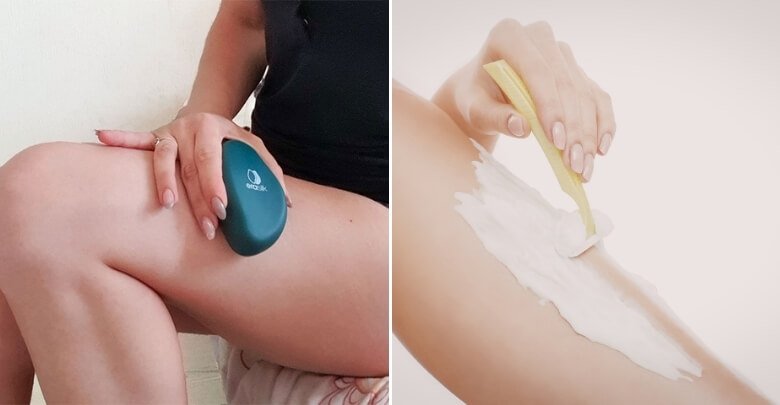
People with sensitive skin need gentle methods that reduce friction, prevent redness, and support a calm healing process. Blade-free tools work better when used lightly, because sharp razors often trigger burning sensations quickly and easily. Slow movements and short sessions help protect skin barriers and lower irritation risks during daily care routines.
Dry Skin
Dry skin needs methods that avoid stripping oils and keep moisture balanced after hair removal sessions gently. Gentle exfoliation helps dry skin feel smoother, especially in comparison with waxing, and discussion about comfort choices. Using creams afterward supports hydration and reduces tightness caused by repeated shaving on dry skin areas.
Normal Skin
Normal skin adapts well to most hair removal methods without frequent irritation or dryness issues during routines. Both options work fine, so comfort, time, and personal habits usually guide decisions for daily grooming needs. Switching methods based on schedules helps maintain smooth skin without extra effort during busy weeks or travel.
Areas of Use (Legs, Arms, Underarms, etc.)
Different body areas respond differently, so choosing methods depends on skin thickness and flexibility levels across zones. Legs and arms handle most techniques well, while underarms need softer pressure and care for comfort daily. Testing small sections first helps prevent discomfort and improves results on tricky spots like knees, elbows, and ankles.
Cost Comparison: Long-Term vs. Short-Term
Cost matters just as much as results. At first glance, shaving and crystal hair removers seem affordable, but the real difference shows up over time. Some costs are one-time, while others keep adding up month after month. Let’s break down what you actually spend in the short term and the long run, so the picture becomes easier to see.
| Aspect | Crystal Hair Remover | Shaving |
| Initial Cost | $15-30 (one-time) | $5-20 (razor pack) + $5-10 (cream) |
| Annual Recurring Cost | $0 | $70-300 (blades, cartridges, cream) |
| 3-Year Total | $15-30 | $210-900+ |
| Lifetime Estimate | $15-60 (multiple units over decades) | $3,000-10,000+ |
- Crystal Hair Remover:
- Short-term: One-time purchase typically costs $15-30. No additional costs in the first year.
- Long-term: Lasts 2-3 years with proper care, so the total cost over 3 years remains $15-30. It pays for itself quickly due to no ongoing expenses.
- Shaving:
- Short-term: Initial razor pack costs $5-20, plus shaving cream/gel at $5-10 per month. Monthly recurring costs for blades/cartridges average $20-30, leading to $120-180 in the first year.
- Long-term: Over 3 years, expect $360-1,080 for razors/cartridges alone, not including cream ($180-360 additional). Lifetime estimates (assuming 40-50 years of use) range from $3,000-10,000, with annual averages of $70-300 depending on frequency and product type (disposables are cheaper short-term but have higher waste; cartridges are more expensive).
One-Time vs. Recurring Costs
- Crystal Hair Remover: Primarily a one-time investment ($15-30). No subscriptions, refills, or replacements needed for 2-3 years. If it wears out, a replacement is another low one-time cost.
- Shaving: Low one-time initial buy, but heavily recurring blades/cartridges every few weeks ($0.10-0.30 per shave), cream/gel monthly, and potential add-ons like aftershave. This adds up quickly for frequent users (e.g., daily shavers spend more).
Crystal is ideal if you value upfront simplicity; shaving suits those okay with ongoing small purchases but risks higher total spend.
Maintenance Considerations
- Crystal Hair Remover: Low-maintenance, rinse under warm water after use to remove debris, pat dry, and store in a dry place. Use on wet skin with gentle circular motions, followed by moisturizing. Limit to 1-2 times per week per area to prevent irritation. No sharpening or part replacements needed.
- Shaving: Requires frequent blade/cartridge changes (every 4-5 shaves), cleaning the razor head, and restocking cream/gel. More prone to skin issues like cuts or ingrown hairs if not maintained properly, demanding consistent technique and products.
Overall, crystal demands less ongoing effort but requires careful use to avoid over-exfoliation, while shaving’s maintenance is tied to consumables.
Sustainability Angle
Crystal hair removers are generally more sustainable than disposable razors due to reusability and reduced waste.
- Crystal Hair Remover: Made from durable, recyclable nano-crystalline glass; lasts 2-3 years with zero waste during use. Eliminates the need for plastic refills, reducing environmental impact. It’s a reusable alternative that cuts down on the billions of disposable razors polluting landfills and oceans annually.
- Shaving (with Disposables): High waste from plastic razors/cartridges—billions discarded yearly, taking hundreds of years to decompose and leaching chemicals into soil/water. Higher carbon footprint from manufacturing and shipping bulky packaging. Reusable safety razors with metal blades are a greener shaving option, but standard disposables lag behind.
Switching to crystal can minimize plastic pollution and resource consumption, making it a more sustainable choice for eco-conscious users.
Who Should Choose What?
Choosing between a crystal hair remover and shaving depends on more than just hair removal. Factors like skin sensitivity, time, comfort, and long-term cost all play a role. This section breaks it down clearly so you can decide which method best fits your lifestyle and skincare needs.
Choose a Crystal Hair Remover If…
- Sensitive skin needs a blade-free option
- Razor burn, cuts, or ingrown hairs happen often
- A gentler, more controlled hair removal method feels safer
- Built-in exfoliation sounds appealing
- Saving money long-term with a reusable tool makes sense
- Extra time for hair removal is not a problem
Why:
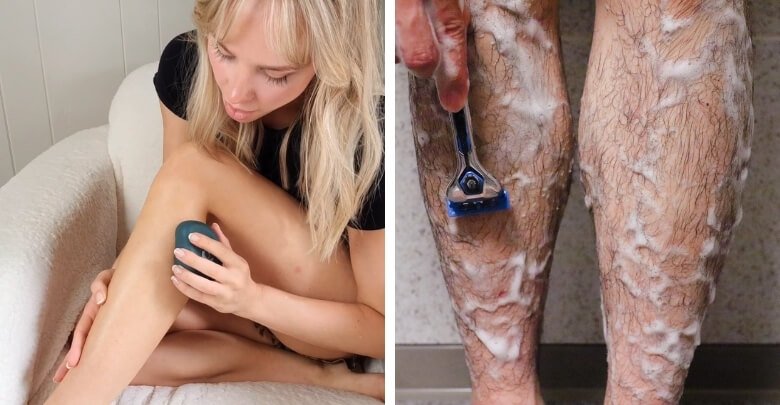
Crystal hair removers offer a blade-free experience with lower risk of cuts and added exfoliation benefits, making them ideal for comfort-focused users who prioritize skin care over speed.
Choose Shaving If…
- Fast results with minimal effort matter most
- Large areas need to be cleaned up quickly
- A traditional, familiar method feels comfortable
- Low upfront cost is the main priority
- A steady shaving routine is already in place
Why:
Shaving delivers immediate smoothness and unmatched speed, making it the best option for users who prioritize convenience and quick results over long-term maintenance or exfoliation benefits.
Frequently Asked Questions About Crystal Hair Remover vs. Shaving
Both shaving and crystal hair removers have their pros and cons, but there are still many questions people ask before switching or sticking with one method. Below are five fresh, relevant FAQs not yet covered in the main article.
Can I Travel With a Crystal Hair Remover?
Yes, crystal hair removers are compact, blade-free, and TSA-friendly, making them perfect for travel. Unlike razors, they don’t need to go in checked baggage, and they eliminate the need for shaving cream or other liquids while on the go.
Which Method Works Better on Coarse Hair?
Shaving is generally more effective for coarse or thick hair because blades can easily cut through tougher strands. Crystal hair removers may struggle with dense hair and could require more time or pressure, which increases the risk of skin irritation.
Are Crystal Hair Removers Suitable for Teenagers?
Yes, crystal hair removers can be a safer option for teens who are new to hair removal. Since they’re blade-free, there’s less risk of cuts or injury. However, proper guidance is important to avoid over-rubbing and potential skin sensitivity.
Do Crystal Hair Removers Work on Curved Areas Like Knees?
Crystal hair removers can be used on curved areas like knees or elbows, but they may require more careful motion to be effective. In contrast, razors glide more easily on curves, though they pose a higher risk of nicks and cuts.
Is It Okay to Use Both Methods Together?
Yes, some people use both methods depending on the area and situation. For example, they might use a crystal remover for arms and exfoliation, and shaving for quick results on legs. Always avoid using both on the same area consecutively.
Final Thoughts
Choosing the right hair removal method ultimately comes down to how your skin reacts, how much time you have, and what kind of routine feels sustainable long term. Some people value speed and familiarity, while others prioritize comfort, exfoliation, and reduced irritation.
When weighing crystal hair remover vs. shaving, it becomes clear that both options remove hair effectively but deliver very different experiences. One offers convenience and speed, the other focuses on gentle care and long-term value. Paying attention to your skin type, budget, and lifestyle will help you achieve smoother results with less frustration and more confidence in your daily grooming routine.


