
Disclosure: This review contains affiliate links. I may earn a commission if you buy through them, at no extra cost to you. Written by Michael Montoya. Last updated: November 7, 2026.
A cough that hangs on for weeks is hard on a kid and harder on the parent listening to it at 2 a.m. So when a small plastic device promises to clear your child’s chest with no drugs and no batteries, I understand why you’d look twice.
The ads for AirPhysio for Children promise a lot, including “FEEL IT WORKING INSTANTLY.” The method behind it is real, and respiratory therapists use it. What I wanted to know is how far that method carries for a healthy-ish 7-year-old with a cold, or a child with asthma.
So I went through its offer pages, its sales stories, its refund policy, Trustpilot, and the studies its own page links to, plus guidance from the National Heart, Lung, and Blood Institute.
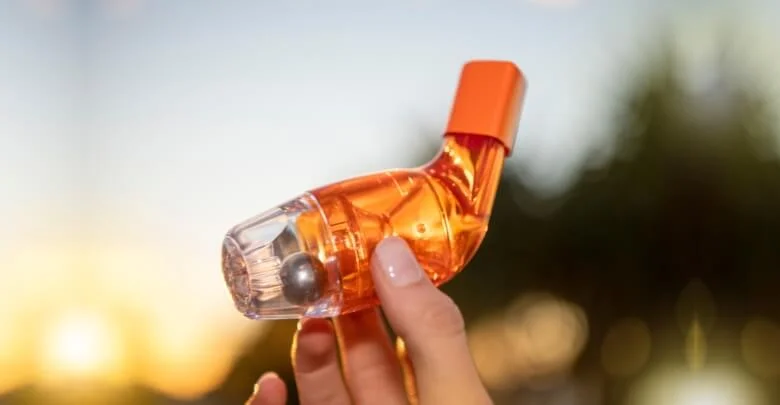
A small breath-powered device that uses pressure pulses to help loosen mucus. It suits older kids whose doctor agrees, as an add-on to their treatment, and not as a substitute for an inhaler.
- Drug-free, with no batteries or refills
- Uses a real airway clearance technique
- Sessions of about 5 minutes
- Small enough to carry
- Most research I read isn’t on kids with colds or asthma
- Needs an adult at every session, and small parts are a choking risk
- Doesn’t replace inhalers or prescribed medicine
- 30-day return, and shipping is on you
- Trustpilot score is 3.5
Quick Verdict
AirPhysio for Children is a simple, drug-free mucus clearance device that needs no batteries or refills, and the technique behind it has a real medical history. Most of the research I read is on cystic fibrosis and adult lung disease, though, not on a child with a cold or asthma. Trustpilot shows 3.5 from 7,180 reviews for the brand, and you pay return shipping. It can make sense alongside your child’s treatment, with your doctor’s OK and an adult watching, but it isn’t a replacement for an inhaler. The brand also lists medical reasons not to use it, including middle ear problems, so check those first.
What is AirPhysio for Children?
It’s a small handheld device your child blows into. The brand says it’s “Recommended for Children Ages 4 and Up” It’s drug-free, and there’s nothing to plug in, charge, or refill.

The technique is called OPEP, which stands for Oscillating Positive Expiratory Pressure. Your child breathes out through the device, a small steel ball moves, and that sends gentle pressure pulses back into the airways. The idea is that this loosens mucus so a cough can bring it up.
The brand lists asthma, bronchiectasis, cystic fibrosis, chronic bronchitis, and flu and colds among the conditions it helps with. A sales story says it’s “trusted by doctors around the world,” without naming any, and the brand’s site says it “Helps treat respiratory conditions.” The fine print on its offer page says the products “are not intended to diagnose, prevent, treat, or cure any disease” and adds, “Consult with your doctor before modifying your regular medical regime.” I’d read the whole pitch through those two lines.
Who Invented AirPhysio?
A sales article says it was “Invented by entrepreneur Paul O’Brien,” and the brand’s about page calls him the Managing Director. So he’s a businessman, and that’s worth knowing when you read about all the doctors behind it. The company footer reads Better Breathing Devices Pty Ltd, Trustpilot lists AirPhysio Pty Ltd, and the offer page says it’s “proudly designed and manufactured in Australia.”
The children’s version is a separate model, with its own orange design and box.
How Does AirPhysio for Children Work?
The brand’s steps are short: “Slowly Inhale,” “Exhale Through AirPhysio,” and “Breathe Easier!” One sales story adds more detail, with a deep breath held for 2-3 seconds and then a steady blow for 3-5 seconds. Here’s the idea behind each stage.

- Your child breathes in: A deep breath comes first, followed by a short hold.
- Your child blows out through the device: The breath is the only power source, so there are no batteries or buttons.
- The steel ball moves: It moves against the air, which is what makes the pressure pulses.
- Pressure pulses reach the airways: The brand says these “expand airways and help loosen excess mucus.” The loosening is what OPEP is meant to do, and it isn’t a treatment for an asthma attack.
- A cough clears what’s loose: Your child coughs up what moved. Expect that, since it’s the point of the exercise.
- Short sessions, repeated: The offer page says “use for 5 minutes 1-2 times per day.”
- Technique matters: A child has to blow correctly for the ball to do its job, and the study below shows how hard that can be.
What You’re Signing Up For With AirPhysio for Children
Getting a young child to do anything twice a day is its own project, and this is no different.
Teaching Your Child To Use It
One sales story says it’s “designed for children to use without assistance.” The brand’s own about page says otherwise: “do not allow unsupervised children to use the AirPhysio device.” It warns that the steel ball, protective cover, and cone “pose a choking hazard for children.” So plan on an adult being there for every session, and store it out of reach between uses.
What The Evidence Says About Children’s Technique
A 2019 study in Respiratory Care measured 21 children with cystic fibrosis who already used an OPEP device twice a day and had training from a specialist physiotherapist. The authors wrote, “None of the participants achieved target therapeutic pressure ranges during expiration.” Those children weren’t using this exact product, but it’s a useful warning. If trained kids struggled, ask your child’s doctor or a respiratory therapist to check the technique.
What The Brand Says About Timing
The offer page says “Most children feel a huge difference the very first time they use AirPhysio.” The narrator of its sales story talks about “about three weeks.” I wouldn’t expect instant results. If your child has had a cough for weeks, see the doctor before you try this at all. The brand’s own site says, “IF SYMPTOMS PERSIST, TALK TO YOUR HEALTH PROFESSIONAL.”
During A Cold Or A Flare-Up
The brand’s copy says it can help during a cold or flu. Thick mucus is the target, so a wet, chesty cough seems a better fit than a dry one. That’s my reasoning, not a study, and it’s another good question for your pediatrician. A wheezing attack is a different situation. Follow your child’s asthma action plan and use their reliever inhaler, not this device.
The Downsides To Expect
It takes daily effort, it can bring on coughing, and it needs regular washing. You may also have a hard time telling whether it’s helping, because a child’s cold usually clears up with time anyway. That’s why a quick note on night coughs and activity each week would tell you more than your memory will.
Keeping It Going Long Term
One parent on the brand’s testimonials page writes, “my son has managed to kick his dependency on medicines.” Please don’t read that as a goal. Right below it, the brand’s disclaimer says it does “not advise that people should stop using their Asthma medication unless under the strict advice from a medical professional.” That same parent also wrote, “if only I could get him to use it every day,” which sounds about right for a kid. I’d treat it as one tool in a plan, reviewed with your child’s doctor now and then.
Top Features of AirPhysio for Children
These are the practical points, as the brand describes them.

- Sized for children: The brand recommends it for ages 4 and up. It doesn’t give an upper age on the pages I read.
- Drug-free: No medicine goes into your child. That’s a true feature, but it doesn’t mean it’s a substitute for medicine.
- Simple controls: There are no buttons or screens.
- Aimed at mucus: It’s meant to loosen mucus so it can be coughed up. It doesn’t do what a reliever inhaler does.
- No batteries or refills: The offer page says “AirPhysio requires no batteries or refills!” So the running cost is close to nothing.
- Reusable: You wash it and use it again. One device per child is the sensible way to keep it clean.
- Pocket-sized: It’s easy to travel with, but the choking warning means it should stay with an adult and not loose in a young child’s bag.
How Does It Compare to Other Devices?
Parents often see these options lumped together, but they do different jobs.
Inhalers Do A Different Job
This is the comparison that matters most. The American Lung Association says quick-relief medicines “relieve or stop asthma symptoms once they have started,” and controller medicines “must be taken regularly (even when you don’t have asthma symptoms).” AirPhysio doesn’t do either of those jobs. The offer page says, “You’ll never need to worry about running out of medicine or filling a prescription,” and I think that’s a dangerous line for a parent to take at face value.
Nebulizers Are Also Medicine Delivery
A nebulizer turns medicine into a mist for a child to breathe. If your doctor prescribed one, AirPhysio doesn’t replace it. The only real difference in its favor is that there’s no medicine or machine to prepare.
Other OPEP Devices
OPEP is a category, not something only this brand offers. A 2019 Cochrane review looked at positive pressure therapy in people with cystic fibrosis, with oscillating devices among the comparisons. It found little or no difference in lung function against other airway clearance methods over short periods, and fewer flare-ups with mask-based therapy used for at least a year. That’s not a mouthpiece device like this one, and it isn’t about colds. Ask your child’s care team if they already prefer a particular device.
Cost Over Time
You pay once, which beats anything you have to keep buying. It doesn’t cancel the cost of any medicines your child needs.
AirPhysio For Children Review: Pros And Cons
Here’s the good and the bad, from what I could check.
Different Versions of AirPhysio for Children
AirPhysio devices come with different ball sizes. The brand’s shop lists a ball bearing part in sports, average, and low lung sizes, and its about page explains two of them.
1. Regular-Sized Ball
The about page says this one “is best for healthy, active individuals and adults with mild to moderate respiratory conditions.” So it isn’t the one the brand points children to.
2. Small-Sized Ball
The same page says this one “provides less expiratory resistance and is ideal for children.” The offer page for the children’s model doesn’t say which ball is in the box, so confirm it with support at support@airphysio.com. If your child has a lung condition, ask their doctor as well.
Cleaning and Maintenance of AirPhysio Device
This device collects moisture and mucus, so cleaning isn’t optional. I couldn’t open the official user guide, because the page wouldn’t load for me, so treat the steps below as general guidance and follow the leaflet in your box first.

Step 1: Open It Yourself
Take it apart yourself, away from young children, because of the choking warning above.
Step 2: Work Over A Flat Surface
Lay the parts out on a towel or a flat counter so that nothing rolls away, especially the ball.
Step 3: Check What Soap You Can Use
I couldn’t settle this one. A copy of the manual that I could only see in a search summary says, “Chlorine bleach or other products containing chlorine (e.g. dishwashing detergent) should not be used for cleaning AirPhysio® device.” Other pages mention soapy water, so check the leaflet in your box before you use any soap.
Step 4: Rinse Well
Rinse every part with clean water so nothing is left on the parts your child breathes through.
Step 5: Air-Dry It
General hospital advice on respiratory equipment, which I also saw in a search summary, says “only air-dry equipment,” and that’s what I’d do. Let everything dry completely, since moisture left inside is what you’re trying to avoid.
Step 6: Put It Back Together
Reassemble it on a clean, dry surface and count the parts. If the ball or cone is missing, find it before your child goes back to playing nearby.
One Trustpilot reviewer wrote, “there are NO assembly instructions showing where the ball goes.” So learn how it goes back together before the first wash.
How Much Does AirPhysio Cost?
These are the prices I saw on the offer page my links go to, on November 7, 2026.

| Option | Total | Devices | Per device |
| One device | $59.99 | 1 | $59.99 |
| Buy 2, Get 1 FREE | $119.98 | 3 | About $39.99 |
| Buy 3, Get 2 FREE | $179.97 | 5 | About $35.99 |
The per-device numbers are my math. The offer page advertises free US shipping “on qualifying orders,” and the page’s data also lists $7.99 and $8.99 shipping on some entries, so check the total at checkout.
The bundles only pay off if you have more than one child who needs it, because sharing a device that collects mucus is a bad idea. I’d buy one, see if your child will really use it, and go from there.
Where & How Can You Order AirPhysio For Children?
My links go to the brand’s offer page, which says buying there is “buying directly from AirPhysio.” It also mentions “3rd-Party retailers,” so it isn’t the only place. The offer page claims “$22 MILLION+” in sales while a sales article says “more than $1.2M,” and neither number tells you it’s right for your child.
- Step 1: Open the offer page and check that it says the children’s model.
- Step 2: Choose one device or a bundle, based on how many children need it.
- Step 3: Check shipping at checkout before you pay.
- Step 4: Save your order number, because you’ll need proof of purchase for a return.
The offer page says “30 DAY Money Back Guarantee.” The refund policy says the item must come back “in its original packaging,” that “Customer will be responsible for all return shipping costs,” and that the company inspects the return before approving a refund. The site’s terms also say, “NO REFUNDS WILL BE GIVEN AFTER START OF PRODUCTION OF PRODUCTS AND/OR SHIPMENT HAS STARTED,” which doesn’t square with a 30-day guarantee further down the same page. For a device that’s been in your child’s mouth, get the answer in writing before you count on a refund. Keep the box either way.
Is AirPhysio For Children Legit?
Yes, the product and company look genuine, and OPEP is an established therapy. My concern is how the sales pages describe it for children.
- Trustpilot: AirPhysio shows 3.5 from 7,180 reviews, with 47% five-star and 21% one-star. Only 8 are from the last 12 months, and none on the first page I read mentioned children.
- BBB: A search for “AirPhysio” showed no results, so there’s no rating to report under that name.
- The FDA: The offer page says its claims “have not been evaluated by the Food and Drug Administration.” I couldn’t get the FDA and Australian device databases to give me an answer either way.
- Warnings: The brand’s site tells you to check with a doctor about untreated pneumothorax, tuberculosis, esophageal surgery, right-sided heart failure, and middle ear problems such as a ruptured eardrum. Those warnings don’t appear on the offer page I read.
AirPhysio For Children Claims Vs What I Found
| Claim | What I found | Where I checked |
| “Backed By Medical Studies” | One linked study is a 2019 trial of adults hospitalized with COPD. It’s useful research, but not about children. I couldn’t open the other linked abstract. | Offer page, PubMed |
| “FEEL IT WORKING INSTANTLY” | I found nothing measuring this, and its own sales story talks in terms of weeks. | Offer page, sales story |
| “completely safe and designed for children to use without assistance” | The brand’s own about page says “do not allow unsupervised children to use” it and warns of a choking hazard. In one study, none of the 21 trained children reached the target pressure. | Sales story, about page, PubMed |
| “Unlike medications, which can cause your child to become reliant on them” | This is a poor way to talk about asthma medicine. The American Lung Association says controller medicines need to be taken regularly, and the brand’s own disclaimer warns against stopping them. | Sales article, lung.org, AirPhysio site |
| “3,900+” five-star reviews | Trustpilot’s score is 3.5 from 7,180, with 21% at one star, and a sales article says 4.2 on Amazon. The offer page doesn’t say where its number comes from. | Offer page, Trustpilot, sales article |
| “quickly open up blocked and semi-closed airways” | That sounds like a reliever inhaler, and it isn’t one. I found nothing showing it does that for a child’s asthma, and the brand’s disclaimer warns against stopping asthma medicine. | Offer page, testimonials page |
| “as many times as they need” | A sales story says this because “it’s completely safe.” The offer page itself says 5 minutes, 1-2 times a day, and the brand warns about supervision. I’d stick to the directions. | Sales story, offer page |
AirPhysio Reviews From Users
These come from the brand’s own offer page, so they’re its picks. I can’t verify them, but they’re useful for what they say about how people use it.
Two happy parents:
Jasmina Saczek wrote, “The device was ordered as a gift to my asthmatic son, and came promptly, looked well made and he says it’s a good help for his condition.”

Paul wrote, “We gave it a go and it definitely helped my sons lung capacity.” He also says they “sought medical advice” for the breathing problem, and I’d start there.

And one with a practical point:
Heidi Robertson, who bought it for an 8-year-old with viral cough asthma, wrote, “He still has his inhalers but uses the Air Physio with them.” That’s the setup I’d want, the device alongside the medicine and not in its place. She also says it let them stop antibiotics, which is a call for your doctor and not something a device decides.

On the other side, one Trustpilot reviewer said in May 2025, “When ypu ask for a refund they ignore you and tell you to stop replying to their emails.” That’s one person, but it’s one more reason to read the refund policy first.
Who Should Buy It, And Who Should Skip It?
You might consider it if your child:
- Is 4 or older and can follow directions for a few minutes
- Often has a wet, chesty cough, and your doctor agrees it’s worth trying
- Already has an airway clearance plan, and the care team likes this type of device
I’d skip it or check with the doctor first if your child:
- Has any of the conditions on the brand’s warning list, including middle ear problems
- Has asthma and you’re hoping to cut back on medicine
- Is too young to blow on command, or still puts small objects in their mouth
- Won’t have an adult with them during every session
- Has a dry cough with no mucus, which may not be what this device targets
Get medical care now, and don’t reach for this device, if your child’s breathing is very hard or their medicine isn’t helping. The National Heart, Lung, and Blood Institute says to call 911 for those, and for a young child who seems “drowsy, confused, or troubled,” or has “a blue tint to the skin and lips.”
Frequently Asked Questions
These are the questions I’d ask before ordering one for a child.
How Often Should Children Use AirPhysio?
The offer page says 5 minutes, 1-2 times a day. If your child has a lung condition, ask the doctor what fits their plan, and don’t push through dizziness or discomfort.
Is The AirPhysio Device Uncomfortable to Use?
It may be at first. Blowing against pressure takes some effort and it’s meant to bring on a cough. If your child gets lightheaded or upset, stop and ask the doctor.
Can AirPhysio Clear Up Respiratory Conditions?
No. It may help move mucus, but its own fine print says the products are “not intended to diagnose, prevent, treat, or cure any disease.” Asthma and other lung conditions need a doctor’s plan.
Can Siblings Share One Device?
I wouldn’t. It collects moisture and mucus from one child’s lungs, so that’s an easy way to pass germs around. Get one per child.
Is AirPhysio For Children Safe?
I can’t say it’s been shown safe in children, because I found no safety study on this model in kids. The brand warns about choking and lists conditions to check with a doctor, so ask first if your child has any lung, ear, or heart problem, and supervise every session.
How Long Does AirPhysio For Children Last?
The company cites a 12-month warranty in a reply on Trustpilot. I’d inspect it for cracks at each wash and replace it if it’s damaged.
What Is The Recommended Age Range?
The offer page says ages 4 and up, and I saw no upper limit there. What matters most is whether your child can follow the directions and blow steadily.
Final Verdict: Should You Buy It?
Yes, if your child is old enough to use it properly, your doctor agrees, and you see it as an add-on to their treatment. The technique is real and the device is simple, but the research on it mostly isn’t about kids with colds or asthma. I gave it 8.0 out of 10 for its simple, drug-free design and low running cost, and the weaker evidence and return terms are why it isn’t higher. Don’t cut back on any inhaler or prescribed medicine because of it.


