
Cleaning hard floors is a regular task that helps maintain cleanliness, hygiene, and a dust-free environment at home. People often choose between sweeping and vacuuming. Each method works differently depending on the floor type and dirt level. Choosing the right one makes daily cleaning easier and more effective.
Many wonder, is it better to vacuum or sweep hard floors?
Vacuuming is generally better than sweeping because it removes fine dust, allergens, and debris from cracks and corners instead of spreading them into the air. Sweeping is useful for quick cleanup, but vacuuming provides a deeper, healthier, and more thorough clean overall.
Find out which method is best for your space and lifestyle. Learn the pros and cons of each technique clearly. Keep reading to make smarter floor-cleaning decisions that actually work.
What are the Challenges of Hard Floor Cleaning?
Hard floors often appear clean, yet they quietly collect dust, debris, and fine particles every day. Without proper cleaning methods, these hidden contaminants can build up over time and affect both cleanliness and indoor air quality. Here are common challenges of cleaning a hard floor:
- Hidden Dust Buildup: Fine dust settles into floor seams and surface textures, making it hard to remove with basic cleaning methods.
- Airborne Particles: Cleaning actions can lift dust into the air, where it spreads and later resettles across the floor.
- Cracks and Gaps: Floor joints and grout lines trap dirt that simple surface cleaning tools often fail to reach.
- Static Attraction: Hard floors attract dust through static electricity, causing particles to cling instead of lifting away easily.
- Daily Foot Traffic: Shoes and bare feet constantly bring in new dirt, spreading debris across clean-looking surfaces quickly.
- Surface Scratches: Improper tools or rough cleaning can scratch floors, creating grooves that trap even more dirt.
Is It Better to Vacuum or Sweep Hard Floors?
Vacuuming is generally better than sweeping hard floors because it removes fine dust, allergens, and debris from cracks and corners instead of spreading them into the air. Sweeping is useful for quick cleanup, but vacuuming provides a deeper, healthier, and more thorough clean overall.
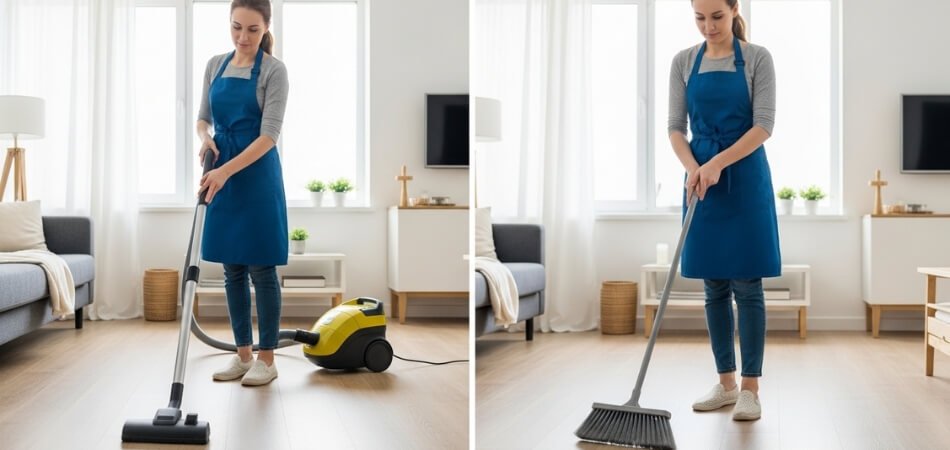
Vacuuming Hard Floors – Effectiveness and Advantages
Hard floors need careful cleaning because dust behaves differently on smooth surfaces than on carpets. Vacuuming offers stronger control, deeper reach, and cleaner air results. Its advantages become clearer when you examine how suction, filtration, and precision cleaning work together effectively.
Fine Dust Removal
Strong suction pulls fine dust directly off hard floors instead of pushing particles across surfaces repeatedly. This method prevents dust from spreading into nearby areas and settling again, which helps floors stay cleaner for longer periods between cleanings.
Allergen Control
Advanced filtration systems capture allergens like pollen, pet dander, and tiny debris before they escape back into the room air. Many modern vacuums, including models inspired by tools like DreamVac, focus on cleaner air while maintaining steady cleaning performance indoors.
Edge and Corner Reach
Vacuum tools reach edges, corners, and narrow cracks where dirt often hides and brooms struggle to clean fully. This precision helps prevent buildup along walls and seams, improving the overall appearance and hygiene of hard floor surfaces consistently.
Indoor Air Quality
Vacuuming reduces airborne dust movement, which helps maintain fresher indoor air during and after cleaning sessions. Cleaner air supports breathing comfort and reduces irritation, especially in homes with pets, children, or people sensitive to dust exposure.
Sweeping Hard Floors – Benefits and Limitations
Sweeping remains a common cleaning habit for hard floors because it feels simple and fast. Many households rely on it for daily upkeep, yet sweeping has clear strengths and limits that affect cleanliness, comfort, and long-term indoor air quality.
Large Debris Removal
Sweeping works well for visible debris like crumbs, sand, and dry food pieces on hard floors. It allows quick cleanup after meals or entryway messes without preparing tools or moving furniture around.
Low Cost Method
A broom needs no electricity, charging, or maintenance, making sweeping affordable for nearly every household. This simplicity helps people clean anytime without noise concerns or dependence on power sources indoors.
Dust in Air
Sweeping often pushes fine dust into the air, where it enters the breathing zone during cleaning. These particles later settle back onto floors, shelves, and furniture, reducing overall cleaning effectiveness.
Missed Fine Particles
Brooms struggle to collect tiny dust, allergens, and pet dander that cling to smooth surfaces. These fine particles remain behind and slowly build up, especially in corners, seams, and floor edges.
Types of Hard Floors Suitable for Using a Vacuum for Cleaning
Hard floors vary in texture, strength, and sensitivity, yet many types work well with vacuum cleaning methods. Using the right settings and tools helps protect surfaces while removing dust, debris, and allergens more effectively than basic manual cleaning routines.
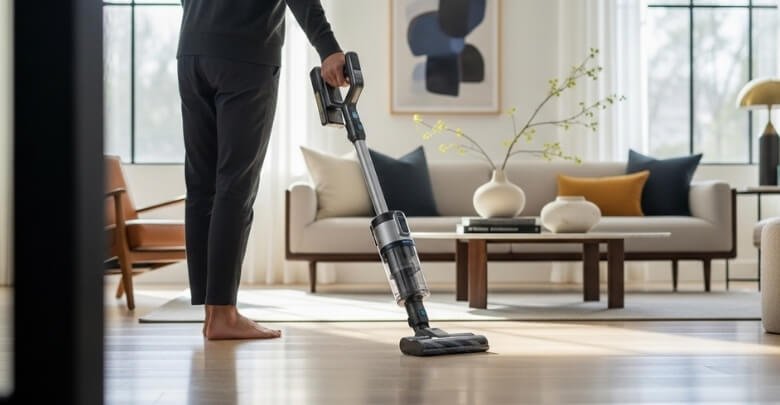
Hardwood Floors
Hardwood floors respond well to vacuuming because suction lifts dust from seams without scratching surfaces. Soft brush attachments protect finishes while cleaning deeply, although users should learn places to avoid vacuuming to prevent moisture damage in certain areas.
Tile Floors
Tile floors handle vacuum cleaning easily because strong surfaces resist wear from regular suction. Vacuums remove dirt from grout lines better than brooms, helping kitchens and bathrooms stay cleaner with less repeated effort.
Laminate Floors
Laminate floors benefit from vacuuming since dust collects quickly between panels and edges. Gentle suction prevents surface wear while removing fine debris that sweeping often leaves behind after cleaning sessions.
Vinyl Flooring
Vinyl floors pair well with vacuum use because they resist scratches and moisture during routine cleaning. Vacuuming removes dust and hair efficiently, keeping the surface smooth, bright, and comfortable underfoot.
Stone Floors
Stone floors like marble or slate suit vacuum cleaning because textured surfaces trap dirt easily. Vacuum tools reach grooves and uneven areas, reducing buildup while maintaining the natural appearance of stone surfaces.
Types of Hard Floors Suitable for Using Sweeping for Cleaning
Hard floors differ in strength and surface texture, so sweeping works better for some types than others. It suits spaces needing quick cleanup of visible debris without power tools, especially where gentle contact and simplicity matter during daily cleaning routines.
Ceramic Tile Floors
Ceramic tiles handle sweeping well because stiff surfaces resist wear from regular broom contact. Sweeping quickly removes crumbs and dry dirt, making it useful for kitchens and dining spaces with frequent surface messes.
Concrete Floors
Concrete floors suit sweeping since they handle rough contact and collect large debris easily. Garages, patios, and basements benefit from fast broom cleaning where dust and grit often appear.
Brick Floors
Brick floors work well with sweeping because textured surfaces hold visible dirt and loose debris. A broom clears surface particles quickly, although fine dust may remain trapped inside deeper grooves.
Slate Floors
Slate floors allow sweeping because their strong structure resists damage from stiff bristles. Sweeping removes sand and soil effectively in entryways where outdoor dirt enters frequently.
Outdoor Stone Floors
Outdoor stone floors rely on sweeping for leaves, soil, and dry debris removal. Brooms offer fast cleaning without power needs, especially in patios and walkways exposed to natural elements.
Tips for the Most Effective Cleaning Routine
Keeping floors clean sounds simple, but small habits make a big difference over time. Many people clean often, but still feel that floors get dirty quickly. A good routine helps save effort and keeps spaces comfortable. Simple steps matter more than fancy tools.
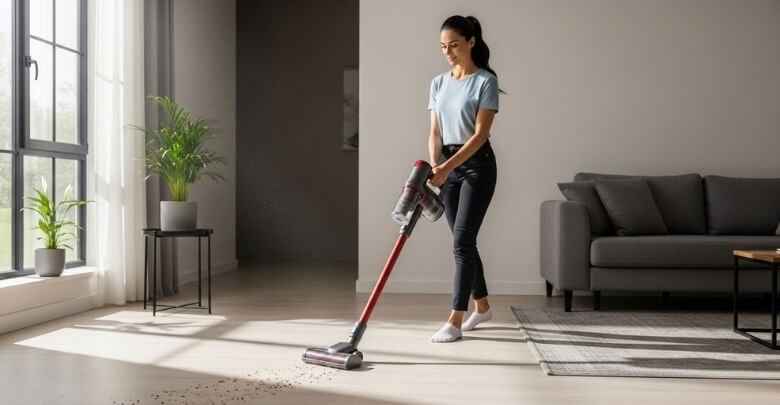
Clean Often
Floors collect dirt every single day, even when they look fine at first glance. Shoes, pets, and open windows bring dust inside without notice. Cleaning a little every day works better than deep cleaning once a week. Short daily cleaning keeps dirt from building up and becoming harder to remove later. This habit also makes cleaning feel less tiring and more manageable.
Start With Big Mess
Before doing any deep cleaning, always remove large visible mess first. Crumbs, hair, or sand can block proper cleaning if left behind. A quick sweep or hand pickup clears the surface fast. This step makes the next cleaning stage smoother and faster. It also prevents dirt from spreading across the floor during deeper cleaning.
Choose the Right Tools
Using the right tool matters more than using many tools at once. A soft broom works well for quick surface messes. A vacuum helps with fine dust and hidden dirt. Many homes now see the value of small vacuum cleaners because they are light, easy to use, and perfect for daily cleaning tasks.
Follow A Routine
Cleaning feels easier when you follow the same order every time. Start from the corners, then move toward the open spaces. Clean one room fully before entering the next one. This habit prevents dirt from spreading back into clean areas. A fixed routine also saves time and helps you finish cleaning faster.
Mind Floor Type
Different floors need different care, so treat them gently. Wooden floors need soft brushes and light pressure. Tiles handle sweeping and vacuuming better. Using the wrong tools can cause scratches or damage. Learning what your floor needs helps keep it clean and looking new for longer without extra effort.
Ventilate Rooms
Fresh air helps a lot during and after cleaning. Open windows let dust move out instead of settling again. Airflow also reduces stuffy smells after cleaning. Even ten minutes of fresh air can improve how clean a room feels. This small step supports cleaner air and better comfort.
Stay Consistent
Cleaning works best when you stick to your routine. Skipping days makes dirt harder to remove later. Short, regular cleaning keeps floors neat without stress. Consistency builds a habit that feels natural over time. When cleaning becomes routine, it takes less time and effort overall.
Frequently Asked Questions
Cleaning hard floors raises many practical questions beyond choosing between a broom and a vacuum. People often wonder about safety, long-term use, comfort, and special situations at home. The following frequently asked questions address common concerns that were not discussed earlier, helping you make smarter cleaning choices.
Can Vacuuming Scratch Hard Floors?
Vacuuming can scratch hard floors if the vacuum uses stiff brushes, damaged wheels, or incorrect settings. Choosing a vacuum with a hard floor mode and soft brush attachments reduces this risk. Regularly checking for trapped grit under the vacuum head also helps protect delicate surfaces like hardwood and laminate.
Is Vacuuming Better For Homes With Pets?
Homes with pets benefit more from vacuuming because pet hair and dander cling to floors and corners. A broom often spreads hair around instead of collecting it fully. Vacuums capture hair, fine dust, and allergens together, making floors cleaner and helping reduce pet-related allergies indoors.
How Often Should Hard Floors Be Vacuumed?
Most homes should vacuum hard floors at least two to three times each week. High-traffic areas like kitchens and hallways may need daily attention. Regular vacuuming prevents dust buildup, keeps floors looking clean longer, and reduces the need for heavy cleaning sessions later.
Are Robot Vacuums Effective On Hard Floors?
Robot vacuums work well on hard floors for daily maintenance and light dust removal. They help keep floors tidy between deeper cleanings. However, they may miss corners or heavy debris, so combining them with occasional manual vacuuming gives better overall results.
Does Sweeping Use Less Energy Than Vacuuming?
Sweeping uses no electricity, which makes it energy-free and quiet. However, it often requires more frequent cleaning because it leaves fine dust behind. Vacuuming uses power but removes more dirt in one session, which can reduce total cleaning time and effort over the long run.
Final Thoughts
Keeping hard floors truly clean depends on more than habit or speed. Sweeping feels quick and simple, but it often leaves fine dust behind. Vacuuming removes hidden dirt, reaches corners, and supports cleaner indoor air. When people ask is it better to vacuum or sweep hard floors, the answer usually depends on cleanliness goals, not convenience.
A smart routine uses sweeping for quick surface messes and vacuuming for deeper care. Floor type, foot traffic, and daily use all matter when choosing the right method. In the end, combining both tools thoughtfully creates cleaner floors, healthier air, and less effort over time.


