
A good travel backpack can make every trip feel light and easy. It helps you stay organized and comfortable wherever you go. Many people often wonder how much they should carry for outdoor trips, especially hiking. You might also be thinking the same about how much weight should I carry on a hike?
Carry no more than 10% of your body weight for day hikes and up to 20% for multi-day hikes. A 150-pound person should carry under 15 pounds for short hikes and around 30 pounds for longer trips. Adjust for fitness, terrain, weather, and personal comfort.
If you’ve ever packed too much or too little, you know how it affects the whole trip. Understanding the right backpack weight helps you walk longer and enjoy more. Keep reading, and you’ll find every useful tip to make your next hike lighter, safer, and more fun.
How Much Weight Should I Carry on a Hike?
Going on a hike is fun and exciting, but carrying too much can spoil it. The right pack weight keeps you comfortable and safe throughout the trip. Knowing how much to pack makes hiking easier and more enjoyable. Let’s look at how to find the right pack weight and what affects it.
Day Hike Pack Weight
For short hikes, your backpack should be light and simple. Carry no more than ten percent of your body weight. A person weighing 150 pounds should keep their pack under 15 pounds. Keep only water, snacks, a first-aid kit, and basic gear to stay light and fast.
Multi-Day Hike Pack Weight
For trips that last a few days, your pack can be a bit heavier. Try not to go over twenty percent of your body weight. A 150-pound person should stay around 30 pounds. Include your sleeping bag, food, and clothes, but cut out anything you don’t need.
Trip Duration
The length of your hike plays a big role in pack weight. Longer hikes need more food, fuel, and gear. This adds weight quickly, so plan each day’s supplies carefully. Only pack what you know you will use to keep your bag manageable.
Experience Level
How much you can carry often depends on your hiking experience. People who hike often may know how to pack light and still have all they need. Beginners might take extra items just in case. As you gain practice, you’ll learn what’s really important to bring.
Fitness and Injury
Your body strength affects how much you can safely carry. If you are fit, you may handle more weight without feeling sore. Anyone with joint or back problems should keep their pack extra light. Listening to your body helps avoid injury and tiredness.
Terrain and Conditions
The hiking path and weather can change how heavy your pack feels. Rough or steep terrain takes more effort to walk on. Cold or wet weather may require extra clothes or gear. Always adjust what you pack based on the trail and forecast.
Pack Design
The way your backpack is built can make a big difference. Good packs spread weight evenly across your shoulders and hips. This helps prevent back pain and makes walking easier. Adjustable straps and padding also help balance your load comfortably.
Personal Comfort
Everyone feels weight differently, even with the same gear. Try walking with your packed bag before your trip. If it feels too heavy or unbalanced, remove a few things. Comfort is key because you’ll carry that weight for hours each day.
The right pack weight can make hiking safe and enjoyable for anyone. Keep it light, stay organized, and take only what you need most. Paying attention to your body and the trail helps you stay strong. Use these simple tips to make every hike more fun and comfortable.
Ideal Backpack Weight Based on Your Body Weight
Carrying a backpack should feel easy, not like a heavy task. The right weight helps you move better and keeps your back safe. Many people make the mistake of packing too much. Knowing how much weight is safe for your body helps you enjoy your trip better. Keep reading to learn the best weight range and tips for packing smart.
General Rule of Backpack Weight
A simple rule says your backpack should be about 10 to 20% of your body weight. If you weigh 60 kg, your pack should be around 6 to 12 kg. For beginners, staying near 10% is best. Strong hikers can go closer to 20%. Always remember comfort is more important than numbers.
Importance of Weight
Too much weight can strain your back and shoulders. It may cause pain and even long-term injury. Heavy packs also make it hard to keep your balance. When you pack light, you move faster and feel less tired. This is why choosing the right load matters for any trip.
How Fitness Affects the Right Weight
Stronger and fitter people can carry more weight safely. Beginners or those new to hiking should go for lighter loads. Fitness helps muscles handle the stress of carrying gear. But even fit people should not overdo it. A balanced load always works best for comfort and safety.
Trail Type and Backpack Weight
The kind of trail changes how heavy your pack should be. A flat trail allows a bit more weight. If you’re climbing hills or rocky paths, carry less. Steep and uneven paths need better balance. A lighter bag helps you stay steady and move more easily.
Smart Packing and Gear Choice
The secret is to carry only what you really need. Pack lightweight items and skip extras. Organize so heavy items stay close to your back. One of the best options you can consider is Avio Apex travel backpack, which has great storage, a smart design, and balanced weight support. This kind of pack makes travel easier and safer. Here’s why this Avio Apex backpack is the best option:
- Capacity & Expandability: The backpack expands from about 20 litres to 30 litres, and with its vacuum-compression system, it can hold up to the equivalent of ~60 litres of soft-packed items.
- Travel & Carry-On Compliance: It’s designed to meet airline carry-on size rules even when expanded.
- Organization & Compartments: There are 28+ pockets, three main compartments, a tech sleeve, and anti-theft pockets for items you want to keep safe.
- Material & Weather Protection: It uses waterproof 900D Oxford-type cloth, has TPU-coated zippers, and a tear-resistant lining that handles rain and rough use.
- Comfort & Ergonomics: The straps are made with EVA foam cushioning, a neoprene (or wetsuit-grade) back panel helps with heat and comfort, and there’s a luggage-belt fixation to secure it.
- Security Features: Includes a TSA-approved lock, hidden back pocket, and anti-theft zippers so your gear stays safer.
- Style & Versatility: The design is sleek and minimalist, so it works just as well in an office or a weekend away. It doesn’t look like a giant hiking bag, but it performs like one.
A backpack should support you, not slow you down or hurt you. Keeping it between 10 to 20% of your body weight is a safe rule. Adjust it based on your fitness and the trail you walk. The lighter and smarter you pack, the more you will enjoy every trip.
Why Carrying the Right Weight Matters on a Hike?
Carrying the right amount of weight can make or break your hike. If your bag is too heavy, every step starts to feel harder. If it’s too light, you might miss something important you need later. Finding the right balance keeps you steady and helps you enjoy the trail more. Let’s look at why this matters.

Helps You Stay Balanced
When your backpack is too heavy, it pulls your body backward or sideways. This makes walking on uneven ground harder and can cause slips or falls. A lighter, well-balanced pack keeps your center steady. You can walk easily and safely without losing balance on rocks or slopes.
Keeps You Moving Longer
Heavyweight makes you tired faster and drains your energy early. If you pack just what you need, your legs and back feel less pressure. You can walk longer without needing many breaks. This helps you finish your hike without feeling worn out halfway through.
Reduces Strain on Your Body
Too much weight can hurt your shoulders, back, and knees. Even small extra pounds add up over time. A lighter load puts less stress on your joints. This keeps your body comfortable and helps prevent pain or injury during long walks.
Makes the Hike More Comfortable
Carrying the right amount makes hiking feel easier and more fun. You move more freely, breathe better, and enjoy the views. It also helps you stay cool and relaxed instead of sweaty and tired. Comfort turns a tough trail into a good outdoor memory.
Keeps You Prepared and Safe
Packing too little can be risky if you forget water or weather gear. Having the right weight means you carry only what’s needed. You stay ready for rain, cold, or minor injuries without being weighed down. It’s about smart choices, not carrying more or less.
Packing wisely makes your hike smoother and safer in every way. The right balance gives you more control and better energy. You enjoy nature without the struggle of heavy gear. Next time you hike, check your pack and carry only what you truly need.
How to Distribute Weight in Your Hiking Backpack?
Packing your hiking bag the right way makes your walk much easier. It helps your body stay balanced and stops your shoulders from hurting. When you learn where to place heavy and light items, your steps feel lighter. Keep reading to see simple ways to pack smart and stay comfortable on the trail.
Put Heavy Items Close to Your Back
Keeping heavy things near your back helps you stay steady. It stops the bag from pulling you backward when walking. Place big items like food packs or water bottles near the middle of your back. This keeps the weight even and makes it easier to move uphill or on rocky ground.
Keep Light Items on the Outside
Small, light things can go toward the sides or top of your bag. Items like clothes, snacks, or a rain jacket are perfect for those spots. It helps balance the weight and makes the pack easier to handle. You can also grab what you need without opening the whole bag.
Use the Middle for Medium Items
The middle part of your bag is best for medium-weight things. You can place things like cooking gear, extra clothes, or a tent cover here. It keeps the bag’s weight balanced and helps the heavy items near your back stay stable. This setup helps you walk smoothly without too much pressure on your spine.
Fill Gaps to Stop Movement
Loose items can move around and throw off your balance. Fill empty spaces with soft things like a towel or sleeping bag. This keeps everything tight and secure. A stable pack is easier to carry and feels much lighter even after hours of walking.
Adjust Straps for Comfort
Once everything is packed, tighten the shoulder and waist straps. This helps spread the weight across your hips instead of your shoulders. Adjusting your straps often keeps your back relaxed and your posture straight. Learning how to balance items correctly is just as important as knowing how to pack a travel backpack efficiently, especially when you’re hiking long distances and want to avoid back strain.
Packing your backpack the right way makes every hike feel easier. It protects your back and helps you keep good posture while walking. Once you understand how to place each item, hiking feels more natural and smooth. Try these tips on your next trip and notice the difference right away.
Tips for Reducing Pack Weight Without Skipping Essentials
Carrying too much on a hike can make you tired fast. The goal is to keep what you need but make it lighter. Here are some easy ways to cut pack weight without losing essentials.
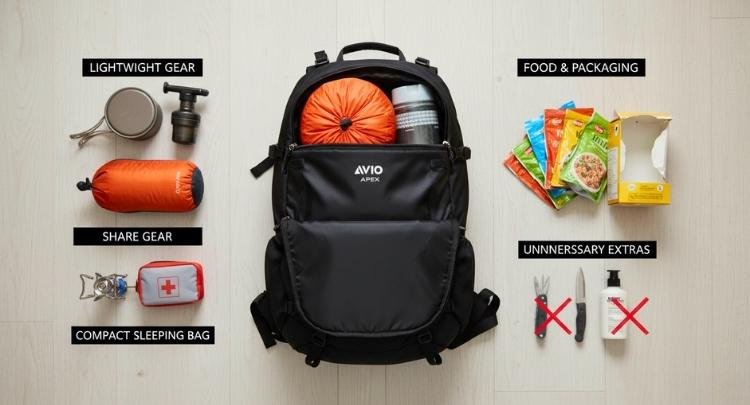
- Choose Lightweight Gear: Pick lighter materials like aluminum or titanium. These save weight but still work well. Small changes in your tent, cookware, or tools can reduce your overall load a lot.
- Swap Bulky Sleeping Bags: Choose a smaller, lighter sleeping bag that still keeps you warm. Down-filled ones weigh less and pack tighter than most synthetic sleeping bags, which helps save space in your backpack.
- Use a Lighter Backpack: Modern backpacks are designed to be both strong and light. Find one that fits your body and has only the pockets and straps that you actually use.
- Refill Water on the Trail: Carry a filter or purifier to clean stream or lake water instead of hauling liters from home. This simple switch can save several pounds of pack weight.
- Share Gear with Friends: When hiking with others, plan and divide items. One person can carry the tent, another the stove, and another cookware, so everyone carries less weight overall.
- Cut Down on Food Packaging: Take food out of heavy boxes and store it in light plastic or reusable bags. This saves weight and keeps everything organized and easier to fit inside your pack.
- Skip Unnecessary Extras: Before you go, check every item in your pack. If you packed two similar things, remove one. Keeping only what you really need makes your trip much easier.
You don’t need to give up comfort to travel light. Choosing lightweight gear and taking time to find the perfect backpack size for travels can make a big difference in keeping your hiking load comfortable and well-balanced.
FAQs About How Much Weight Should I Carry on a Hike?
It’s normal to have questions when planning how much to carry for a hike. The right answers can help you stay safe and make your trip smoother. These simple FAQs cover important things you should know before you pack. Read them carefully to make sure you hike with the right weight and comfort in mind.
How Can I Tell If My Backpack Is Too Heavy?
If your shoulders or back start to hurt after a short walk, your backpack is too heavy. You might also lean forward or feel unbalanced while walking. Try lifting your bag before the hike; if it feels hard to move or makes you tired quickly, it’s likely overweight. A quick fix is to remove extras and keep only what you really need.
What Is the Best Way to Weigh My Backpack?
You can use a simple bathroom scale at home. First, weigh yourself without the backpack, then weigh yourself again while wearing it. Subtract the first number from the second one to get your pack weight. This easy trick helps you know exactly how much you are carrying before your hike.
Does Water Weight Affect My Backpack Load?
Yes, water can add a lot of extra weight that people often forget. One liter of water weighs about one kilogram, so carrying several bottles adds up fast. Try bringing only what you need for the start and refill along the way when possible. Using a water filter helps you stay light and still have clean water.
Should I Train Before Carrying a Heavy Backpack?
Training helps your body handle the extra weight better. Start by walking short distances with a light bag and slowly increase the load. Doing simple leg, back, and core exercises also builds strength for longer hikes. When your body gets used to carrying weight, hiking becomes easier and more enjoyable.
How Does Altitude Affect the Weight I Can Carry?
High places have thinner air, which makes breathing harder and walking slower. This means even normal pack weight can feel much heavier. When hiking at high altitudes, keep your load lighter than usual. It helps your body save energy and adjust better to the thin air.
What Should I Do If I Start Feeling Pain While Hiking?
Stop right away and take a short break if you feel pain. Check your straps and adjust the backpack so the weight sits evenly. Drink some water, stretch a bit, and see if the pain goes away. If it keeps hurting, lighten your load or rest before walking again to avoid injury.
Are There Special Backpacks for Reducing Weight Strain?
Yes, many backpacks are designed to spread weight evenly. Look for padded straps, waist belts, and a strong frame that fits your body well. These help shift pressure from your shoulders to your hips. Choosing a well-designed pack makes a big difference in comfort and balance on the trail.
Conclusion
Finding the right balance is what makes every hike enjoyable and safe. The answer to “how much weight should I carry on a hike?” is simple: carry about 10 to 20 percent of your body weight, depending on trip length, fitness, and comfort. Keeping your load within this range helps you move freely and enjoy nature without strain.
Packing light doesn’t mean leaving comfort behind; it means choosing smartly. Always test your pack, adjust straps for support, and remove items you don’t truly need. Stay hydrated, wear good shoes, and rest when needed. Enjoy your hike, stay safe, and let every step feel easy and fun.


