
A beautiful smile can change the way you feel about yourself, and veneers are often the secret behind those flawless teeth you see in photos. But what many people wonder is, can teeth go bad under veneers if they look so perfect on the outside? The truth might surprise you.
Yes, teeth can go bad under veneers if they are not cared for properly. Veneers only cover the front of the teeth, so the natural tooth underneath can still develop decay or gum problems when bacteria build up. Good brushing, flossing, and regular dental visits are important to keep both the veneers and the natural teeth strong and healthy.
If you’ve ever questioned the long-term safety of veneers or want to keep your smile strong for years, this guide is for you. Keep reading to learn the facts, signs, and best prevention tips.
Can Teeth Go Bad Under Veneers?
Veneers can beautifully enhance your smile, but the natural teeth underneath still require regular care. While veneers serve as protective covers, they don’t make your teeth immune to decay. If dental hygiene is neglected or dental issues go untreated, the teeth beneath can still deteriorate over time.
Poor Oral Hygiene and Plaque Buildup
Even with veneers, plaque can build up where the edge meets your natural tooth. When bacteria settle near the gumline, it can lead to decay, gum inflammation, and discoloration. Daily brushing, flossing, and rinsing with an alcohol-free mouthwash are simple yet vital steps to maintain the health of both your veneers and natural teeth.
Pre-Existing Cavities Before Veneer Placement
Applying veneers over untreated cavities only hides the problem instead of fixing it. Decay can continue to spread underneath, causing pain or infection later. This is why dentists always recommend treating existing issues first. Interestingly, removable options like Shiny Smile Veneers avoid this risk since they don’t require drilling or covering active decay.
Improper Bonding or Gaps
When veneers aren’t properly bonded, small gaps may form between the veneer and the tooth. These spaces act as entry points for bacteria and moisture, increasing the risk of decay. Ensuring veneers are well-fitted and applied by experienced professionals helps keep your natural teeth protected from hidden damage.
Gum Recession Over Time
As gums recede with age or poor brushing habits, areas of the tooth once shielded by the gum may become exposed. These uncovered parts are more likely to develop cavities or sensitivity. Gentle brushing and maintaining gum health through regular dental cleanings are essential to prevent long-term issues.
Skipping Dental Visits
Even with perfect home care, routine dental visits are necessary to detect early signs of decay or gum disease. Regular cleanings and checkups help ensure your veneers remain well-bonded and your underlying teeth stay strong. Many people mentioned in their Shiny Smile Veneers review discussions that consistent checkups significantly prolonged their veneer lifespan.
Teeth can indeed go bad under veneers when care routines are ignored or pre-existing problems are left untreated. The best protection comes from daily oral hygiene, prompt dental treatment, and professional monitoring to preserve both your natural teeth and your enhanced smile.
Common Signs Your Teeth Might Be in Trouble
Even with veneers, your teeth can send clear warning signs when something isn’t right. Recognizing these early can prevent bigger dental issues and keep your smile healthy for years. Let’s look at some common symptoms to watch for carefully.
- Sensitivity to Hot or Cold: If you feel sharp or lingering sensitivity when eating or drinking, it might signal enamel wear, gum recession, or decay forming near the edges of your veneers.
- Pain or Dull Ache Under the Veneer: A persistent ache or pressure could mean underlying decay, an infection, or bonding failure. Don’t ignore it, as timely attention can prevent deeper dental complications.
- Gum Swelling or Bleeding: Swollen or bleeding gums often suggest trapped bacteria or plaque buildup near the veneer edges. Proper cleaning and regular dental visits can quickly resolve this issue.
- Darkening Around Veneer Edges: Any discoloration around the gumline or veneer margins may point to decay or adhesive breakdown. This is an early indicator that professional inspection is needed soon.
- Bad Breath or Taste Changes: Persistent bad breath or an unusual taste could result from bacterial buildup beneath the veneer. It’s often an early sign that the tooth underneath might be developing decay.
Paying attention to these subtle changes helps you act before problems worsen. If you notice any of these symptoms, it’s best to schedule a dental checkup right away to ensure your veneers and teeth remain in excellent condition.
Steps You Can Take to Prevent Tooth Decay Under Veneers
Here’s how you can protect both your veneers and your natural teeth from decay. Follow these simple steps in order, keep them consistent, and you’ll reduce hidden risks while keeping your smile strong and bright.
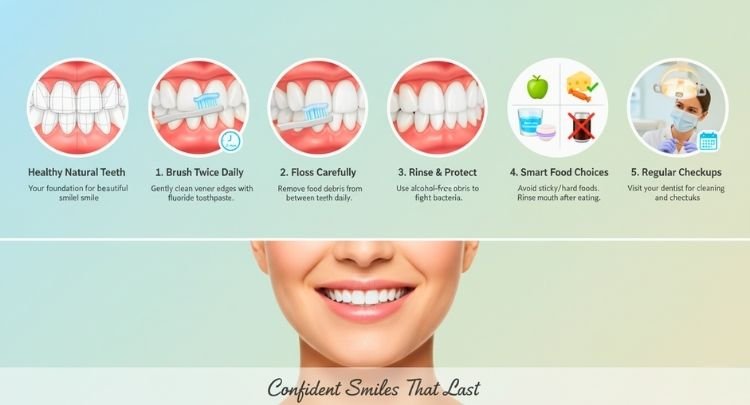
Step 1: Brush Twice Daily with Fluoride
Brush morning and night using a soft brush and fluoride toothpaste. Angle bristles toward the gumline to clean along the veneer margins. Take at least two minutes, finishing with a gentle tongue brush to reduce bacteria. Consistency prevents plaque from settling where veneers meet enamel.
Step 2: Floss Carefully Around Edges
Slide floss gently under the contact points, curving it in a C shape around each tooth. Avoid snapping against veneer surfaces. Daily dental care, like proper flossing, removes trapped debris that brushing misses and protects the bonding line from bacterial buildup and early decay.
Step 3: Rinse With Alcohol-Free Mouthwash
Choose an alcohol-free antiseptic rinse to reduce bacteria without drying tissues or weakening adhesives. Swish for the full label time after brushing and flossing. This step reaches tight spaces around veneer edges, freshens breath, and supports gum health that stabilizes the veneer margins.
Step 4: Be Smart With Food Choices
Limit sticky candies, hard nuts, and chewing ice, which can stress veneer edges or create microgaps. Rinse with water after sweets and acidic drinks. Favor tooth-friendly snacks like yogurt, cheese, and fibrous fruits to balance pH and reduce plaque formation throughout the day.
Step 5: Book Regular Professional Cleanings
Schedule dental cleanings and exams at least every six months, or more often if recommended. Professionals remove hardened tartar, check veneer fit, and spot early gum or decay changes. Early intervention preserves bonding integrity, protects the tooth beneath, and extends veneer longevity with minimal repairs.
A steady routine of mindful cleaning, smart food choices, and timely professional visits keeps veneers and the teeth beneath them healthy and secure. Keep these steps consistent to protect your smile for the long term.
Professional Care vs. At-Home Maintenance – What’s Best?
Even if you follow a strong routine at home, professional cleanings still play an essential role in maintaining oral health. Both are equally important for preserving your veneers and the teeth beneath them. Let’s look at how each type of care supports your smile differently.
| Aspect | At-Home Maintenance | Professional Care |
| Main Focus | Daily cleaning and prevention | Deep cleaning and early diagnosis |
| Key Actions | Brushing twice daily, flossing gently, using fluoride toothpaste | Comprehensive cleanings, X-rays, and decay checks |
| Benefits | Reduces plaque buildup, prevents stains, and maintains veneer shine | Removes tartar, checks bonding, and detects hidden decay |
| Time Commitment | A few minutes each morning and night | Every six months or as advised by your dentist |
| Tools Used | Toothbrush, floss, and alcohol-free mouthwash | Professional instruments and diagnostic tools |
| Why It Matters | Keeps veneers looking clean and natural between appointments | Ensures long-term protection of teeth beneath veneers |
| For Permanent Veneers | Regular brushing and flossing prevent minor edge buildup | Even with permanent veneers, professional cleanings help catch early signs of decay or gum issues |
Combining both care methods gives the best results. Maintaining permanent veneers and dental care together ensures long-term strength, better gum health, and protection against hidden decay, keeping your smile bright and lasting for years.
What Happens If a Veneer Starts to Fail?
Veneers are designed to last for years, but they can sometimes fail due to wear, impact, or poor maintenance. When this happens, quick attention from a dentist can prevent further issues. Let’s look at what to watch for and how problems are usually resolved.
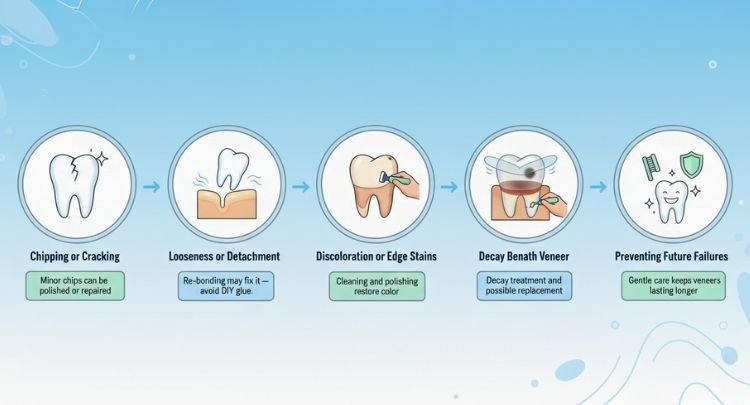
Chipping or Cracking
A small chip or crack may appear after biting something hard or from grinding teeth. Minor damage can often be polished or repaired, but larger cracks might require a replacement. Using a mouthguard at night helps protect your veneers from unnecessary stress and breakage.
Looseness or Detachment
If a veneer feels loose or detaches, it’s usually because the bonding has weakened. Dentists can often re-bond it if the veneer and tooth are still intact. Avoid using strong adhesives at home, as improper fixing can worsen both the fit and the underlying structure.
Discoloration or Edge Stains
Over time, the edges of veneers might darken or show stains from coffee, wine, or tobacco. This isn’t always veneer failure, but it can signal bonding wear or gum changes. Professional cleaning and polishing help restore their brightness and identify any hidden decay.
Decay Beneath the Veneer
When bonding gaps form, bacteria can reach the natural tooth and cause decay. If the damage is extensive, the veneer may need to be removed for treatment. Understanding the pros and cons of Shiny Smile Veneers can also prepare you for what to expect if a veneer ever loosens or needs replacement.
Preventing Future Failures
To avoid repeat problems, practice gentle brushing, avoid biting hard objects, and maintain regular checkups. Using non-abrasive toothpaste and protecting veneers from physical stress keeps them stable for years. Consistent oral care is key to extending both veneer life and natural tooth health.
When a veneer starts to fail, early action makes all the difference. Addressing issues quickly through professional repair or replacement ensures lasting comfort, aesthetics, and protection for your natural teeth underneath.
Expert Tips to Keep Both Veneers and Teeth Healthy
Taking care of veneers is simple when you follow consistent habits supported by dental experts. A few small changes in your daily routine can keep both your veneers and natural teeth strong. Let’s review the most effective tips below.
- Stay Hydrated to Support Saliva Flow: Drinking enough water helps wash away food particles and bacteria. It also supports natural saliva production, which keeps your mouth balanced and prevents plaque from forming along the veneer edges.
- Quit Smoking to Prevent Stains: Tobacco products cause yellowing and dullness around veneers. Quitting smoking not only protects your oral health but also helps maintain the clean, natural appearance of your smile for years.
- Avoid Using Teeth as Tools: Never open packages, bottles, or hard items with your teeth. This habit can crack veneers or damage bonding. Always use proper tools to protect both your veneers and enamel.
- Visit Your Dentist Every Six Months: Routine visits help your dentist detect early signs of decay, gum irritation, or veneer loosening. Regular professional care ensures your veneers remain stable, polished, and problem-free.
- Use a Night Guard if You Grind Your Teeth: Grinding or clenching can put pressure on veneers, leading to cracks or detachment. A night guard prevents this, providing extra protection while you sleep and extending veneer durability.
Maintaining veneers doesn’t have to be complicated. By staying mindful of these simple habits and prioritizing professional checkups, you can enjoy a bright, confident, and healthy smile that lasts for many years to come.
Frequently Asked Questions
Even after learning the essentials of caring for veneers, many people still have a few lingering questions. Below are some helpful answers to common doubts that come up once you’ve decided to maintain or invest in veneers for your smile.
How Long Do Veneers Usually Last?
Most veneers last between 10 and 15 years with good care. Their lifespan depends on daily habits, oral hygiene, and professional maintenance. Regular checkups, gentle brushing, and avoiding hard foods can help your veneers stay in great condition for longer.
Can I Whiten My Veneers If They Start To Look Dull?
Veneers don’t respond to regular whitening treatments like natural teeth do. If they appear dull, professional polishing or replacement is the best solution. Always ask your dentist before using any whitening product on veneer surfaces.
Are Veneers Painful To Get Or Maintain?
Applying veneers is generally painless since dentists use minimal preparation and local anesthesia. After placement, most people feel only mild sensitivity that fades within days. Ongoing maintenance involves routine cleaning, which is completely comfortable and easy to manage.
Can I Eat Normally After Getting Veneers?
Yes, you can enjoy most of your usual foods after your veneers settle. It’s best to avoid very hard or sticky items to prevent damage. Chewing carefully and maintaining good oral hygiene helps protect both veneers and natural teeth.
Do Veneers Affect My Speech?
Some people experience a slight adjustment period when speaking after new veneers are applied. This temporary phase usually lasts a few days. Once your mouth adapts, your speech returns to normal and feels completely natural.
What Should I Do If My Veneer Feels Loose?
If a veneer feels loose or moves slightly, avoid trying to fix it yourself. Contact your dentist immediately for inspection and re-bonding if needed. Early attention prevents further issues and helps protect the underlying tooth from damage.
Can Veneers Protect Weak Teeth From Breaking?
Veneers can strengthen mildly damaged or worn teeth by covering and supporting the surface. However, they aren’t suitable for severely weak teeth. Your dentist can recommend a crown or other restoration if more protection is necessary.
Concluding Words
Understanding can teeth go bad under veneers helps you take better care of your smile. While veneers protect your teeth from minor stains and chips, they still rely on healthy enamel underneath to last. Ignoring proper cleaning or skipping dentist visits can put that protection at risk.
The good news is that prevention is simple. Regular brushing, gentle flossing, and professional checkups can prevent hidden decay and ensure your veneers stay bright and secure. A few small habits make a lasting difference.
With mindful care, veneers can enhance your confidence without harming your dental health. Remember, your best smile isn’t just about appearance, it’s about maintaining the strength and wellness of the teeth behind it.


